

The Sanhedrin recently issued a formal letter to the Iranian people claiming that the ancient Persian prophet Zoroaster was actually Mordechai from the biblical book of Esther, according to a report from Israel365 News.
The letter, signed by “the Elder Brother, the Rabbis of the Mount Zion Sanhedrin Court,” described the Jewish and Persian peoples as having a shared spiritual history dating back roughly 2,500 years. The Sanhedrin connected the claim to both biblical history and current tensions between Israel and Iran.
According to the report, the Sanhedrin declared, “The only explanation for this wondrous phenomenon is that the God of Israel, Creator of the world, protects the soldiers of Israel and brings success to our wars.”
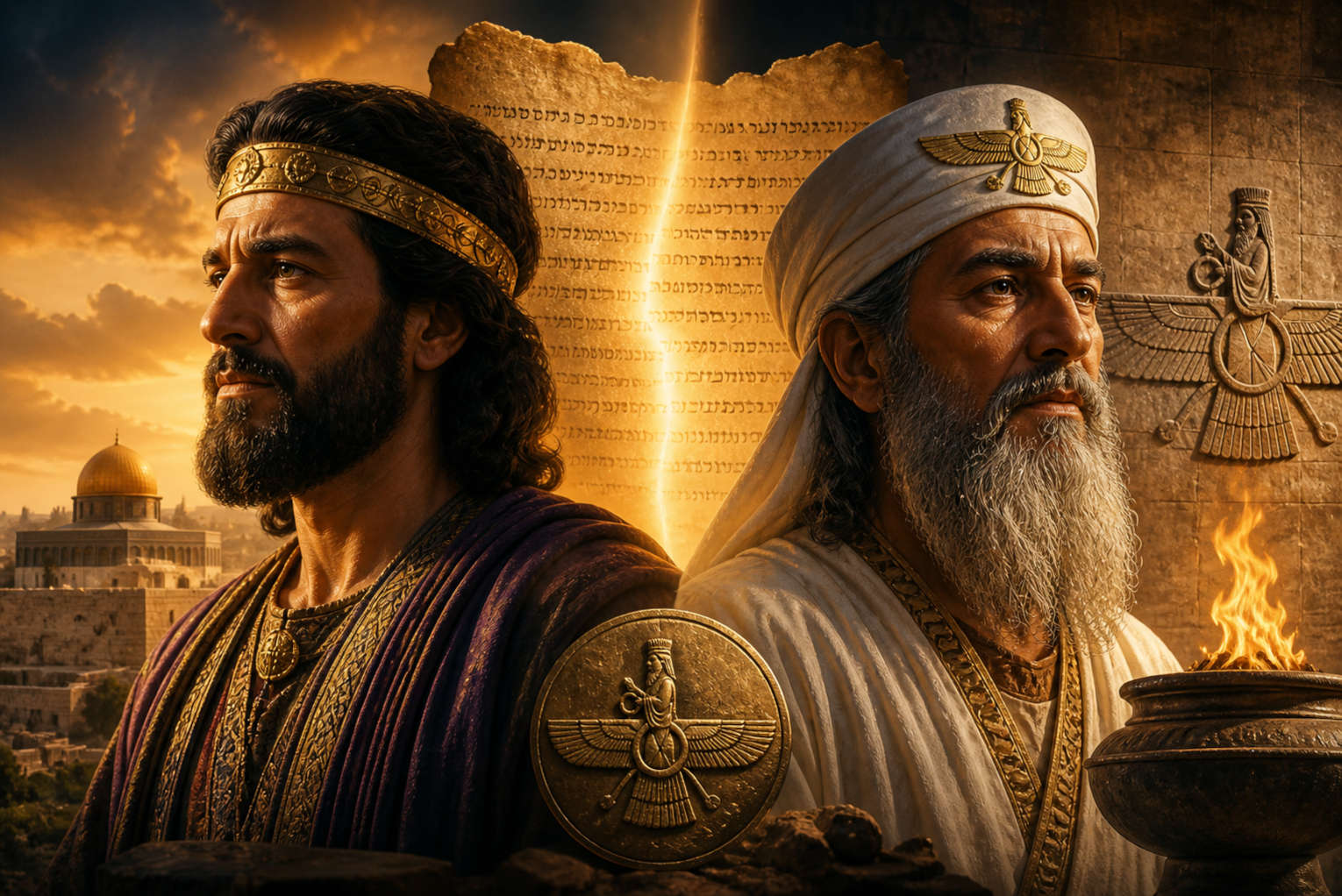
The article explained that the Sanhedrin’s argument relies heavily on research by Dr. Chaim Hafetz, who claims Jewish and Persian historical traditions describe the same individuals under different names. The letter specifically tied the theory to the story of Queen Esther, King Ahasuerus and the rise of Mordechai in the Persian Empire.
The Sanhedrin stated plainly: “The name Mordechai could be associated with the Babylonian idol Merodach or Marduch. Therefore, Mordechai preferred to become known by the name ‘dod Esther’ — Zoroaster.”
According to the article, the Sanhedrin also argued that the core teachings of ancient Zoroastrianism mirror biblical Judaism. “All the core beliefs of the original prophet Zoroaster correspond to Judaism: the struggle between good and evil, free choice, the vision of the end of days, good thought, good speech, and good action,” the letter stated.
The article listed several reasons the Sanhedrin believes Mordechai and Zoroaster were the same person:
- The timelines of the Persian Empire and the events in the book of Esther closely align.
- The name “Zoroaster” is interpreted by the Sanhedrin as meaning “elder of Esther” or “dod Esther.”
- The Sanhedrin identifies the Persian figure Hutaosa with Esther’s Hebrew name, Hadassah.
- Zoroastrianism’s monotheistic beliefs closely resemble Judaism.
- The struggle between Zoroaster and the Magi is viewed as parallel to Mordechai’s battle with Haman.
- The influence of Esther over King Ahasuerus mirrors accounts of Hutaosa influencing Persian rulers.
- References in the Talmud to “Ahormiz” are interpreted as references to the God of Israel.
- The “mass conversions” mentioned in Esther 8:17 are viewed as the spread of a monotheistic Persian faith tied to Mordechai.
- The Sanhedrin argues Mordechai’s fame throughout Persia only makes sense if he later became known historically as Zoroaster.
The letter concluded with a direct appeal to the Iranian people, urging them to return to what the Sanhedrin described as the original monotheistic faith of ancient Persia and its historic relationship with Israel.
James Lasher, a seasoned writer and editor at Charisma Media, combines faith and storytelling with a journalism background from Otterbein University and ministry experience in Guatemala and at the LA Dream Center. A Marine Corps and Air Force veteran, he is the author of The Revelation of Jesus: A Common Man’s Commentary and a contributor to Charisma magazine. For interviews and media inquiries, please contact [email protected].