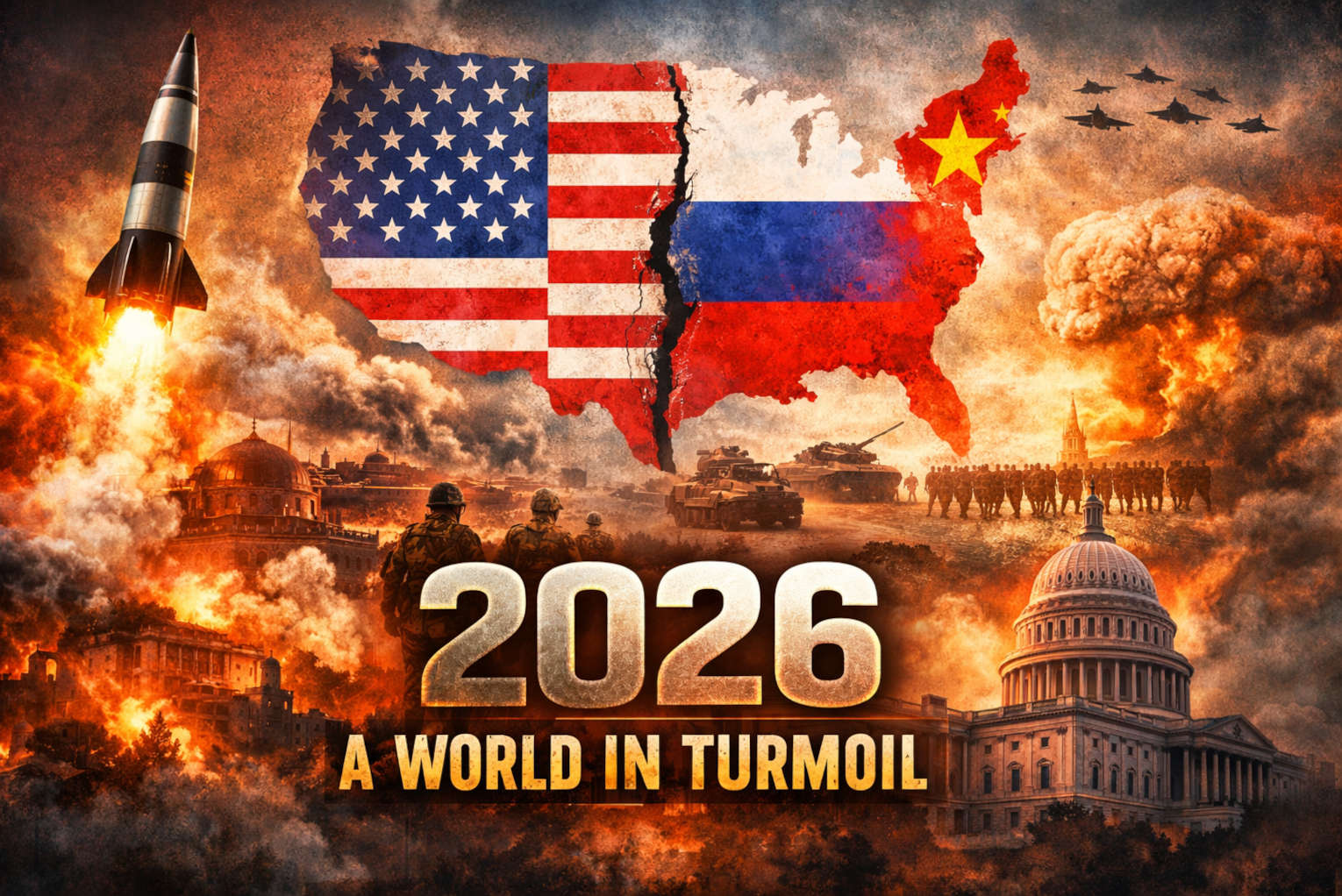
Victor Davis Hanson, a historian, Hoover Institution senior fellow and longtime geopolitical analyst, lays out a sweeping case that the world is entering a defining moment. “2026 looks like it’s going to be the most tumultuous, geo-strategically significant and dangerous year since the fall of the Soviet system and the fall of the Berlin Wall,” he said.
The scale of disruption is global, but he argues it is not random. It is part of a broader realignment that could restore American dominance on a level not seen in decades.
At the center of it all is a single figure. “Donald Trump is the catalyst of this,” Hanson said, noting that both allies and critics see his influence shaping events across multiple regions.
The World in Upheaval
Hanson points to a series of flashpoints unfolding at the same time, each with major consequences:
- Iran and the Middle East
“Iran’s theocracy has no intention of stopping nuclear proliferation,” Hanson said, adding that its goal is regional dominance and eventual threats to Europe and the United States. After failed diplomacy, the strategy shifted to direct military pressure aimed at weakening or collapsing the regime. - Ukraine and Europe
Hanson highlights Europe’s dependence on Russian energy and its reliance on U.S. intervention. He said leaders are being forced to confront policies that have strengthened their adversary. - Latin America’s political shift
A wave of change is sweeping the region, with countries moving away from socialist influence toward constitutional systems and market reforms. - Declining Chinese and Russian influence in the Western Hemisphere
U.S. pressure has pushed both powers out of key areas, reinforcing American dominance closer to home.
Together, these developments create what Hanson describes as a moment of global instability with the potential for resolution.
Order Troy Anderson’s New Book, “Designated Disrupter” on Amazon.com!
Trump’s Strategy Explained
What appears chaotic on the surface is presented as a deliberate strategy. Hanson outlines several key components:
- Confronting Iran directly after decades of inaction
“Every president… said that and they were going to take care of the problem… None did anything,” he said. The current approach aims to make the regime “inert militarily” or trigger internal collapse. - Forcing regime pressure in Venezuela and Cuba
The removal of leadership in Venezuela and growing pressure on Cuba are meant to spark reform and weaken long-standing communist systems. - Reasserting control in the Western Hemisphere
The United States has warned regional players against aligning with China, signaling a return to firm enforcement of its sphere of influence. - Reframing the approach to Russia
Hanson describes an effort to weaken Russia while keeping open the possibility of strategic realignment, particularly in countering China. - Pressuring Europe on energy and defense
European nations are being pushed to end reliance on Russian energy while taking greater responsibility for their own security.
Hanson argues that this approach is rooted in a clear principle. “Strength radiates friendship. Weakness repels it.”
A High-Risk Gamble
The strategy carries significant risks. Military action in major oil-producing regions threatens energy markets. Political timing adds another layer of uncertainty.
“This was not necessary in Trump’s political calculus,” Hanson said, noting that such moves came ahead of key elections and could disrupt economic gains. At the same time, resistance from European allies and skepticism within Trump’s own base complicate the path forward.
A Potential Historic Outcome
Despite the risks, Hanson sees the possibility of a sweeping transformation. If these efforts succeed, the results could be far-reaching:
- A weakened or collapsed Iranian regime and reduced U.S. military footprint in the Middle East
- A reformed Latin America aligned more closely with the United States
- A shift in global alliances that limits Chinese and Russian influence
“If you could solve all of those things in one year, it would be unheard of,” Hanson said, suggesting it could rival the geopolitical impact of the Cold War’s end.
He believes many of the current disruptions are already moving toward resolution. “There are disruptions all over the world, but three-quarters of them are reaching a consensus,” he said.
What Comes Next
Hanson’s conclusion is clear. The instability seen today may be the beginning of a new order rather than the collapse of the current one.
“I don’t know how they’re all going to turn out,” he said, “but there is a good chance they could turn out with the United States in a preeminent position that we haven’t seen, at least since World War II.”
The outcome is not guaranteed, but the trajectory is unmistakable. A year defined by disruption could ultimately reshape the balance of power for a generation.
James Lasher, a seasoned writer and editor at Charisma Media, combines faith and storytelling with a background in journalism from Otterbein University and ministry experience in Guatemala and the LA Dream Center. A Marine Corps and Air Force veteran, he is the author of The Revelation of Jesus: A Common Man’s Commentary and a contributor to Charisma magazine. For interviews and media inquiries, please contact [email protected].