
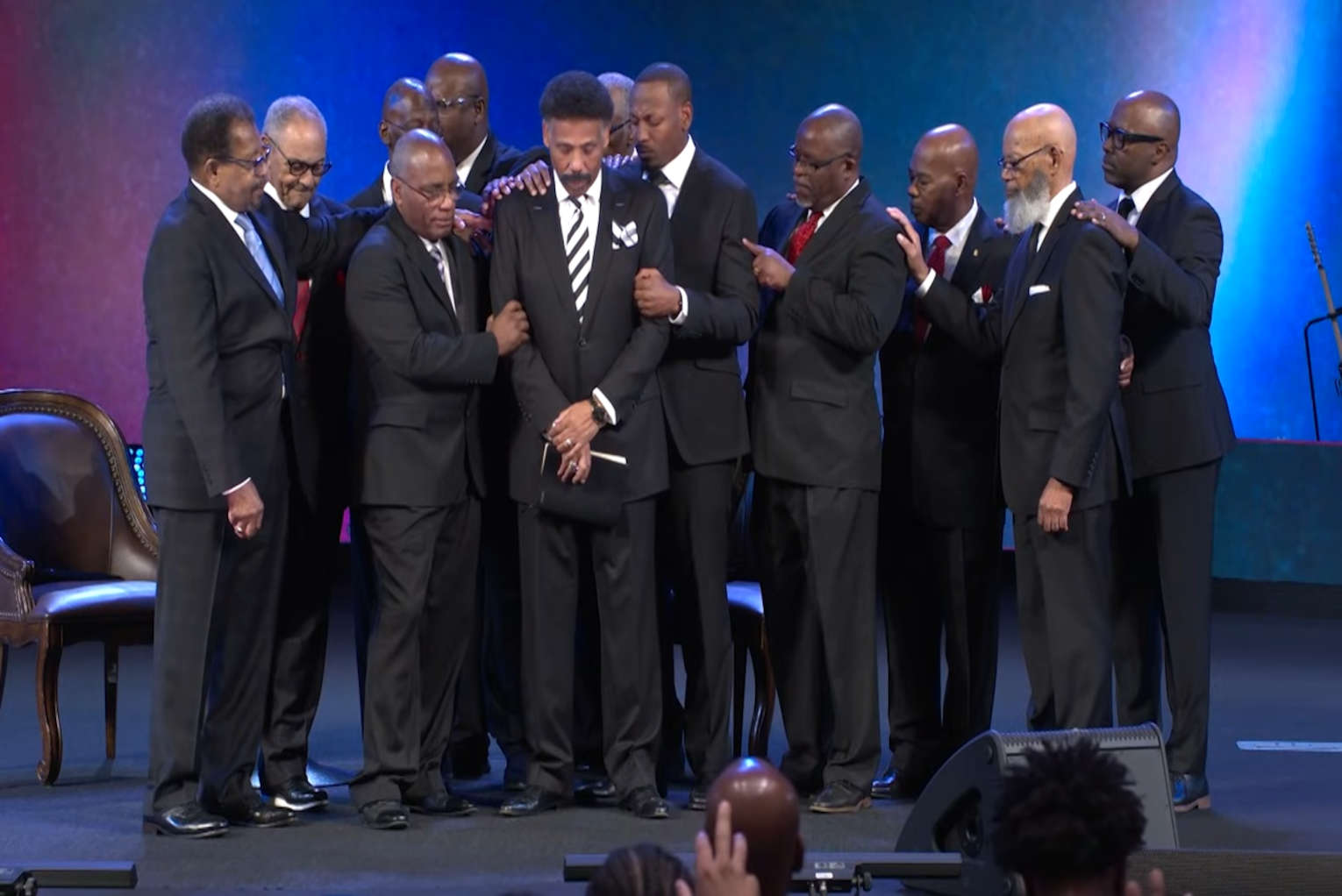
Oak Cliff Bible Fellowship marked a turning point with a restoration service for its founding pastor Dr. Tony Evans. The elders announced that Evans had completed a formal process of discipline and restoration and that he “will not be returning in a staff nor leadership role at OCBF.” Associate Pastor of Outreach Chris Wheel told the congregation, “We are pleased to report that Dr. Evans has fully submitted to the church’s discipline and restoration process,” which included outside counseling, pastoral mentoring, “evidence of genuine repentance and godly sorrow” and a public stepping away from all formal roles for a season.
Breaking News. Spirit-Filled Stories. Subscribe to Charisma on YouTube now!
From the platform, the church rooted its actions in Scripture. Wheel cited Galatians 6:1 as the spirit of the work, restoring the one who has fallen “in a spirit of gentleness.” He also emphasized why certain details were not disclosed, saying the elder board’s discretion was meant “to uphold the integrity of the process, to protect the dignity of all involved and prevent unnecessary speculation or sensationalism.” The service itself carried a pastoral tone with prayers over Evans, communion and a public commissioning toward the future.
Evans, who pastored OCBF for 48 years, described the season as “bittersweet.” He said the hardest part was “disappointing the Lord,” then his family and church family. He apologized openly to his wife Carla, to his children, grandchildren and great-grandchildren, and to the congregation, deacons, deaconesses and ministers. In words that framed the day’s meaning beyond one leader, Evans told the church, “I’m thankful that you have followed the teaching that the church is not about a man. It’s about Jesus Christ.” Months earlier, when he stepped away, he had said, “While I have committed no crime, I did not use righteous judgment in my actions.”

Order Jonathan Cahn’s Newest Book, “The Avatar” on Amazon.com!
Jonathan Evans, newly appointed as an elder and expected to be installed as lead pastor, set the tone at the outset. “Today is a special day,” he said. He told his father, “It’s one thing to watch you preach the Word; it’s another thing to watch you live under its authority even when it hurts.” He then led the congregation in communion and prayer, underscoring that restoration is not the end of accountability but the fruit of it.
What the Bible Says About Restoration
Biblical restoration is neither denial nor dismissal. It is the hard work of telling the truth, submitting to oversight and seeking healing under the lordship of Christ. Galatians 6:1 calls spiritual leaders to restore the fallen with gentleness while also watching themselves. 2 Corinthians 2:6-8 urges the church to reaffirm love after appropriate discipline so that sorrow does not “overwhelm.” Psalm 147:3 says God “heals the brokenhearted and binds up their wounds.” The arc of John 21 shows Jesus restoring Peter not by minimizing sin but by recommissioning him after repentance.
OCBF’s public statements and service order reflected these texts. Confession without voyeurism, care for the wounded without excusing the wound, and a future oriented toward faithful service rather than titles. The elders insisted on time, counseling and demonstrable fruit before pronouncing restoration, then decoupled that restoration from a return to institutional power.
The Fruit on Display
By the end of the service, several marks of healthy fruit were evident.
- Submission and accountability: Evans said he needed “to submit to the very process I helped to install,” accepting outcomes that included not resuming a leadership role.
- Transparency with restraint: The church explained its process and rationale in detail but refused to trade dignity for disclosure.
- Congregational unity: The elders’ prayer, communion and corporate worship fostered shared ownership of the church’s future.
- Clear succession: Jonathan Evans’ appointment as elder with an expectation of installation as lead pastor signaled stability and direction.
- Repentance and repair: Evans’ apologies to family and church were public, specific and coupled with gratitude, not self-defense.
Compared to Other Outcomes
Churches facing moral failure often veer toward two unhealthy poles: swift reinstatement that undercuts accountability or punitive shunning that forgets grace. OCBF’s path threaded a different line, discipline with dignity, measured time away, outside care and restored fellowship without restored office. That is closer to the New Testament pattern where restoration aims at the person’s reconciliation to Christ and his people, not automatic return to authority.
Join Charisma Magazine Online to follow everything the Holy Spirit is doing around the world!
No local church’s process is perfect and this one will be weighed over time by its long-term fruit. But as an example, the service offered a public catechism in how the church can confront sin truthfully, protect people carefully and celebrate grace meaningfully. As Wheel put it, the goal was never punishment for its own sake but “restoration through accountability, humility and grace.” And as Evans reminded everyone, the center holds when Christ, not any leader, is the focus: “The church is not about a man. It’s about Jesus Christ.”
James Lasher, a seasoned writer and editor at Charisma Media, combines faith and storytelling with a background in journalism from Otterbein University and ministry experience in Guatemala and the LA Dream Center. A Marine Corps and Air Force veteran, he is the author of The Revelation of Jesus: A Common Man’s Commentary and a contributor to Charisma magazine.
