

Deliverance has returned to the center of the spiritual battle facing today’s church. In a recent teaching, John Eckhardt revisited Win Worley’s classic Warfare Prayers and laid out why believers must understand the realities of demonization, spiritual confrontation and biblical authority.
“Deliverance is for believers,” Eckhardt said, echoing Worley’s central conviction. “Demons may oppress believers, but they cannot possess them.” The confusion, he noted, comes from translation issues in the King James Version. “The word ‘possessed’ in the Greek is the word daimonizomai, which literally means to be demonized or under the influence of a demon.”
Breaking News. Spirit-Filled Stories. Subscribe to Charisma on YouTube now!
According to Eckhardt, that clarity eliminates the debate about oppression versus possession. “It’s an unfortunate translation because it denotes the fact that the devil can own you,” he said. “We know that’s not true if you’re a born-again believer.”
Identifying the Enemy
Worley taught that naming and identifying spirits exposes their assignments. “Demons have specific names and functions, like a military structure,” Eckhardt said. In Mark 5, Jesus asks the demoniac, “What is thy name?”—a direct model for exposing spiritual identities.
Some spirits have proper names found in Scripture, while many others are identified by their function. “Demons love to be anonymous,” he said. “When you know their names and their functions, it brings light.”
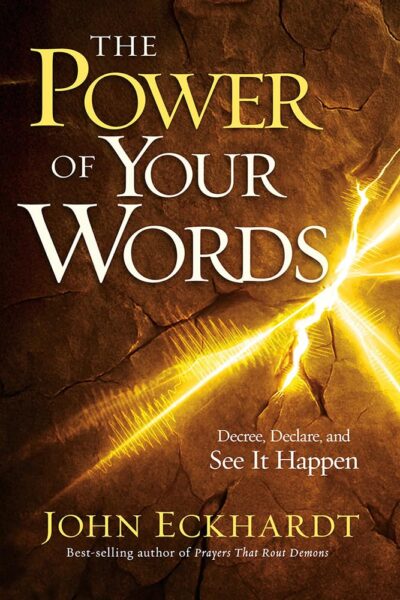
Pre-order John Eckhardt’s New Book, “The Power of Your Words” on Amazon.com!
Deliverance Is Often Progressive
Eckhardt said deliverance frequently mirrors Israel’s gradual conquest of Canaan. “Little by little will I drive them out,” he quoted. “Sometimes our deliverance comes as we also grow.”
Biblical Authority for Warfare
Key passages include:
- Mark 16:17 — Cast out devils
- Luke 10:19 — Authority over the enemy
- 2 Corinthians 10:4 — Spiritual weapons
- Ephesians 6:12 — Wrestling principalities and powers
Worley’s book provides warfare prayers built around these texts.
The Power of Renunciation
Worley emphasized verbal renunciation as a first step toward freedom. “By renouncing it, it tended to break the power of darkness,” Eckhardt said.
Believers renounced:
- Sexual sin
- Perversion
- Witchcraft
- Anger
- Addictions
- Habitual sin
How Warfare Prayer Confronts Darkness
Eckhardt outlined core strategies:
- Bind unclean spirits
- Loose God’s power and angelic help
- Command spirits to leave
- Declare Scripture
- Apply the blood of Jesus
“Demons hate the blood of Jesus,” he said. “They hate the Word.”
The Call to Return to Deliverance
Eckhardt’s teaching shows us a reality many churches overlook: deliverance is not optional for believers living in a spiritually hostile world. It is part of the ministry Jesus commanded, a weapon God designed and a work the Holy Spirit empowers. “These signs shall follow them that believe,” he said, pointing again to the foundational words of Christ. “In my name shall they cast out devils.”
For a generation facing anxiety, fear, addiction, trauma and spiritual confusion, the ministry of deliverance is more relevant—not less. Eckhardt’s message is a reminder that spiritual warfare is real, the enemy is organized and persistent, and believers are called to confront darkness with confidence.
Join Charisma Magazine Online to follow everything the Holy Spirit is doing around the world!
As he taught, the battle is not passive. It requires authority, discernment and boldness rooted in Scripture. And for those willing to step into it, the same freedom seen in the pages of the New Testament remains available today.
James Lasher, a seasoned writer and editor at Charisma Media, combines faith and storytelling with a background in journalism from Otterbein University and ministry experience in Guatemala and the LA Dream Center. A Marine Corps and Air Force veteran, he is the author of The Revelation of Jesus: A Common Man’s Commentary and a contributor to Charisma magazine.