

As Purim approaches, most remember the celebration. The costumes. The joy. The reading of the Book of Esther.
But Purim is not merely a holiday. It is a revelation.
It is the story of a decree of destruction reversed by the hidden hand of God. And according to Jonathan Cahn, it is also a pattern.
“Whatever was written before is for our instruction,” Cahn said, pointing to the apostle Paul’s words in Romans. The events of Esther, he argues, are not sealed in ancient Persia. They speak to the present.
Could the story of Haman be more than history?
The Rise of Haman
In Esther 3, Haman appears suddenly. He rises to power. He becomes second only to the king. A decree goes forth. Everyone must bow down.
“All the king’s servants who were with the king’s gate bowed down to him, paid homage to Haman,” Cahn recounted from the text.
Everyone except Mordecai.
Haman’s fury was not merely political. It was spiritual. Cahn identifies pride as the root.
“Behind the Haman is the enemy,” he said. “The enemy’s nature is pride. The exalting of oneself, the seeking of godhood.”
The pattern is ancient. The desire to ascend. The demand for homage. The rage when denied.
The Demand to Bow
Haman’s anger was ignited by one man who would not bow.
“Mordecai the Jew, it says, would not bow down to Haman. And Haman becomes enraged,” Cahn said.
The refusal of one believer exposed the insecurity of a tyrant.
According to Cahn, this pattern repeats whenever a culture demands conformity to values that replace God. The issue is not mere disagreement. It is allegiance.
“The spirit of Haman says everything bows down,” he said.
When a society removes God, Cahn argues, something else takes His place. The state. An ideology. A movement. Whatever fills the vacuum demands submission.
“When a culture or nation takes God out, it always ends up bowing down to other gods,” he said.
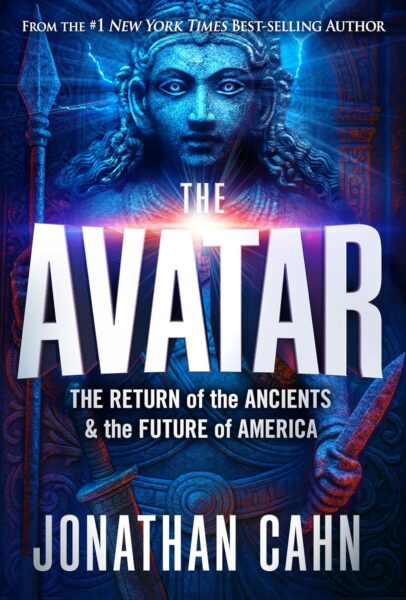
Order Jonathan Cahn’s New Book, “The Avatar” on Amazon.com!
Evil Masks Itself
Haman did not present his plan as genocide. He framed it as beneficial to the kingdom.
“There is a certain people scattered and dispersed among the peoples of your provinces. Their laws are different from those of other people. They don’t comply with the king’s laws,” Haman told the king, according to Esther.
Cahn points to the method.
“Evil always masks itself,” he said. “Satan appears as what? An angel of light.”
Throughout history, he notes, destructive agendas have often been wrapped in moral language. The pattern of concealment reveals the nature of the spirit behind it.
The War Against God’s People
Haman’s rage did not stop with Mordecai. It expanded to an entire people.
“Haman sought to annihilate all the Jews,” Cahn said.
Why such fury?
“The enemy hates the Jewish people,” he said. “Because God chose them as His witness.”
Through Israel came the Word of God. Through Israel came the Messiah. Through Israel comes the unfolding of redemptive history. To strike at Israel is, in Cahn’s theology, to strike at the purposes of God.
He argues that this hatred is not random but spiritual. The same spirit that sought to destroy the Jewish people in Persia has reappeared in different forms across centuries.
A Shadow of the Antichrist
Cahn connects Haman to a future figure described in Scripture.
“Haman is a shadow,” he said, “of one who is yet to come, who is called in the Bible the antichrist or the beast.”
The parallels are striking. A sudden rise. A demand for worship. A change of laws. Persecution of God’s people.
“Haman demanded worship. The antichrist will demand the world to worship him,” Cahn said.
Yet even this shadow carries the seed of its own defeat.
The Great Reversal
Purim is not ultimately about the threat. It is about the overturning.
The gallows built for Mordecai became the instrument of Haman’s own execution. The decree of destruction was countered by a decree of deliverance.
“God is on the throne,” Cahn declared.
He emphasized that evil may appear dominant for a season, but it cannot prevail.
“Evil may have its day, but no matter how powerful it looks, in the end, it will not last, it cannot prevail in the world, in our culture, or in your life,” he said.
For thousands of years, attempts to erase the Jewish people have failed. The pattern remains. The enemy rises. God reverses.
A Call Before Purim
As Purim draws near, the message is not fear but resolve.
“We are living in the days of Haman, the spirit of Haman, but we are not of him,” Cahn said. “We are of those who do not bow down.”
The story of Esther does not promise ease. It promises victory to those who stand.
Haman cast lots to determine the day of destruction. That day became a holiday celebrating deliverance.
The pattern endures.
The spirit that demands worship will fall. The people who refuse to bow will stand.
And Purim, once again, declares that the final word does not belong to Haman.
James Lasher, a seasoned writer and editor at Charisma Media, combines faith and storytelling with a background in journalism from Otterbein University and ministry experience in Guatemala and the LA Dream Center. A Marine Corps and Air Force veteran, he is the author of The Revelation of Jesus: A Common Man’s Commentary and a contributor to Charisma magazine. For interviews and media inquiries, please contact [email protected].