

A subtle but devastating lie has crept into much of modern Christianity, the idea that believers are meant to survive spiritual opposition rather than confront it. That lie produces timid prayers, defensive faith, and Christians who live as though spiritual resistance is something to endure rather than something to defeat.
In a recent clip from The Deep End w/Taylor Welch, Taylor Welch dismantles that mindset entirely, calling believers back to a biblical understanding of authority, dominion and offensive spiritual warfare.
“What happens when a believer gets convinced of their authority in what God is wanting to do?” Welch asks. “They begin to understand that it is actually offensive that the kingdom of darkness thought that they could do something to violate God’s supreme plan.”
That framing changes everything. Spiritual resistance is no longer something that causes fear or retreat. It is an act of defiance against God Himself, and it demands a response.
Saved to Be Used, Not to Hide
Welch confronts a version of Christianity that stops at personal salvation but never advances into purpose.
“It’s no longer I’m just like, ‘Dude, woe is me, like saved by the blood of Jesus,’” he says. “The Lord saved me so that He could use me.”
That distinction is critical. Salvation is not an endpoint. It is an authorization. Scripture is clear that believers are seated with Christ and empowered by Him, yet many live as though redemption merely grants them shelter rather than assignment.
Welch challenges that passivity head-on.
“I’m beginning to send the blood of Jesus into situations where they cannot survive contact.”
That is not poetic language. It is a declaration of warfare.
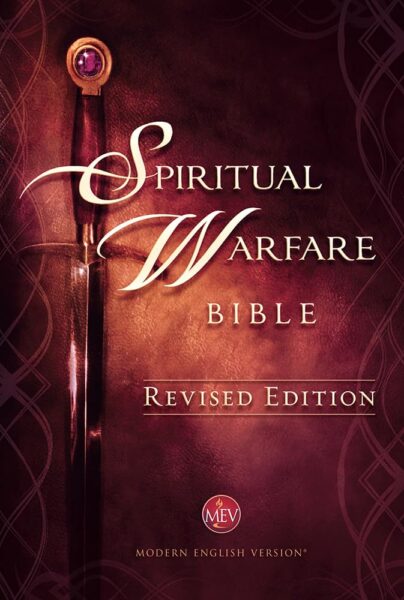
Order Your Copy of the Spiritual Warfare Bible on Amazon.com!
Offensive Warfare, Not Spiritual Self-Defense
One of the most striking aspects of Welch’s message is his rejection of defensive Christianity.
“Offensive warfare, not defensive,” he says plainly. “The Christian has got to stop trying to defend themselves from every little fly that’s floating around.”
Too often, Christians are consumed with protection prayers, constantly reacting to pressure instead of advancing God’s will. Welch argues that this posture misunderstands both authority and responsibility.
“If there is something that God is asking me to do and there’s an obstruction,” he says, “Lord, please send the blood of Jesus into that situation so that any spiritual villain, enemy or thief would begin to die.”
This is not fear-driven prayer. It is dominion-driven prayer.
No Mercy for What Defies God
Welch’s language becomes even more direct when addressing spiritual opposition.
“Rip their plans apart,” he declares. “Do not let them breathe anymore because they thought that they were bold enough and haughty enough to mock the Lord of Hosts.”
That statement alone shatters the modern tendency to soften spiritual warfare into vague encouragement. The Bible does not portray evil as something to negotiate with. It portrays it as something to be cast down, driven out and destroyed.
Welch continues, “Don’t let them function. Don’t let them survive this. Close the doors and lock them so that they must see how they have messed up.”
This is not cruelty. It is alignment with God’s justice and sovereignty.
David Didn’t Ask. He Acted.
Welch turns to David as a biblical example, rejecting the idea that faith is passive trust without confrontation.
“David is not like, ‘The Lord is my shepherd and so whatever He wants to have happen happens,’” Welch says. “No, he goes, ‘No, this is the Lord’s. You’ve made a mistake. You’ve crossed the line.’”
David did not plead. He declared.
“You have defied the plans of God,” Welch continues, paraphrasing David’s posture. “Therefore, I will cut your head off.”
That is biblical faith in action, bold, decisive and unafraid of confrontation.
Stop Begging. Start Warring.
Welch’s final challenge leaves no room for ambiguity.
“Stop begging God to save you,” he says. “Learn how to memorize Scripture. Learn how to come into your place as a chosen son or daughter and begin to do warfare.”
This is the conclusion every believer must face. Either Christianity is a powerless belief system meant to comfort us until heaven, or it is a kingdom mandate that authorizes believers to confront darkness here and now.
Welch makes his position clear. Believers do have authority over the devil and his minions, and the time for timid faith is over.
The enemy is not confused about his role. The only question left is whether the church will finally understand hers.
James Lasher, a seasoned writer and editor at Charisma Media, combines faith and storytelling with a background in journalism from Otterbein University and ministry experience in Guatemala and the LA Dream Center. A Marine Corps and Air Force veteran, he is the author of The Revelation of Jesus: A Common Man’s Commentary and a contributor to Charisma magazine.