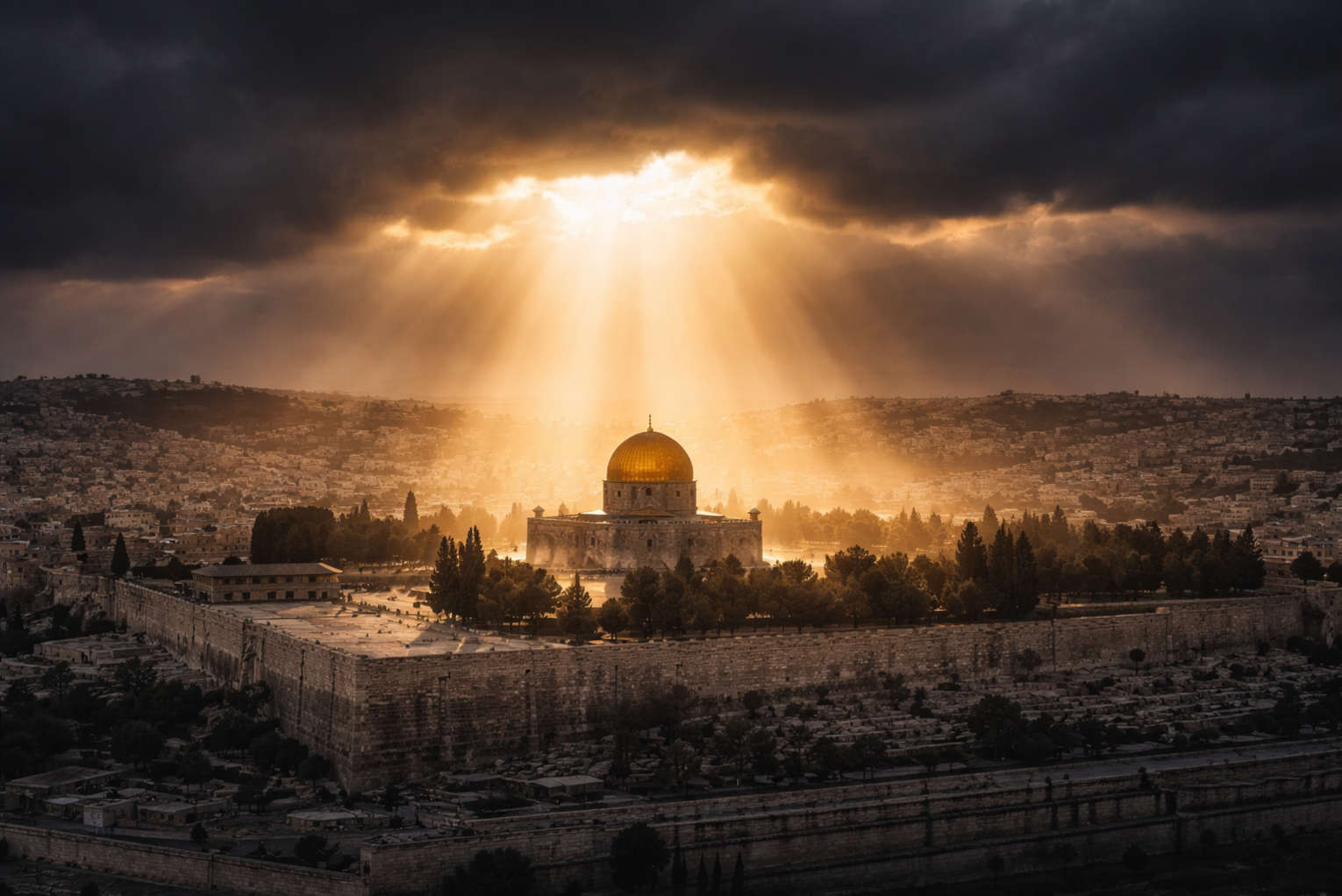

A historic change has taken place on the Temple Mount, marking the most significant shift in Jewish worship access at the site since Israel regained control of Jerusalem’s Old City in 1967.
Israeli police have allowed Jewish worshipers to ascend the Temple Mount carrying printed prayer sheets, a move that breaks with decades of enforcement tied to the long-standing status quo. The development was first reported by The Times of Israel and represents a major change in how worship restrictions are applied at Judaism’s holiest site.
For years, Jewish visitors were permitted to enter the Temple Mount under strict supervision but were barred from bringing any religious texts or prayer materials. Even silent prayer could result in removal or detention.
That line has now been crossed.
What Changed on the Mount
According to reporting by The Times of Israel, the change followed a request from the Temple Mount Yeshiva, which advocates for Jewish prayer at the site. Printed prayer sheets were distributed to Jewish visitors prior to ascent and allowed onto the Mount under police supervision.
The material included guidance for visiting the site, prayers recited before ascending and the Amidah prayer which is central to daily Jewish worship.
Police confirmed the decision was deliberate and regulated.
“In order to maintain the existing order, it was determined that the use of these sheets would be limited solely to specific areas defined by the police,” officers said.
While restrictions remain in place regarding where prayer may occur, the approval of printed liturgy represents a step that had previously been off-limits.
A Clear Departure From Past Enforcement
The Temple Mount is the location of the First and Second Jewish Temples and has been under Israeli security control since 1967. Administrative oversight was transferred to the Jordanian-backed Islamic Waqf following Israel’s victory in the Six-Day War under agreements that sharply limited non-Muslim worship.
As The Times of Israel reported, non-Muslim prayer was effectively forbidden under those arrangements, with police routinely ejecting or detaining Jewish visitors caught praying.
That enforcement has steadily eroded in recent years. Jewish prayer on the Mount has increasingly been tolerated, including audible prayer and physical acts of worship such as bowing and prostration in designated areas. However, prayer items such as tefillin prayer shawls and printed texts remained prohibited until now.
The allowance of printed prayer sheets marks a decisive shift from tolerance to structured permission.
Prophetic Significance: Conditions Are Being Set
Biblical prophecy places the Temple in Jerusalem at the center of end-times events. The Temple is not symbolic. It is physical. Its location is fixed. Its restoration requires conditions on the ground that make worship possible.
Those conditions are now being established.
The progression is unmistakable. Jewish prayer once banned is now permitted. Prayer once forced into silence is now audible. Worship once hidden is now visible. And prayer once stripped of liturgy is now accompanied by printed texts approved by the state.
This is preparation.
Prophecy does not require the Temple to be rebuilt in a single moment. It requires access authority and normalization of worship on the site itself. Each restriction removed brings the ground closer to readiness.
What was once enforced by arrest is now managed by policy. What was once politically untouchable is now administered by police guidelines. The shift is structural and irreversible.
The Temple Mount has always functioned as a prophetic barometer. When worship advances there history moves with it. The Temple has not yet been rebuilt but the obstacles that once made its restoration impossible are being dismantled in real time.
Jerusalem remains the focal point of God’s redemptive timeline. And on the Temple Mount, what was once forbidden is now permitted — step by deliberate step.
James Lasher, a seasoned writer and editor at Charisma Media, combines faith and storytelling with a background in journalism from Otterbein University and ministry experience in Guatemala and the LA Dream Center. A Marine Corps and Air Force veteran, he is the author of The Revelation of Jesus: A Common Man’s Commentary and a contributor to Charisma magazine.