
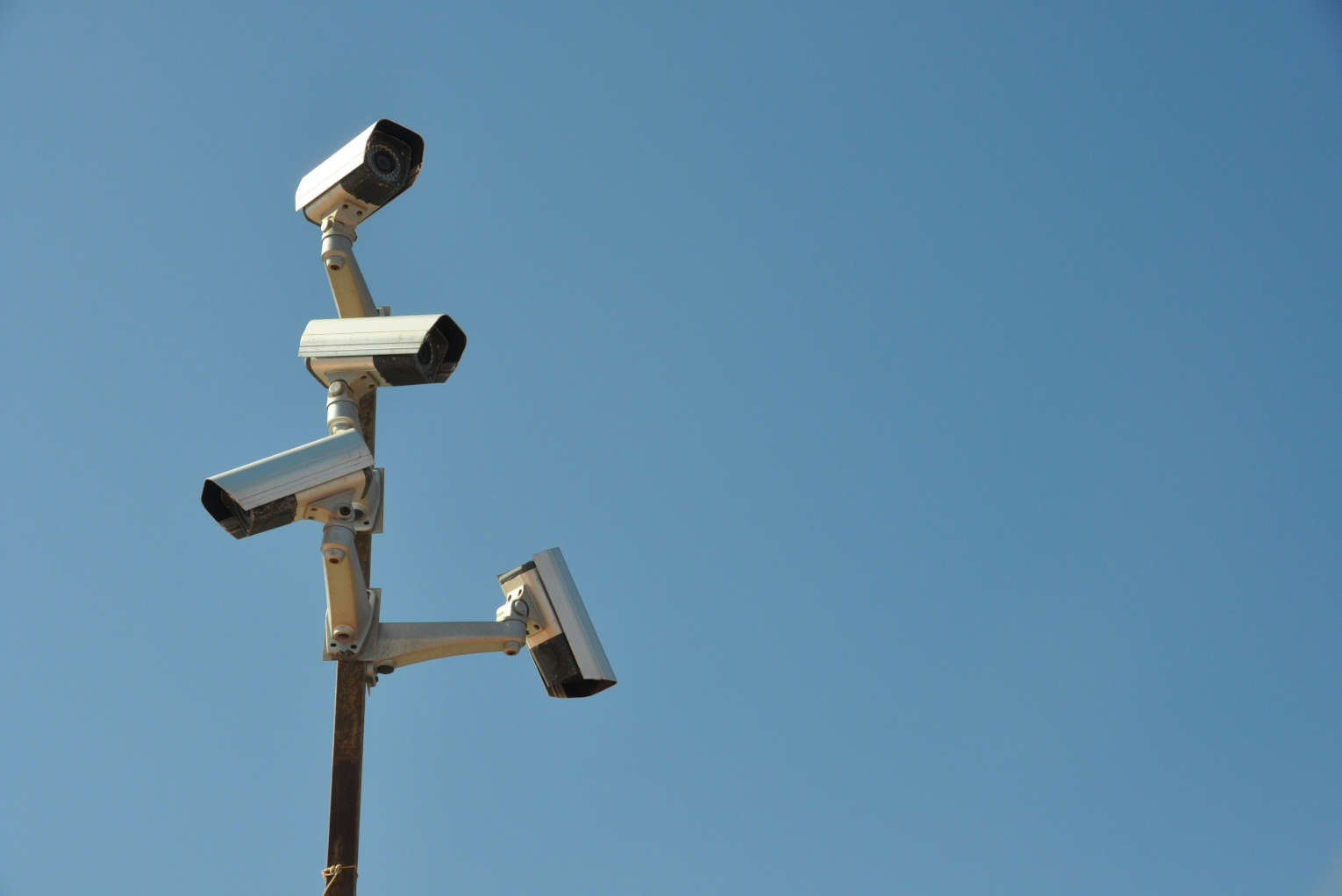

Britain’s plan to expand facial recognition cameras nationwide marks a decisive shift in the rise of technological governance. The proposal establishes a broad network of biometric surveillance that will cover cities, towns and rural communities. Real-time scans will link directly to national databases, allowing authorities to identify and track individuals with greater precision than ever before.
Critics have already revived the phrase “Big Brother Britain,” a reminder that Orwell’s warnings in 1984 were not abstract fiction but an early description of the world now forming.
The new policy includes laws that give police access to passport photos, driver’s license images and other civilian records to identify people as they move through public spaces. Cameras will be stationed at shopping centers, stadiums, transportation hubs and any location deemed strategically necessary. Behind the scenes, civil servants are building a national facial recognition platform capable of searching millions of images from custody files, immigration records and missing persons databases.
The scope is unprecedented in British history.
These developments mirror the global monitoring structure described by biblical prophecy.
The world system that will rise in the end times requires comprehensive identification and the ability to track every person within its reach. Digital identity, biometric enforcement and centralized databases create the framework for a society where participation can be managed from a single point of authority. The model outlined for this future global order is the Beast System, and the technologies emerging today align with that design.

Order James Lasher’s New Book, “The Revelation of Jesus” on Amazon.com!
Orwell warned that a society conditioned to accept surveillance eventually forgets what freedom looks like. Britain’s debate no longer centers on whether such tools should exist. The focus has shifted to how far they should extend and what limits, if any, should be applied.
Public consultations now focus on oversight protocols rather than on preserving anonymity. Once a culture embraces constant monitoring as a legitimate function of government, the groundwork for total control is already in place.
Prophecy describes a world in which daily life is regulated through identification with and compliance with a centralized authority. Such a system cannot appear suddenly. It must be assembled incrementally, justified step by step as necessary for safety, efficiency or order. Britain’s expansion of facial recognition follows this pattern precisely. Mandatory digital identity, live biometric tracking and cross-referenced national databases form the early structure of a future global governance apparatus.
Law enforcement leaders emphasize the technology’s accuracy, as reported by Daily Mail.
Tests report one false match per 33,000 scans. Scotland Yard has already used live facial recognition to arrest more than 1,300 suspects in two years. Officials argue that the system represents the most significant advancement in criminal detection since DNA matching and insist it has already removed dangerous offenders from public streets. The appeal to public safety has become the engine behind each new expansion of surveillance power.
Civil liberties advocates warn that the same tools used to catch criminals can easily be repurposed to monitor the general population. The Equality and Human Rights Commission has already determined that the Metropolitan Police’s current deployment of facial recognition is unlawful. Former Shadow Home Secretary David Davis cautioned that the government is steadily eroding fundamental freedoms through technological means. His concerns reflect a broader reality. The transition from democratic oversight to centralized digital control is no longer hypothetical. It is emerging in real time.
The convergence between technological policy, prophetic expectation and secular warnings has become unmistakable. A modern government is constructing the very infrastructure described in biblical prophecy. The culture once warned by Orwell about the dangers of total surveillance now accepts it as progress. The rise of a surveillance state is no longer a prediction. It is an observable development advancing through legislation, technology and cultural acceptance.
The rise of a surveillance society was once a theoretical concern. It is now a policy discussion. And the world is moving toward the culmination that Scripture has already described.
James Lasher, a seasoned writer and editor at Charisma Media, combines faith and storytelling with a background in journalism from Otterbein University and ministry experience in Guatemala and the LA Dream Center. A Marine Corps and Air Force veteran, he is the author of The Revelation of Jesus: A Common Man’s Commentary and a contributor to Charisma magazine.