
A remarkable archaeological discovery in Egypt is shedding new light on the roots of early Christianity, offering a tangible reminder of a faith that once thrived in simplicity, devotion and spiritual discipline.
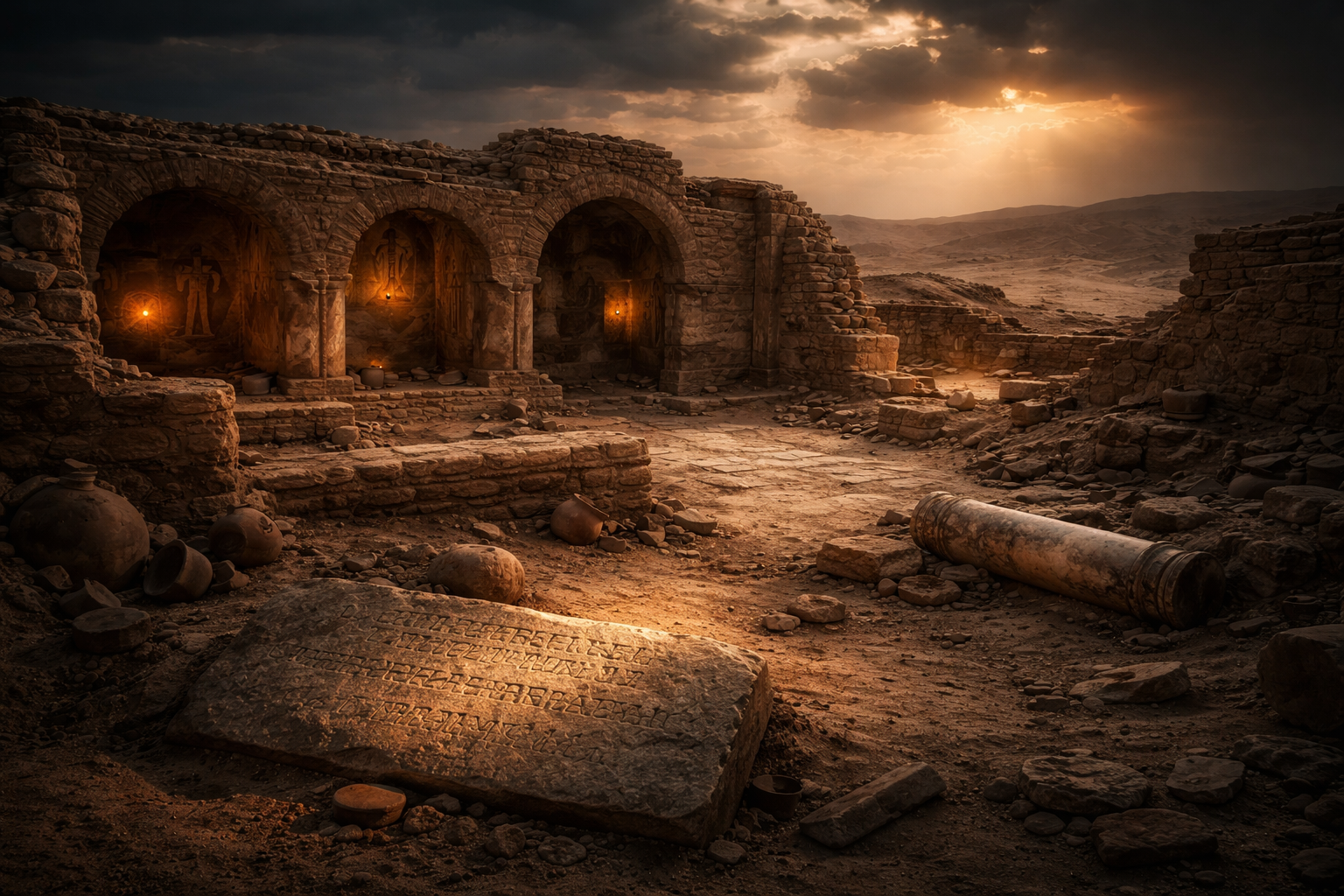
According to Fox News, archaeologists have uncovered a 1,600-year-old Christian monastic site in the Qallaya area of Egypt’s Beheira Governorate, dating back to the 5th century A.D. The site is believed to be part of the early development of Coptic monasticism, one of the oldest organized expressions of Christian communal life.
A Window Into Early Christian Devotion
The structure is believed to have served as a guesthouse, featuring 13 rooms for hospitality, teaching and daily living. The layout provides rare insight into how early believers balanced community life with spiritual pursuit.

To order Dinesh D’Souza’s new book, The End of Time, visit Amazon.com.
As reported by Fox News, the site dates to around the 5th century A.D., a time when Egypt stood as a global center for Christian monasticism. The discovery suggests a transition from isolated asceticism to more structured, semi-communal living, reflecting the early church’s maturation in both organization and mission.
Art, Inscriptions and Daily Life
Among the most compelling findings are wall paintings and decorative elements, offering a glimpse into early Coptic Christian art and symbolism. Pottery fragments adorned with plant motifs, geometric patterns and Coptic letters were also uncovered, pointing to a vibrant yet disciplined community life.
As Greek City Times reported, one of the most intriguing discoveries is a Greek inscription that may read, “Abba Kir, son of Shenouda.” It is believed to potentially be a tombstone.
Additional artifacts—including a marble column, animal and bird bones, and oyster shells—provide clues to the monks’ daily routines and diet.
Echoes of Acts and the Early Church
This discovery is more than historical—it is deeply spiritual.
The communal rhythm of life revealed at this site mirrors what Scripture describes in the early church. In Acts 2:42, believers are said to have devoted themselves “to the apostles’ teaching and to fellowship, to the breaking of bread and to prayer.”
The structure uncovered in Egypt reflects that same pattern—teaching, hospitality and shared life centered around faith.
These early monks were not chasing comfort or cultural influence. They were pursuing holiness.
In a world increasingly distracted by noise and compromise, this ancient site stands as a quiet but powerful rebuke—and invitation.
The early monastics understood something many today have forgotten: intimacy with God often requires separation from the distractions of the world. While not all are called to the desert, every believer is called to devotion.
Abby Trivett is a writer and editor for Charisma Media and has a passion for sharing the gospel through the written word. She holds two degrees from Regent University, a B.A. in Communication with a concentration in Journalism and a Master of Arts in Journalism. She is the author of the upcoming book, The Power of Suddenly: Discover How God Can Change Everything in a Moment. For interviews and media inquiries, please contact [email protected].