

Alzheimer’s disease has long been one of the most heartbreaking diagnoses a family can receive. It slowly steals memories, names, conversations and, eventually, the very people loved ones have known for decades. But new research is offering fresh hope that the disease’s relentless progression may one day be slowed in a way scientists have pursued for years.
At the Alzheimer’s Association International Conference, researchers presented encouraging Phase 2 clinical trial data on an experimental drug called diranersen, a gene-silencing therapy developed by Biogen that targets the tau protein—a hallmark of Alzheimer’s disease that many scientists believe is closely linked to the brain’s progressive degeneration. Unlike currently approved Alzheimer’s therapies that primarily target amyloid plaques, diranersen is designed to reduce the production of tau. This toxic protein forms tangles inside neurons and is closely associated with cognitive decline.
According to researchers, the study involving approximately 416 people with early Alzheimer’s disease found that the therapy reduced tau levels by roughly 50% to 65%, depending on the dose administered. Even more surprising, the lowest dose produced the strongest cognitive benefit, slowing decline by about 26% on one major clinical assessment while demonstrating improvement across five of six cognitive measures, Reuters reported.
For families who have watched loved ones slowly disappear behind the devastating effects of Alzheimer’s, those findings represent more than encouraging statistics. They offer another glimpse into the possibility that the course of this devastating disease may one day be altered.
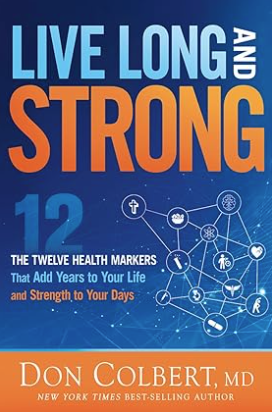
To order Don Colbert’s new book, Live Long and Strong, visit Amazon.com.
The Daily Mail highlighted expert interpretations suggesting the therapy could potentially delay Alzheimer’s progression by as much as three years if larger clinical trials confirm the findings. The publication also emphasized substantial reductions in disease-related biomarkers. However, researchers presenting the Phase 2 data stopped short of making definitive claims about delaying the disease by a specific number of years, instead emphasizing that additional studies are needed before those projections can be confirmed.
Researchers and Alzheimer’s experts described the findings as some of the strongest evidence to date that targeting tau biology could help slow Alzheimer’s progression.
Another encouraging aspect of the study was its safety profile. Unlike several currently approved amyloid-targeting therapies that carry the risk of brain swelling, known as ARIA, researchers reported no cases of ARIA among participants receiving diranersen during the Phase 2 trial, Reuters reported.
Scientists are nevertheless urging caution alongside optimism. Although the study produced promising biological and cognitive results, it did not meet one of its primary statistical endpoints because the higher doses failed to outperform the lowest dose, contrary to researchers’ expectations. As a result, larger Phase 3 clinical trials will be necessary before regulators can determine whether the therapy is safe and effective enough for approval.
Medical breakthroughs rarely arrive overnight. They are built through years of careful research, perseverance and rigorous testing. While diranersen remains an investigational treatment, these latest findings suggest researchers may be entering an important new chapter in the fight against one of the world’s most devastating neurological diseases.
For the millions of families living with Alzheimer’s today, every advance matters. And if future Phase 3 trials confirm these encouraging results, targeting tau could represent a significant shift in how scientists seek to slow a disease that has long seemed relentless.
The promise of preserving memories, extending independence and offering hope to future generations remains a goal that continues to drive researchers—and one that families around the world are watching with great anticipation.
Abby Trivett is a writer and editor for Charisma Media and has a passion for sharing the gospel through the written word. She holds two degrees from Regent University, a B.A. in Communication with a concentration in Journalism and a Master of Arts in Journalism. She is the author of the newly released book, The Power of Suddenly: Discover How God Can Change Everything in a Moment. For interviews and media inquiries, please contact [email protected].
