
Quebec’s sweeping new secularism bill is more than a political flashpoint. It reflects a growing international movement to restrict public expressions of faith—one that mirrors the very conditions Scripture warns will emerge before the return of Jesus. As Western governments limit prayer, regulate conscience and push Christianity out of public life, the prophetic implications are becoming increasingly difficult to ignore.
The province’s new Bill 9 “bans prayer in public institutions, including in colleges and universities” and extends the prohibition to “communal prayer on public roads and in parks,” with fines of C$1,125 for violating the rules. Only short, pre-approved events qualify for exemption. These restrictions mark one of the most aggressive secular policies enacted in North America in recent years.
Quebec’s secularism minister, Jean-François Roberge, defended the measure by criticizing the use of prayer rooms and public gatherings near sacred spaces. Institutions, he said, “are not temples or churches or those kinds of places.” He argued that recent demonstrations crossed a line, adding that it was “shocking to see people blocking traffic, taking possession of the public space without a permit, without warning, and then turning our streets, our parks, our public squares into places of worship.”
Order Jonathan Cahn’s New Book, “The Avatar” on Amazon.com!
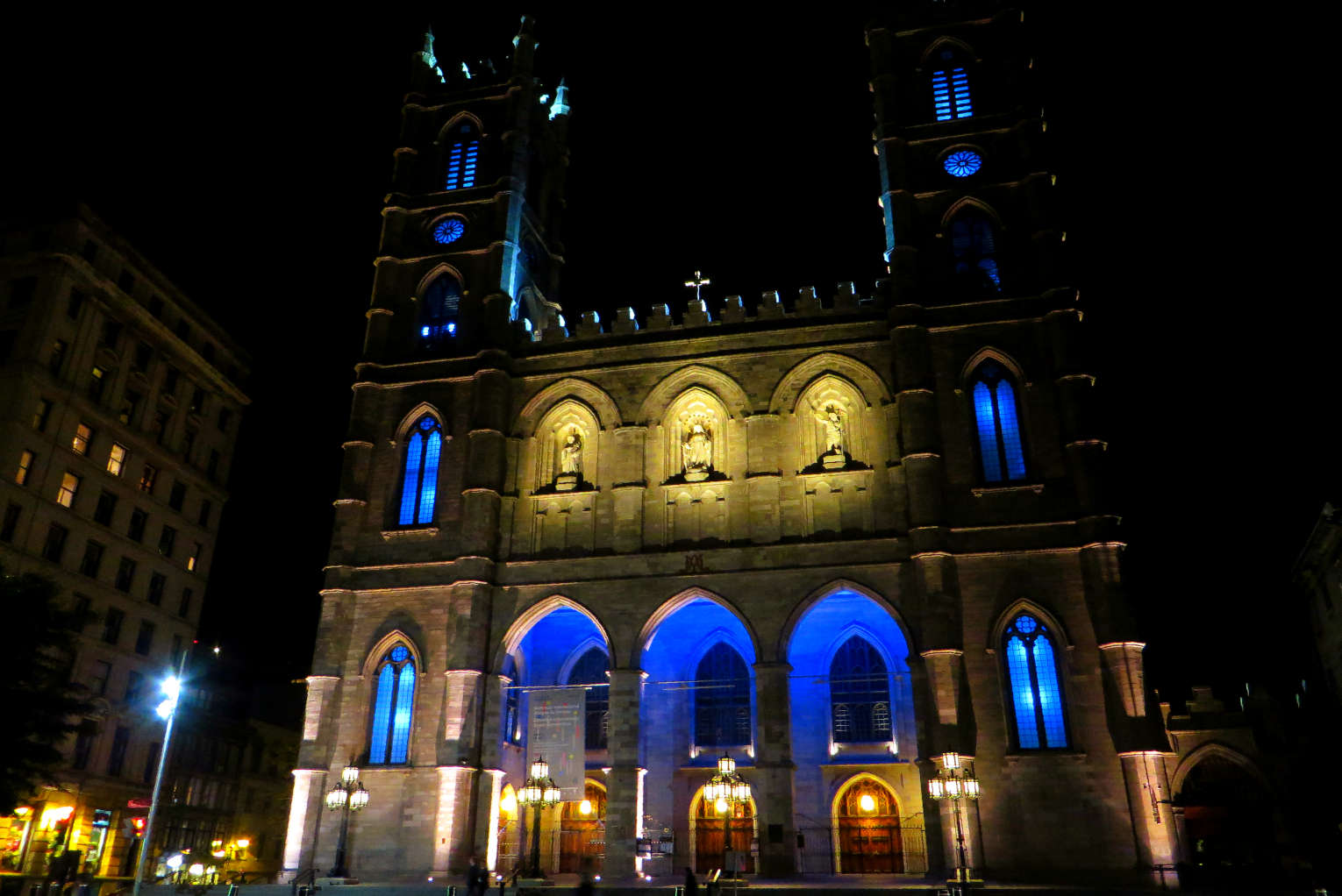
Yet the incident used to justify the ban did not take place outside a mosque—it occurred outside Notre-Dame Basilica, one of Canada’s most iconic Christian churches. Despite this, much of the public discussion has emphasized Muslim concerns while minimizing how directly the bill affects Christians. Quebec’s Catholic bishops stated the legislation would be a “radical infringement on the rights and freedoms of the Quebec population.” They noted the government “has not demonstrated the need for such legislation.”
This trend is not isolated. In the United Kingdom, several Christians have been arrested for nothing more than silent prayer near abortion clinics. These individuals did not preach, hold signs or engage with anyone. In some cases, the only “evidence” against them was an officer’s belief that they might be praying internally. Such actions reveal a government willing not only to control public prayer but to monitor the private thoughts of citizens when those thoughts are directed toward God.
These developments align with the trajectory Scripture describes: a world increasingly resistant to biblical truth, hostile toward the name of Jesus and willing to regulate or punish those who live out their faith openly. Jesus warned that nations would oppose His name. The early church faced orders “not to speak at all nor teach in the name of Jesus.”
The modern shift is following the same pattern—restrict prayer, limit Scripture, pressure believers into silence.
Quebec’s bill does not explicitly ban Christianity or outlaw the Bible, but the direction is unmistakable. Once governments assume the authority to dictate where prayer may occur, the following steps naturally involve regulating what may be said, who may gather and which beliefs are permitted in public life. When silent prayer is treated as a criminal act in the UK and public prayer is fined in Canada, it becomes clear that Western societies are moving toward a model where biblical conviction is no longer tolerated.
Roberge claims, “We have the same rules applying to everyone.”
In practice, the burden falls most heavily on Christians, whose traditions involve public worship, communal prayer, chaplaincy spaces, evangelism and visible expressions of faith. Limiting kosher and halal meals may gain headlines, but banning prayer in front of churches strikes at the heart of Christian life.
The convergence of these events signals a turning point. As governments redefine the boundaries of acceptable faith, the pressure to remove Scripture, restrict Christian speech and sideline the name of Jesus will only intensify. The world is rapidly shifting in ways that match the warnings recorded in the Bible.
The task now is to recognize the moment and respond with clarity and conviction.
James Lasher, a seasoned writer and editor at Charisma Media, combines faith and storytelling with a background in journalism from Otterbein University and ministry experience in Guatemala and the LA Dream Center. A Marine Corps and Air Force veteran, he is the author of The Revelation of Jesus: A Common Man’s Commentary and a contributor to Charisma magazine.