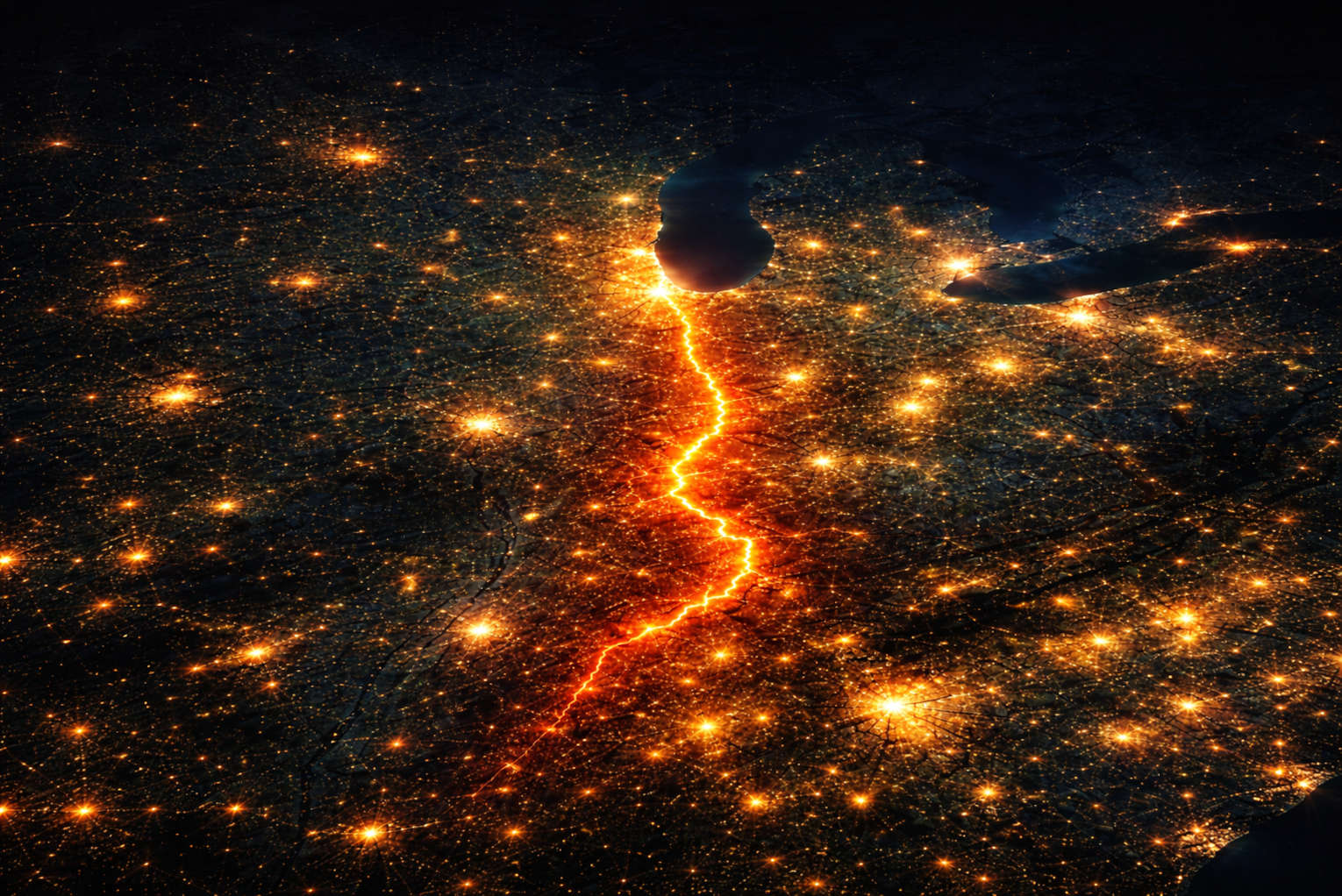

A small earthquake rattled central Illinois this week, and for many people, it did exactly what earthquakes tend to do in the Midwest: It got their attention.
The 3.8-magnitude quake struck just after 1:30 a.m. near Ohlman, according to the U.S. Geological Survey. It was shallow, widely felt and, importantly, caused no damage or injuries. For a region not accustomed to frequent seismic activity, it was enough to spark late-night texts, social media chatter and inevitable questions about whether something bigger might be coming.
To be clear, earthquakes of this size are not unheard of in Illinois. They are uncommon, but not rare. Quakes in the low-to-mid 3 range happen occasionally and are often felt precisely because they occur close to the surface. In other words, a tremor like this does not automatically signal a looming disaster.
Still, it is understandable why events like this cause some Christians to pause, especially when the shaking occurs in proximity to the New Madrid Seismic Zone, one of the most studied fault systems in North America.
For decades, that fault line has been associated not only with scientific concern but also with prophetic discussion, most notably by Bob Jones.
Order Amanda Grace’s New Book, “Brace For Impact” on Amazon.com!
Jones famously spoke of a future, catastrophic earthquake along the New Madrid Fault, describing a vision in which the fault was being restrained until an appointed time. In his prophecy, he warned of massive destruction, altered waterways and cities profoundly impacted.
Those words resurface almost every time the ground shakes in the Midwest.
This is where discernment matters.
Scripture does not call believers to panic at every tremor, nor does it instruct them to dismiss signs outright. Jesus Himself said there would be “earthquakes in various places” (Matt. 24:7), yet He also warned against assuming every disturbance meant the end had immediately arrived. Discernment lives in the tension between awareness and restraint.
Not every earthquake is prophetic. Not every tremor is a harbinger of judgment. Treating every natural event as a cataclysmic signal risks dulling spiritual sensitivity rather than sharpening it.
At the same time, discernment does not mean indifference. The times we live in are marked by global instability, moral confusion and increasing pressure on biblical truth. In that context, even small events can serve as reminders, not of fear, but of fragility. They remind us that creation groans, that human systems are not as stable as they appear and that Scripture consistently calls God’s people to be watchful.
The Illinois quake should be understood for what it was: a minor seismic event in a region with a documented history of occasional earthquakes. But it can also function as a moment of reflection. Not reflection rooted in sensationalism, but in sober awareness.
Discernment asks better questions. What does Scripture say about the season we are in? Are we anchored in truth or driven by headlines? Are we watching with wisdom, or reacting with fear?
The ground may shake from time to time. Our response should not be panic, nor dismissal, but clarity.
James Lasher, a seasoned writer and editor at Charisma Media, combines faith and storytelling with a background in journalism from Otterbein University and ministry experience in Guatemala and the LA Dream Center. A Marine Corps and Air Force veteran, he is the author of The Revelation of Jesus: A Common Man’s Commentary and a contributor to Charisma magazine.