
Pope Leo XIV made a striking claim during his Palm Sunday homily in St. Peter’s Square this week. “Brothers and sisters, this is our God: Jesus, King of Peace, who rejects war, whom no one can use to justify war,” he declared. “He does not listen to the prayers of those who wage war, but rejects them, saying: ‘Even though you make many prayers, I will not listen: your hands are full of blood.'”
The ‘Holy Father’ has this wrong.
The God of the Bible is a God of peace. He is also a God of righteous war. These are not contradictions. They are two expressions of the same holy character.
Start at the beginning. The conquest of the Promised Land was a divine mandate. God told Joshua to take the land and fought alongside Israel to make it happen. The reign of David, the man after God’s own heart, was defined by warfare. God didn’t rebuke David for fighting. He made him king, called him blessed and wrote his victories into the permanent record of Scripture.
But the Pope’s framing has a far bigger problem, and it is found in the very book that defines Christian eschatology: Revelation.
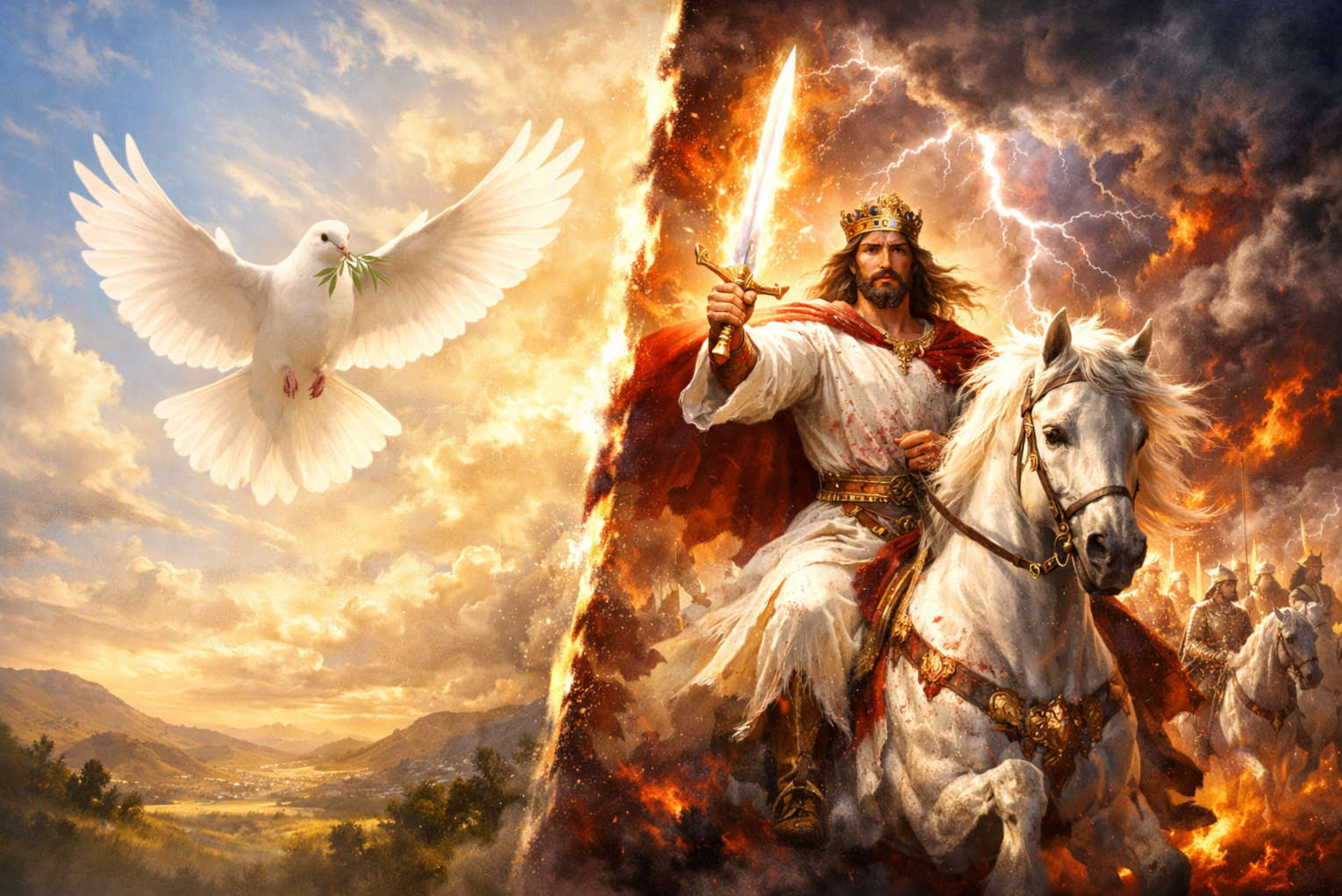
In Revelation 19, Christ does not return as a pacifist. He returns as a warrior king. His eyes are flames of fire. His robe is dipped in blood. He strikes down nations. He treads the winepress of the fury of the wrath of God Almighty. He wages war and He wins.
And Scripture does not soften what that victory looks like. Revelation 19:21 states it plainly: “The remnant were slain with the sword which proceeded out of the mouth of Him who sat on the horse. And all the birds gorged themselves with their flesh.”
That is not the language of a God who categorically rejects war. That is the language of total, righteous, decisive judgment. The birds of the earth feast on the bodies of those who stood against the King of Kings. This is the Word of God, recorded by John, unchanged and unambiguous.
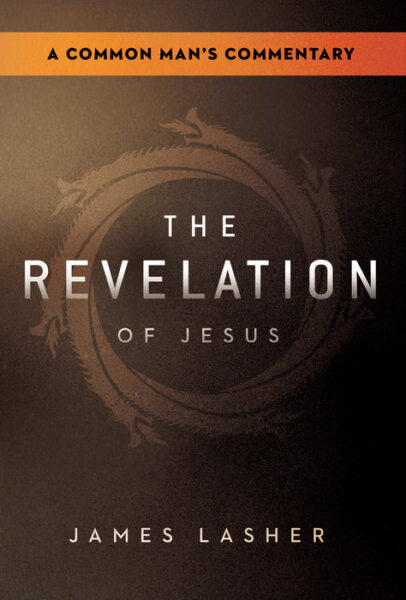
Order James Lasher’s New Book, “The Revelation of Jesus” on Amazon.com!
This is the literal return of Jesus Christ, foretold by Jesus Himself, recorded by John on Patmos. It is the capstone of biblical prophecy.
The context of that return matters. Israel, the chosen people of God, is surrounded. The armies of the Antichrist have converged on Jerusalem. The forces of Satan appear on the verge of victory. Then Christ arrives and the battle ends before it begins.
This matters now. As the AP reported, Leo “prayed especially for Christians in the Middle East who are suffering the consequences of an atrocious conflict. In many cases, they cannot live fully the rites of these holy days.” The events surrounding that prayer — a war between the U.S. and Iran in its second month, the Church of the Holy Sepulchre in Jerusalem blocked by Israeli police in what the Patriarchate called “the first time in centuries” — are not merely geopolitical crises. They are the fulfillment of biblical prophecy unfolding in real time.
Jerusalem. The Temple Mount. Israel surrounded by enemies. Jesus told us to watch for these signs. Paul told us to watch for them. John recorded them in precise detail. The roadmap has been in Scripture for 2,000 years and we are watching it execute.
The Catholic Church does not hold to a literal end-times theology timeline. That is a well-documented divide between Catholic tradition and evangelical and Protestant Christianity. Leo is speaking from within that framework. But that framework omits the defining act of Christ’s return, which is a war.
When Leo says God “rejects war” categorically, he is taking one facet of God’s character and presenting it as the whole. The God who commanded Joshua. The God who drowned Pharaoh’s army in the Red Sea. The God who rides out on a white horse to crush the armies of the earth at Armageddon — that God does not reject all war in all circumstances. He ordains it when His purposes demand it.
The relevant question has never been whether war exists. It is whether a war is just and whether it aligns with the will of God. Leaders who use Scripture as a political prop to dress up their own ambitions deserve the criticism Leo gives them. On that narrow point, he is right.
But the sweeping declaration that God does not hear the prayers of those who wage war cannot be reconciled with the full testimony of Scripture.
The King of Kings is coming back. When He does, He will not be holding an olive branch.
James Lasher, a seasoned writer and editor at Charisma Media, combines faith and storytelling with a background in journalism from Otterbein University and ministry experience in Guatemala and the LA Dream Center. A Marine Corps and Air Force veteran, he is the author of The Revelation of Jesus: A Common Man’s Commentary and a contributor to Charisma magazine. For interviews and media inquiries, please contact [email protected].