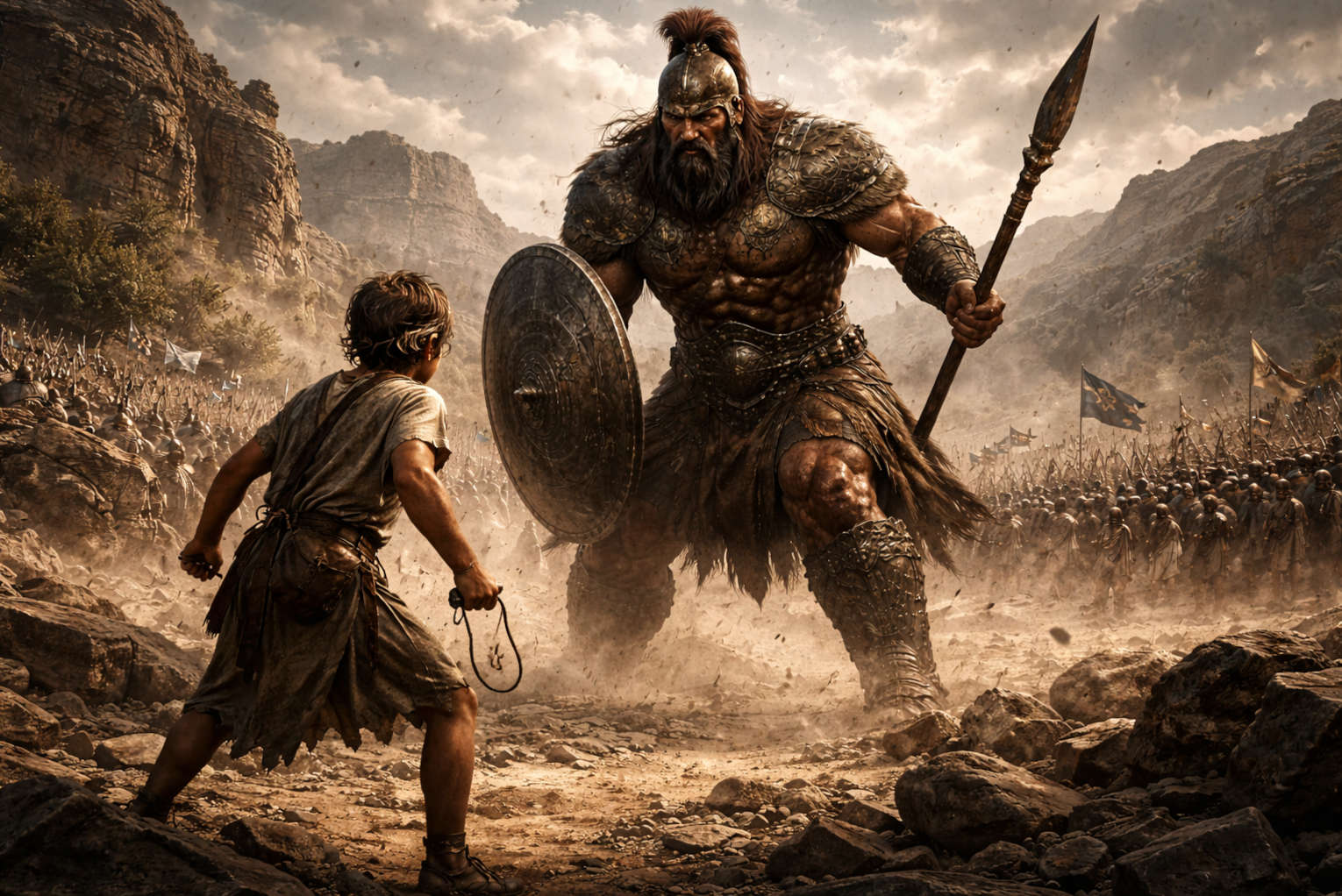

The wind moves quietly across Tel Hebron, brushing against massive stone foundations that have stood for thousands of years. Beneath layers of earth and conflict lies a city Scripture once described as the stronghold of giants. For generations, skeptics dismissed those accounts as legend. But as excavation resumes at the ancient site also known as Kiriath Arba, the stones themselves are forcing a second look.
Joshua and Caleb Colson, known as the Bearded Bible Bros, recently stood among those ruins and traced the biblical narrative through the terrain. What they found was not a mythic backdrop but a fortified city whose scale commands attention.
Cyclopean Walls and Fortified Towers
The brothers walk along the base of towering stone walls that archaeologists date to the Middle Bronze Age. Some of the remaining foundations rise nearly seven meters high. They point out the thickness of the construction, the placement of defensive towers and the layered architecture that reveals centuries of occupation.
These are not the fragile remnants of a nomadic settlement. The city was built for defense. The brothers note that Scripture describes Hebron as a place of large fortified cities ruled by the Anakim. Standing at the base of those stones, the question becomes unavoidable. What kind of inhabitants required fortifications of that magnitude?
The Anakim in the Land
The Bible records that Caleb, at 85 years old, requested this very mountain as his inheritance. In Joshua 14:12 he declares, “Now therefore give me this mountain of which the Lord spoke in that day; for you heard in that day how the Anakim were there, and that the cities were great and fortified.”
The Colsons recount how Caleb did not shrink back from the reputation of the giants. The text names three sons of Anak driven out from Hebron. The brothers describe the setting not as symbolic terrain but as a real battlefield. The fortified remains reinforce the gravity of that confrontation. This was not poetic imagery. It was a stronghold.
Mikvahs and Ancient Presence
Nearby, carved into the ground, are ritual immersion baths known as mikvahs. The brothers pause to examine them, explaining how such structures point to established Jewish life rooted in covenant practice. These baths were used for ritual cleansing before entering sacred space. Their presence ties the location to longstanding worship patterns described in Scripture.
Archaeological layers at the site align with the biblical timeline of the conquest. The acropolis area remains largely unexcavated, yet plans are underway to explore what lies beneath. Each layer uncovered adds texture to the record, connecting text to terrain.
As the sun lowers over Hebron, the ruins do not offer spectacle. They offer weight. The walls still stand where the Anakim once ruled. The mountain Caleb claimed remains visible on the horizon. What was once dismissed as allegory now rests in stone. The land is not telling a new story. It is reminding the world of one already written.
James Lasher, a seasoned writer and editor at Charisma Media, combines faith and storytelling with a background in journalism from Otterbein University and ministry experience in Guatemala and the LA Dream Center. A Marine Corps and Air Force veteran, he is the author of The Revelation of Jesus: A Common Man’s Commentary and a contributor to Charisma magazine. For interviews and media inquiries, please contact [email protected].