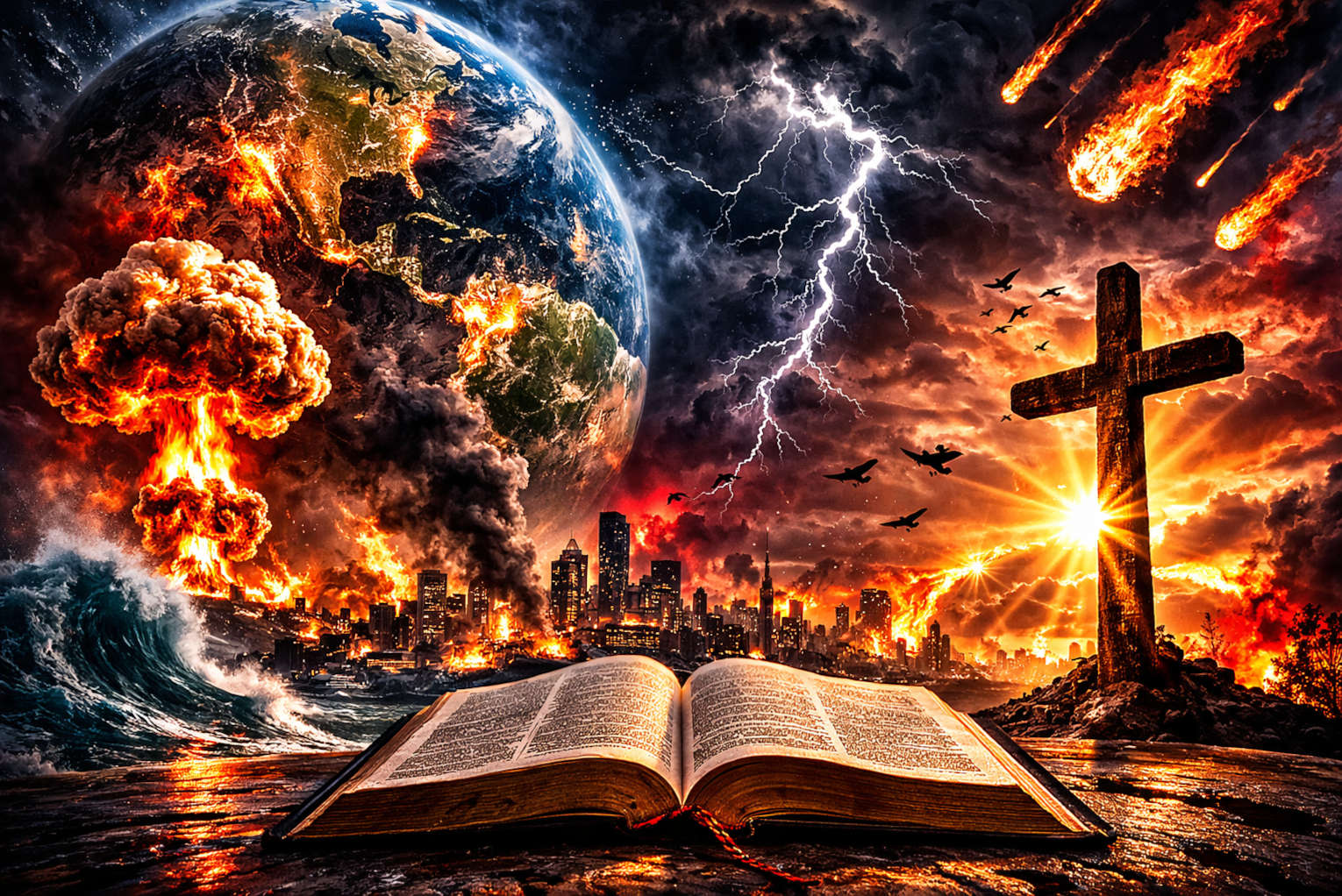

A new psychological study claims belief in the end of the world is no longer fringe thinking in America. Researchers say roughly one-third of the country believes humanity is living in the final chapter of history.
For students of Bible prophecy this discovery comes as no surprise. Scripture laid out the trajectory of the world thousands of years ago. What modern researchers are now measuring through surveys and statistics reflects what the Bible has declared all along.
StudyFinds reported that “between 29% and 39% of Americans believe they are currently living in the end times.” It also found that “about one in three Americans in the study’s sample believed the world would end within their own lifetime.”
Researchers surveyed more than 1,400 Americans from multiple religious backgrounds and concluded that apocalyptic thinking is not limited to fringe groups.
“That is not a fringe position held by a handful of doomsday cults,” the article explains. “It cuts across Evangelical congregations, climate activist circles, Silicon Valley boardrooms, and rural prepper communities alike.”

Order Mark Biltz’s New Book, “The Final Tyrant” on Amazon.com!
A World Sensing Something Is Coming
The researchers attempted to categorize how people think about the end of the world. Their framework measured beliefs about how soon the end will occur, who will cause it and whether the end is something people fear or welcome.
The article states that “apocalyptic thinking is neither a fringe preoccupation nor a purely spiritual abstraction. It is a measurable psychological force.”
People across society recognize that the world appears to be moving toward a climactic moment. Some blame climate change. Others warn about nuclear war, economic collapse or artificial intelligence.
Yet the Bible already described a world marked by growing turmoil, deception and global instability before the return of Jesus Christ.
While modern culture searches for explanations in politics, science and technology, the prophetic outline of history has existed for millennia.
The Explanation Researchers Missed
The study also found that beliefs about the end of the world strongly influence how people respond to global threats. End-times belief explained “roughly 15% of the variation in how severely people perceived global threats,” far more than political ideology.
One result left researchers puzzled. People who believed the apocalypse would ultimately be a good thing still supported extreme efforts to prevent global catastrophe.
“If someone thinks the apocalypse is a welcome event, why work so hard to stop it?” the article asks.
Scripture provides the answer.
The words of Jesus, the writings of the apostle Paul and the Revelation given to John spell out the signs humanity would see in the final days. Jesus warned of wars, deception and global upheaval. Paul described a world falling deeper into rebellion and confusion. The book of Revelation reveals a climactic spiritual and geopolitical conflict unlike anything in history.
The world senses something monumental approaching. Analysts search for answers in climate models, geopolitical forecasts and technological predictions.
Yet the explanation has never been hidden.
The prophetic words written thousands of years ago continue unfolding in real time.
James Lasher, a seasoned writer and editor at Charisma Media, combines faith and storytelling with a background in journalism from Otterbein University and ministry experience in Guatemala and the LA Dream Center. A Marine Corps and Air Force veteran, he is the author of The Revelation of Jesus: A Common Man’s Commentary and a contributor to Charisma magazine. For interviews and media inquiries, please contact [email protected].