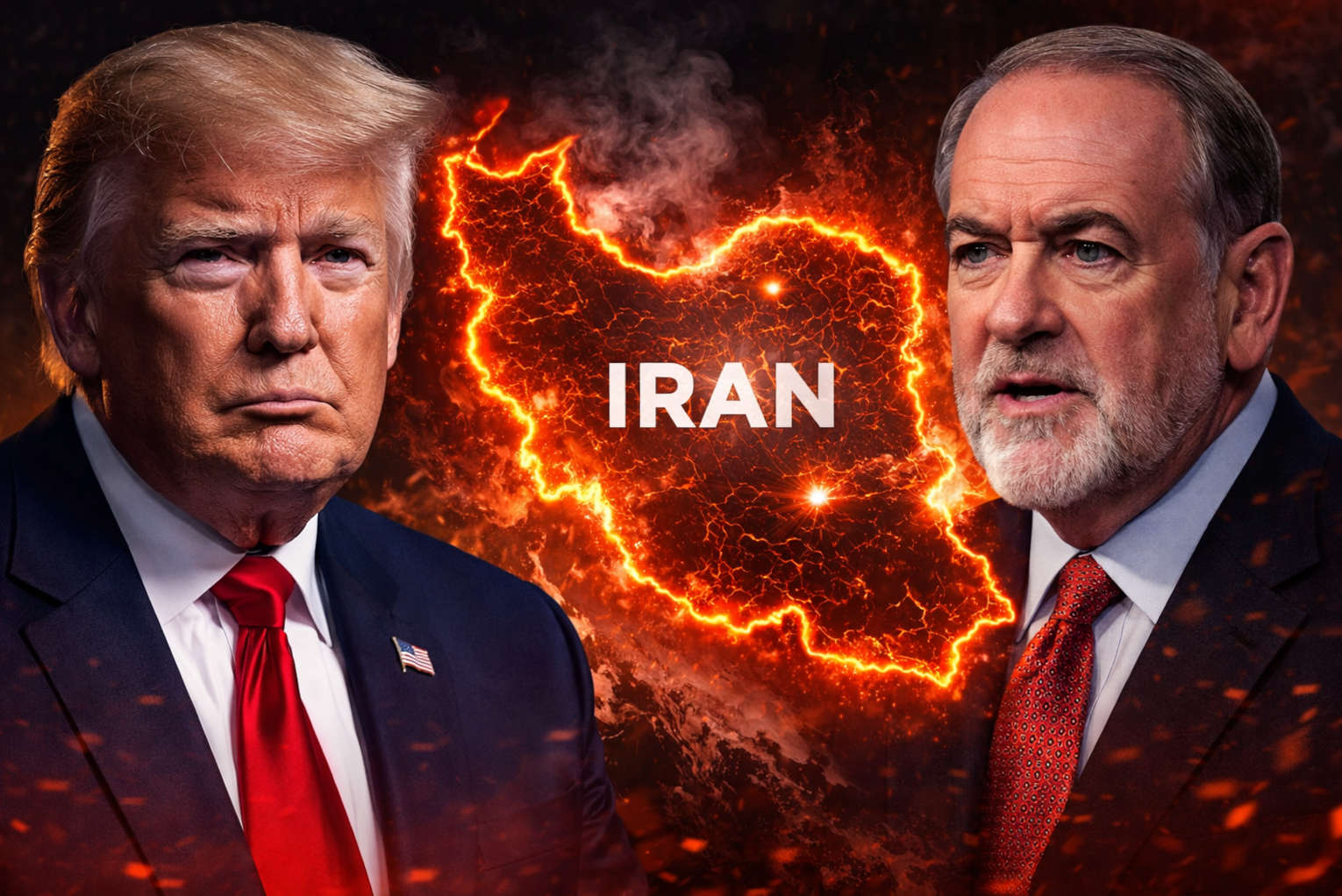

As tensions simmer between Israel and Iran, U.S. Ambassador to Israel Mike Huckabee offered a sober but steady message during an interview with Joel Rosenberg: uncertainty is unavoidable, fear is not.
“We should be prepared for anything, but we should not be afraid of anything,” Huckabee said, framing the current moment as one that demands vigilance without panic. Living in the Middle East, he added, means accepting that “on any given day something could happen that we were not expecting.”
Despite the speculation swirling around Washington, Jerusalem and Tehran, Huckabee repeatedly returned to one central point. Decisions about Iran rest with one man alone.
“I would say that only the President of the United States knows what he will do,” he said. “Nobody else has the absolute word.”
Hostages Home, a Nation Breathes Again
The interview followed the recovery of the remains of the last Israeli hostage held in Gaza, a moment Huckabee described as both historic and deeply emotional. The return marked the first time since 2014 that Israel no longer had a hostage in Gaza.
“It gave everyone here a combination of euphoria and relief,” Huckabee said. “Everyone breathed a deep sigh of relief because just the thought that there was still a hostage and Hamas was holding them.”
He credited the success to coordinated efforts by Israeli intelligence, security forces and regional cooperation, calling the outcome remarkable amid the devastation of war.
“It really strikes me as a miracle and the answer to a lot of people’s prayers,” Huckabee said.
The recovery also reinforced, in his view, the credibility of President Donald Trump and Israeli leadership. “It’s also a great testament to the commitment both President Trump and Prime Minister Benjamin Netanyahu made, which was, ‘We will not leave a hostage there.’”

Order Troy Anderson’s New Book, “Designated Disrupter” on Amazon.com!
Three Broad Paths on Iran
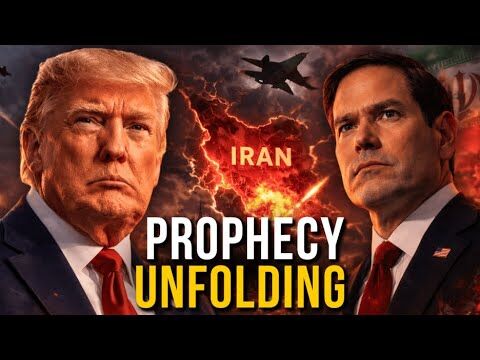
As discussion turned to Iran, Rosenberg outlined three broad possibilities facing the White House, scenarios Huckabee did not dispute while cautioning against predictions.
- Do nothing, maintain pressure, assess risks and avoid military action.
- A large but limited strike, punish the Iranian regime without explicitly seeking to topple it.
- An all-in campaign, sustain attacks until the regime falls, a path described as “messy, expensive, complicated.”
Huckabee declined to forecast which path the president might choose.
“If I were to speculate and say, ‘Here’s what I think is going to happen,’ I would be making it up,” he said. “I don’t know.”
What he did emphasize is that military action, while possible, is not Trump’s first instinct.
“One thing that people may not fully understand or appreciate about President Trump is that for him, military action is not the first resort,” Huckabee said. “It’s the thing he wants to do last.”
‘Hamas Has No Future in Gaza’
On Gaza’s long-term future, Huckabee spoke with certainty about one outcome the administration rejects outright.
“The president has never been in any point in any facet other than saying Hamas has no future in Gaza,” he said. “They will disarm.”
How that happens, and how long it takes, remains unclear. Still, Huckabee urged viewers to judge by precedent rather than pessimism.
“When he said all the hostages will come home, they did,” Huckabee said. “When he said we will have a ceasefire, we do.”
For Huckabee, the lesson of the moment is not to guess the calendar or script the next move, but to recognize the gravity of the hour and the resolve behind it.
“Stand back and watch,” he said.
James Lasher, a seasoned writer and editor at Charisma Media, combines faith and storytelling with a background in journalism from Otterbein University and ministry experience in Guatemala and the LA Dream Center. A Marine Corps and Air Force veteran, he is the author of The Revelation of Jesus: A Common Man’s Commentary and a contributor to Charisma magazine.