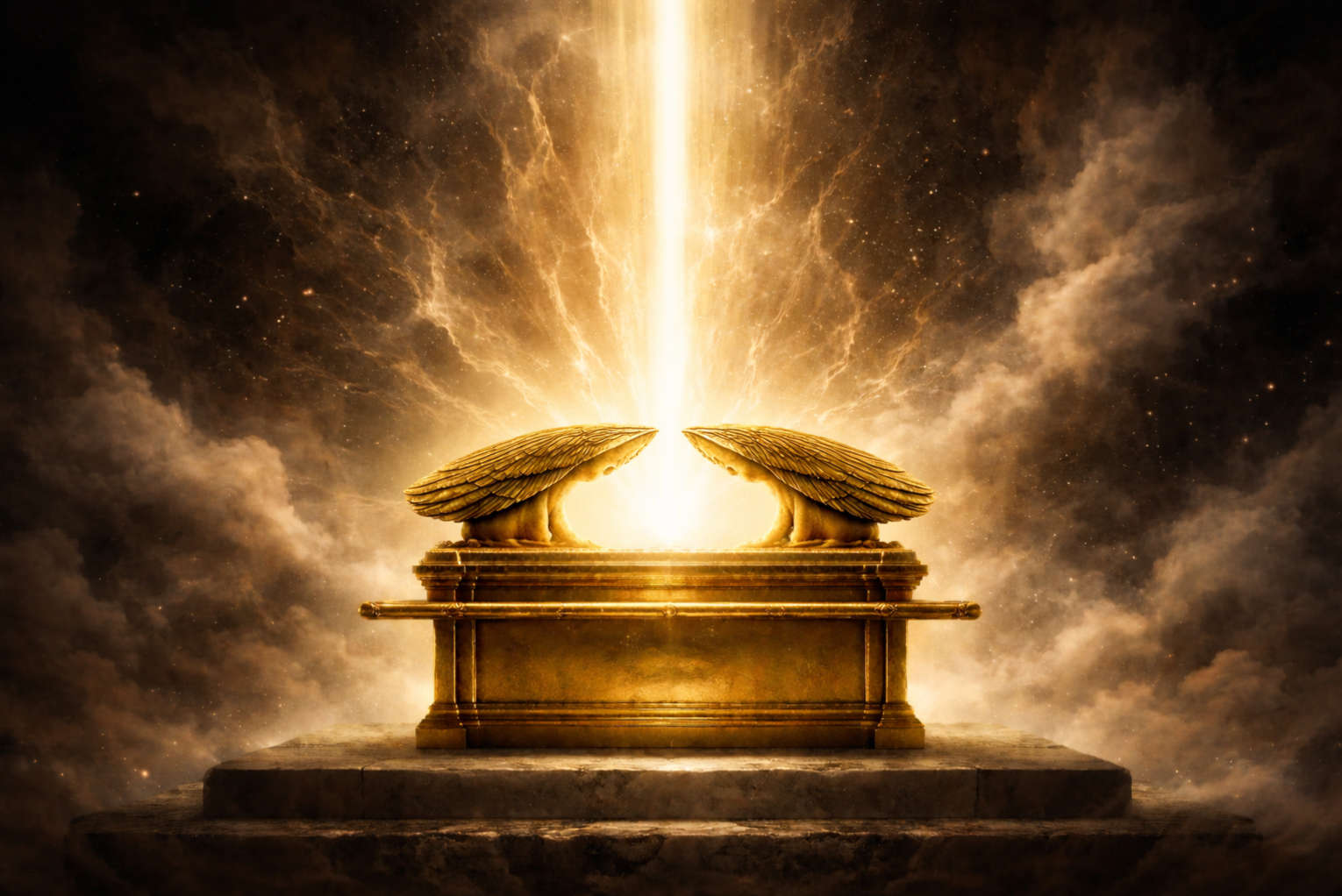

A recent Daily Mail article claims the Ark of the Covenant was not primarily a sacred vessel revealed by God but a theological remix of Egyptian religious furniture. The article centers on a theory by Egyptologist David Falk who argues the Ark borrowed Egyptian visual symbolism while rejecting idol worship, reframing the Ark as a cultural polemic rather than a divinely revealed object.
That claim may sound compelling to modern scholars, but when weighed against Scripture, it collapses under the Bible’s own testimony about the Ark’s origin, purpose and authority.
The Central Claim
The article states that the Ark “was not merely a sacred container for the Ten Commandments, but a radical reimagining of ancient religious symbols.”
Falk argues the Ark was modeled after Egyptian ritual shrines designed to house idols, but unlike those shrines, the Ark “contained no idol, meaning it was built to show that God’s presence did not require a physical representation.”
According to the article, the Ark borrowed Egyptian imagery such as winged figures and protective symbolism but intentionally inverted their meaning. Falk claims this shows the Israelites “weaponized” Egyptian religious symbols to make a theological statement about the superiority of Israel’s God.
In this framing, the Ark becomes a cultural rebuttal rather than a revealed holy object.
Scripture Says the Ark Was Revealed, Not Reimagined
The Bible offers no ambiguity about where the Ark came from. Its design was not the result of cultural memory or theological creativity but direct divine revelation.
In Exodus 25:9, God tells Moses to build the Ark “according to all that I show you, the pattern of the tabernacle and the pattern of all its furnishings.”
This language matters. Moses was not asked to adapt familiar religious furniture. He was commanded to replicate a pattern shown to him by God. Later, Exodus 25:40 reinforces that instruction, emphasizing the design was revealed on the mountain.
The Bible presents the Ark as obedience to revelation, not reinterpretation of Egyptian religion.

Order Amanda Grace’s New Book, “Brace For Impact” on Amazon.com!
The Ark Was Not Empty or Symbolic
Falk’s argument hinges on the idea that the Ark was intentionally empty of divine presence, creating sacred space above it rather than within it. Scripture directly contradicts this framing.
God declares in Exodus 25:22, “There I will meet with you, and I will speak with you from above the mercy seat, from between the two cherubim.”
The Ark was not a philosophical statement about divine absence. It was the appointed meeting place where God spoke to Moses. The presence of God was real, active and covenantal.
The Ark also contained the tablets of the law, described repeatedly as “the testimony.” It was not empty. It was filled with covenant authority.
Cherubim Did Not Originate in Egypt
The Daily Mail article emphasizes Egyptian winged imagery as a source for the Ark’s design. Scripture places cherubim long before Israel’s time in Egypt.
Cherubim first appear in Genesis 3:24 guarding the entrance to Eden. They are consistently depicted throughout Scripture as heavenly beings associated with God’s holiness and throne.
This means Egypt did not originate the imagery. At most, Egyptian religion mimicked or distorted heavenly realities already revealed by God.
Egypt Was Judged, Not Consulted
The article assumes Israel was still operating under Egyptian religious influence when the Ark was revealed. The Bible presents Egypt as defeated and judged, not formative.
In Exodus 12:12, God declares judgment “against all the gods of Egypt.” The Ark appears after this judgment, not as a continuation of Egyptian theology but as part of Israel’s separation from it.
The Ark did not weaponize Egyptian symbols. It replaced them with revealed truth.
A Heavenly Pattern, Not Cultural Protest
The New Testament confirms what Exodus already established. In Hebrews 8:5, the tabernacle furnishings are described as “a copy and shadow of the heavenly things.”
This places the Ark’s origin in heaven, not in Egypt.
The righteous indignation arises here because Scripture leaves no room for ambiguity. Recasting the Ark as a clever cultural critique diminishes what the Bible presents as a holy object revealed by God Himself.
The Ark of the Covenant was not designed to make a statement to Egypt. It was designed to house God’s covenant and manifest His presence among His people.
Anything less is not reinterpretation. It is revision.
James Lasher, a seasoned writer and editor at Charisma Media, combines faith and storytelling with a background in journalism from Otterbein University and ministry experience in Guatemala and the LA Dream Center. A Marine Corps and Air Force veteran, he is the author of The Revelation of Jesus: A Common Man’s Commentary and a contributor to Charisma magazine.