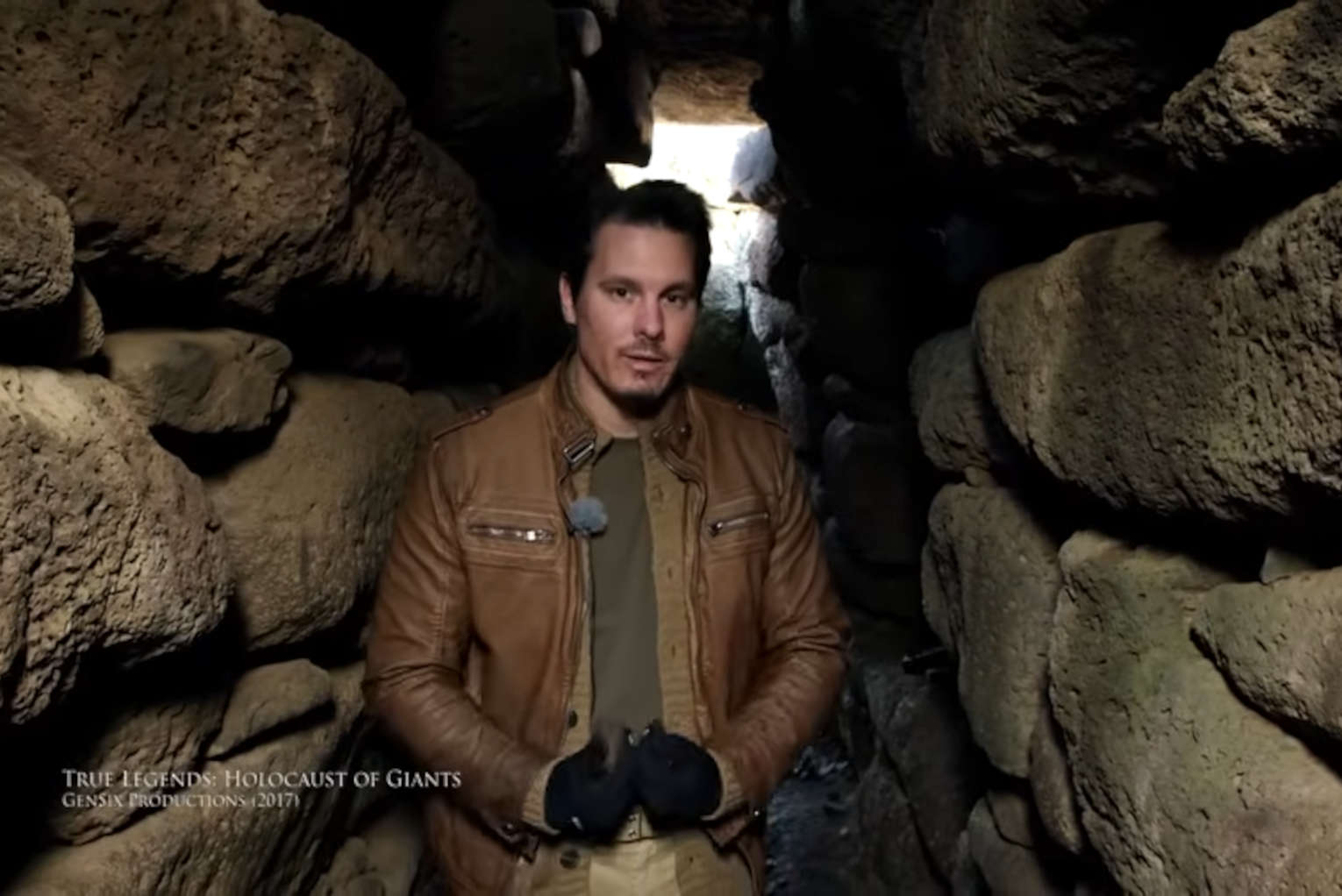

On the rugged island of Sardinia, a series of massive stone structures known as the Tombs of the Giants is drawing fresh attention as explorer and researcher Timothy Alberino steps inside what he describes as a doorway into the ancient world.
Standing within one of the megalithic chambers, Alberino points to a tradition that feels pulled straight from the pages of Scripture and ancient texts.
“So this is the tomb of one of the tombs of the giants,” Alberino says. “There are many of these dispersed all over Sardinia.”
The scale of the structures is undeniable. Towering stones form long burial chambers, some built with blocks so large they rival the greatest megalithic works in the ancient world. Alberino says the site matches models preserved in local museums, offering a glimpse into how these tombs once stood in their full form.
Order Katie Souza’s New Book, “Star Gods” on Amazon.com!
But it is what allegedly happened inside these chambers that transforms the site from archaeology into something far more provocative.
“This is the inner chamber where Paulo was telling us that the young people would come in to spend the night,” Alberino explains. “In order to absorb the power, the valor, the prowess of the mighty one or the hero buried beneath the soil.”
The practice mirrors what ancient texts describe as ritual incubation, where individuals sought communion with the dead. Alberino connects this directly to the giants of antiquity.
“We know that the giants were known as the great heroes even in Greek mythology, even in Roman lore,” he says. “The Bible calls them the gibbor, the mighty ones of old, of renown.”
That language echoes Genesis 6:4, which describes the Nephilim as “mighty men of old, men of renown.” Alberino argues that these tombs may represent the resting places of those very beings.
“Those are exactly the kind of entities that were buried here beneath the soil, beneath these graves,” he says.
The connection does not stop with the Old Testament. The New Testament also points back to this mysterious era. Second Peter 2:4 speaks of angels who sinned and were cast into chains of darkness, while Jude 1:6 describes angels who “did not keep their own domain.” These passages align with the account preserved in the Book of Enoch, where fallen angels descended to earth and produced a race of giants.
For Alberino, Sardinia is not just a collection of ruins. It is a living archive of that ancient rebellion.
Some of the stones used in these tombs are staggering in size. Alberino stands atop one and gestures to the surrounding structure.
“Some of the largest stones that I’ve seen incorporated into the megalithic structures in Sardinia have been used in the tombs of the giants,” he says. “Like the one I’m standing on right now. Just absolutely massive.”
Each slab, each corridor, each chamber tells a story that stretches beyond conventional history and into the realm of biblical memory and apocryphal tradition.
What unfolds in Sardinia feels less like a dig into the past and more like stepping into a forgotten chapter of human history. A chapter where the lines between myth, Scripture and reality begin to blur, and where the question remains impossible to ignore.
Who were the mighty ones buried beneath these stones, and what legacy did they leave behind?
James Lasher, a seasoned writer and editor at Charisma Media, combines faith and storytelling with a background in journalism from Otterbein University and ministry experience in Guatemala and the LA Dream Center. A Marine Corps and Air Force veteran, he is the author of The Revelation of Jesus: A Common Man’s Commentary and a contributor to Charisma magazine. For interviews and media inquiries, please contact [email protected].