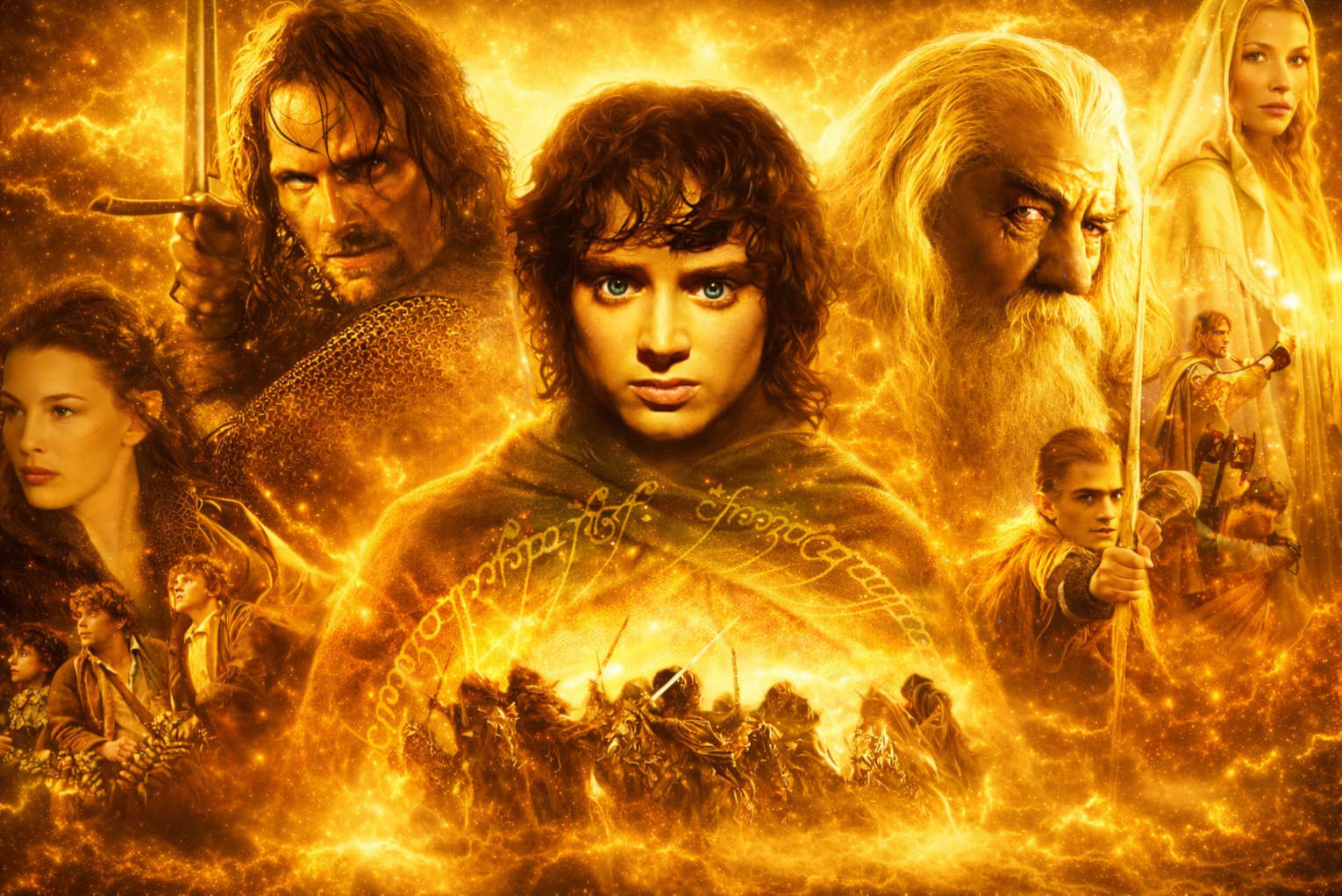

As The Lord of the Rings returns to theaters, audiences are being reminded that the beloved fantasy epic is about far more than elves, swords and epic battles.
“It’s a story that matters,” Kirk Cameron said on a recent episode of his podcast, The Kirk Cameron Show. “Because beneath the adventure, beneath the dragons and the dark lords, there is deeper magic at work.”
Cameron argues that The Lord of the Rings endures because it does not merely entertain. It shapes the imagination, forms moral clarity and reflects the gospel in ways that continue to resonate across generations.
Tolkien’s Faith Woven Into the Story
The Lord of the Rings was written by J.R.R. Tolkien, a committed Catholic who believed stories had the power to shape souls, particularly those of children.
“Stories are not just entertainment. They shape souls, especially children’s souls,” Cameron said.
While Tolkien famously rejected writing direct allegory, he did not hide his worldview. Cameron noted that Tolkien once described The Lord of the Rings as “a fundamentally religious work,” even though it never preaches overtly.
“Somehow without ever preaching, his story has preached to millions,” Cameron said. “And that’s why people keep flocking back to Middle-earth again and again.”
A World Not Confused About Good and Evil
Cameron emphasized that one reason the story resonates so deeply with Christians is its moral clarity.
“In a world where many are confused about reality, Middle-earth is not,” he said. “There is good, there is evil, and the two are not the same thing.”
The Shire, he explained, reflects Eden, peaceful, green and innocent, while Mordor resembles hell, dark, enslaving and consuming. The central danger is not merely evil’s existence, but the temptation to wield it for good.
“That is the ring,” Cameron said. “That’s the power of the ring that promises control, safety and victory, but it’s always at the cost of your soul.”
Order Amanda Grace’s New Book, “Brace For Impact” on Amazon.com!
Frodo and the Weight of Redemption
At the heart of the story is Frodo Baggins, an unlikely hero who reflects a deeply biblical pattern.
“Small, ordinary, not a warrior, not a king, and yet he is the one who’s chosen to carry the burden that could save the world,” Cameron said.
The ring wounds Frodo, isolates him and slowly breaks him. Though he has a good heart, he is not victorious through strength or willpower.
“He becomes a picture of the suffering servant bearing a weight that he didn’t create for the sake of saving others,” Cameron said.
In the end, Frodo is not saved by his own triumph, but through mercy shown long before, when Bilbo spared Gollum.
“That small, quiet decision was epic,” Cameron said. “What we do in mercy today, even if it seems small and insignificant, can shape the future for someone else in ways that we can’t see.”
Eucatastrophe and the Shape of the Gospel
Cameron also highlighted Tolkien’s concept of “eucatastrophe,” a word Tolkien coined to describe a sudden, joyful turn when all appears lost.
“A eucatastrophe is a sudden turn of joy,” Cameron said. “That is the gospel.”
He compared it directly to the Resurrection.
“Terrible crucifixion on Friday, silent Saturday and then Sunday, life bursting out of death when no one expected it,” he said. “The resurrection is the ultimate eucatastrophe.”
This, Cameron explained, is why The Return of the King resonates so deeply.
“It feels right because it is the eucatastrophe of the universe,” he said.
Why These Stories Still Matter Today
Cameron placed Tolkien among other Christian storytellers, such as C.S. Lewis and G.K. Chesterton, men who understood that stories prepare people to face reality rather than escape it.
“Children don’t need softer stories. They need true ones,” Cameron said.
Quoting Chesterton, Cameron added: “Fairy tales don’t inform children that dragons exist. Children already know that dragons exist. Fairy tales tell the children that the dragons can be killed.”
A Call to See With New Eyes
As the films return to theaters, Cameron urged viewers to see The Lord of the Rings not as nostalgia, but as formation.
“See it as a reminder that truth is beautiful, that courage is costly, that mercy matters, and that hope, real hope, never disappoints,” he said.
Because, as the story ultimately reflects, the light has shone in the darkness, and the darkness does not overcome it.
James Lasher, a seasoned writer and editor at Charisma Media, combines faith and storytelling with a background in journalism from Otterbein University and ministry experience in Guatemala and the LA Dream Center. A Marine Corps and Air Force veteran, he is the author of The Revelation of Jesus: A Common Man’s Commentary and a contributor to Charisma magazine.