
Pastor Josh Howerton isn’t mincing words when it comes to the growing number of online personalities who once identified as Christians and now argue that believers should step away from politics.
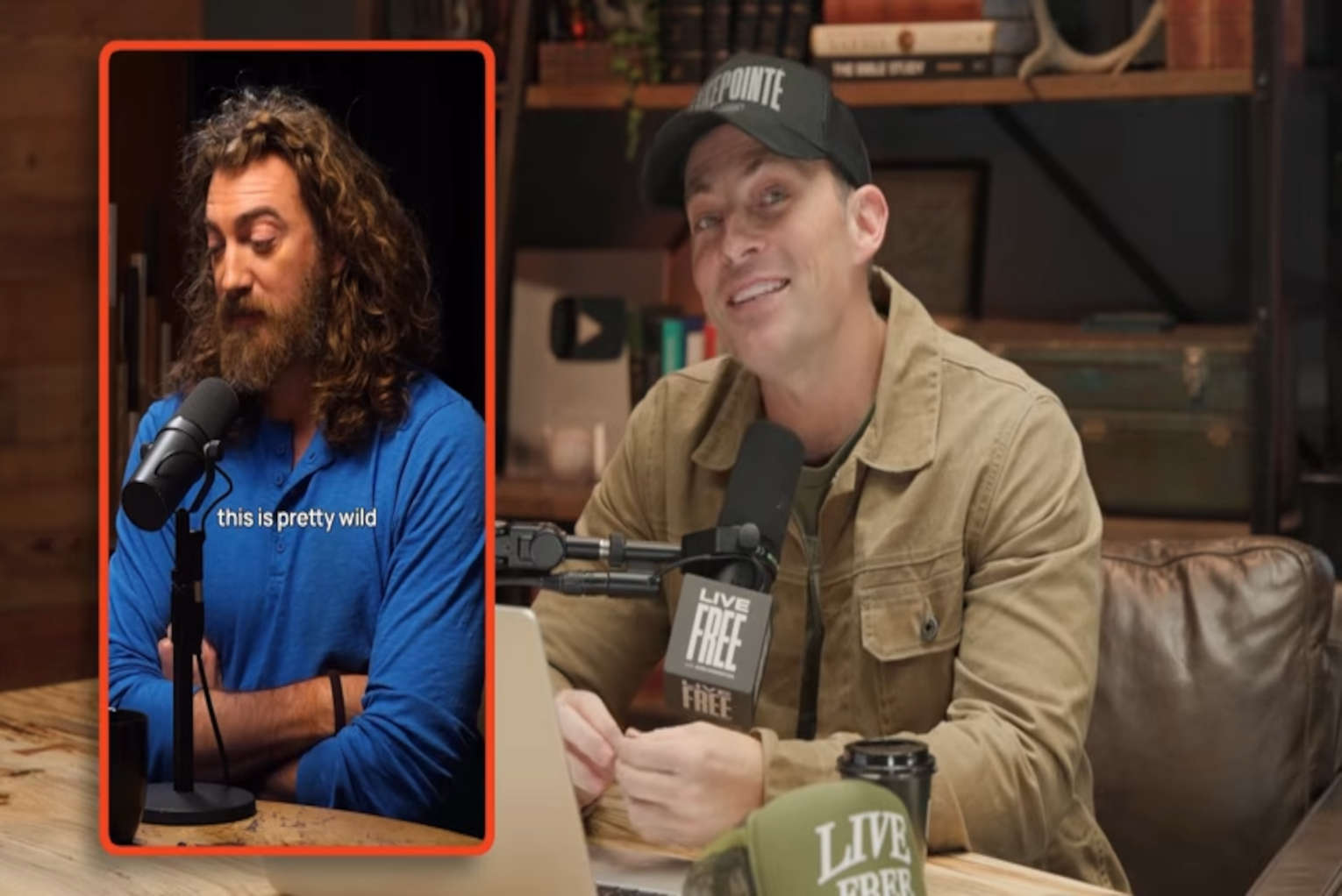
In a recent Live Free reaction episode, Howerton responded to viral comments from former Christian and YouTuber Rhett McLaughlin, who claimed that Jesus’ teachings forbid Christians from pursuing political influence. Howerton said that the argument rests on selective Bible reading, bad theology and what he described as intentional misdirection.
“This isn’t someone working through honest doubt,” Howerton said. “This is someone standing in unbelief and trying to pull other people there with him.”
Doubt Is Not the Same as Leading Others Astray
Howerton repeatedly emphasized that Christianity allows questions but not the public promotion of unbelief disguised as biblical wisdom. Drawing from the book of Jude, he explained that Scripture calls for mercy toward those wrestling with faith, while sharply confronting those who actively undermine it.
“There’s a massive difference between people who stumble into church saying, ‘I don’t want the world anymore,’ and people who are out there evangelizing unbelief,” Howerton said.
Enforcing a Bible You Reject
One of Howerton’s sharpest critiques was aimed at what he sees as a common pattern among deconstructed influencers: rejecting the authority of Scripture while insisting Christians submit to carefully chosen verses.
“He doesn’t believe the Bible,” Howerton said of McLaughlin, “but he’s going to make sure you obey his interpretation of it.”
Howerton argued this approach allows secular voices to police Christian behavior while avoiding the Bible’s broader claims about authority, morality and truth.
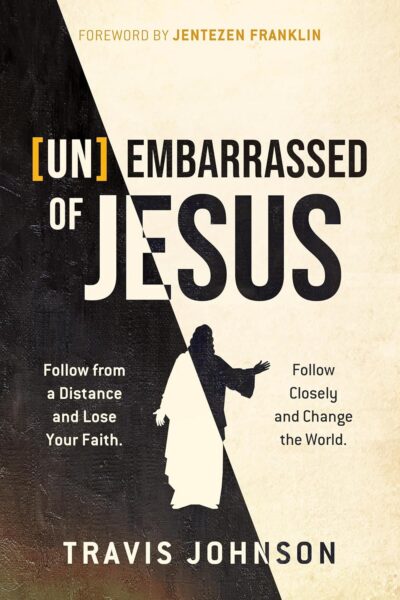
Order Travis Johnson’s New Book, “[Un]Embarrassed” on Amazon.com!
The Temptation Narrative Is Being Misread
At the center of McLaughlin’s argument is Jesus’ rejection of Satan’s offer of the world’s kingdoms. Howerton said that passage is routinely misunderstood.
“The temptation wasn’t authority,” he said. “It was getting the right thing the wrong way.”
Howerton pointed out that Scripture consistently affirms God’s people exercising influence, from Joseph and Daniel to Esther and Nehemiah. Jesus rejecting Satan’s offer, he said, was a refusal to receive dominion through demonic compromise, not a rejection of leadership itself.
When God Is Gone, the State Takes His Place
Howerton also addressed what he believes is the underlying worldview driving McLaughlin’s position. When God is removed from the picture, he argued, the government naturally fills the vacuum.
“If there’s no God over the government, then the government becomes god,” Howerton said, describing how politics takes on religious meaning in secular cultures.
That shift, he argued, explains the urgency to push Christians out of public life. Competing moral authorities become problematic when politics is treated as the ultimate.
Voting Is Not a Moral Purity Test
Howerton rejected the idea that Christians must abstain from voting unless candidates meet an impossible standard of personal righteousness.
“A selection is not a sacrament,” he said. Voting, he explained, is about choosing between available options, not endorsing every aspect of a candidate’s character.
Using biblical examples, Howerton described righteous, wicked and flawed leaders who nevertheless restrained evil. Christians, he argued, are often choosing between paths, not perfection.
Why Christians Can’t Afford to Sit This Out
Howerton closed by challenging the claim that the church became “too political.” In his view, the government moved into explicitly moral and theological territory first, redefining life, marriage and truth.
“The church didn’t suddenly change,” he said. “Politics did.”
For Howerton, disengagement isn’t faithfulness. It’s surrender. And he made clear that Christians withdrawing from public life doesn’t create neutrality—it simply leaves the field to voices eager to shape the culture without them.
James Lasher, a seasoned writer and editor at Charisma Media, combines faith and storytelling with a background in journalism from Otterbein University and ministry experience in Guatemala and the LA Dream Center. A Marine Corps and Air Force veteran, he is the author of The Revelation of Jesus: A Common Man’s Commentary and a contributor to Charisma magazine.