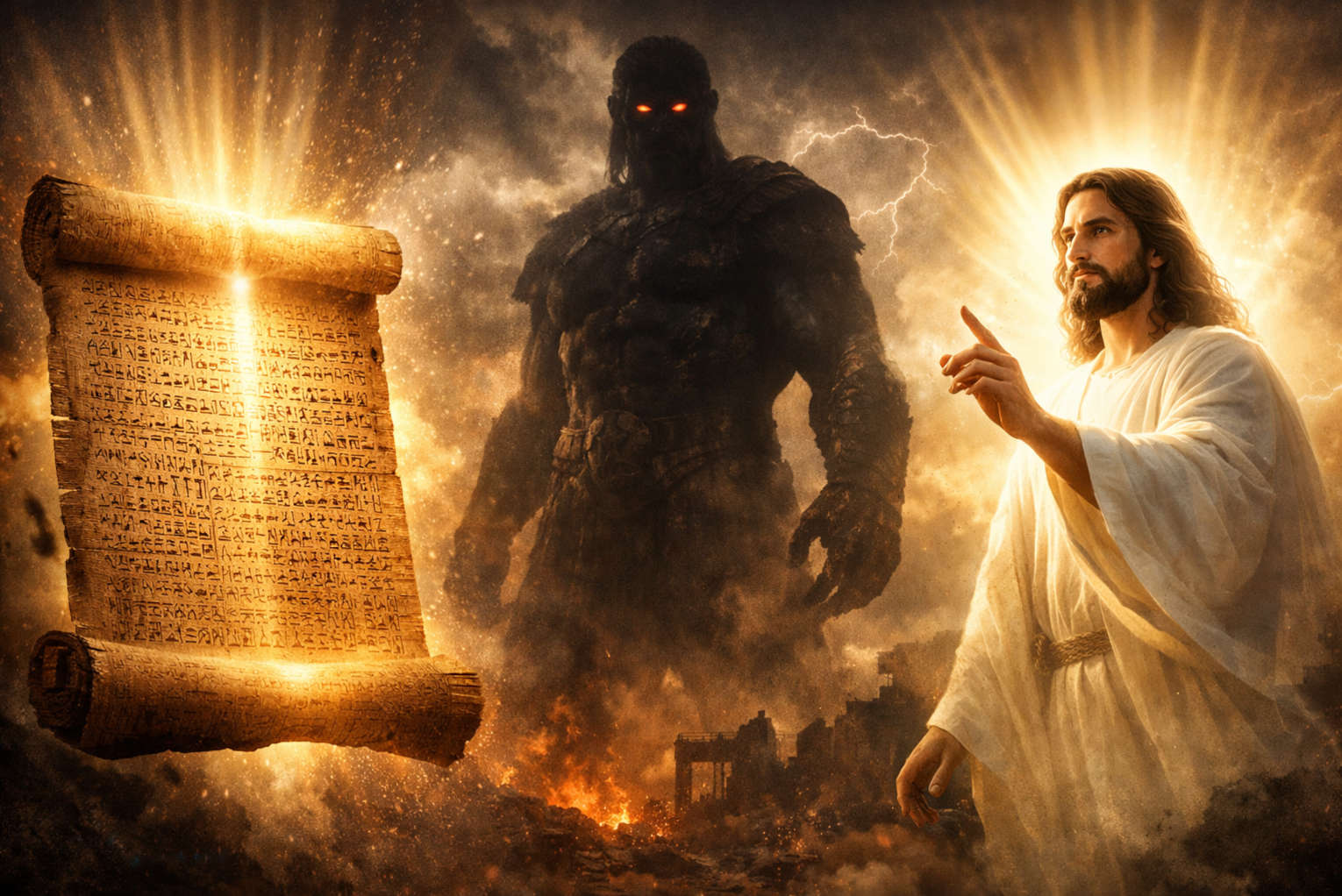

A 3,300-year-old Egyptian papyrus housed at the British Museum is renewing debate over one of the Bible’s most controversial subjects: the existence of giants known as the Nephilim.
The document, known as Anastasi I, dates to Egypt’s New Kingdom period and has been part of the museum’s collection since 1839. While long studied for its insight into scribal training and military logistics, a passage describing encounters with unusually tall warriors has recently drawn fresh attention.
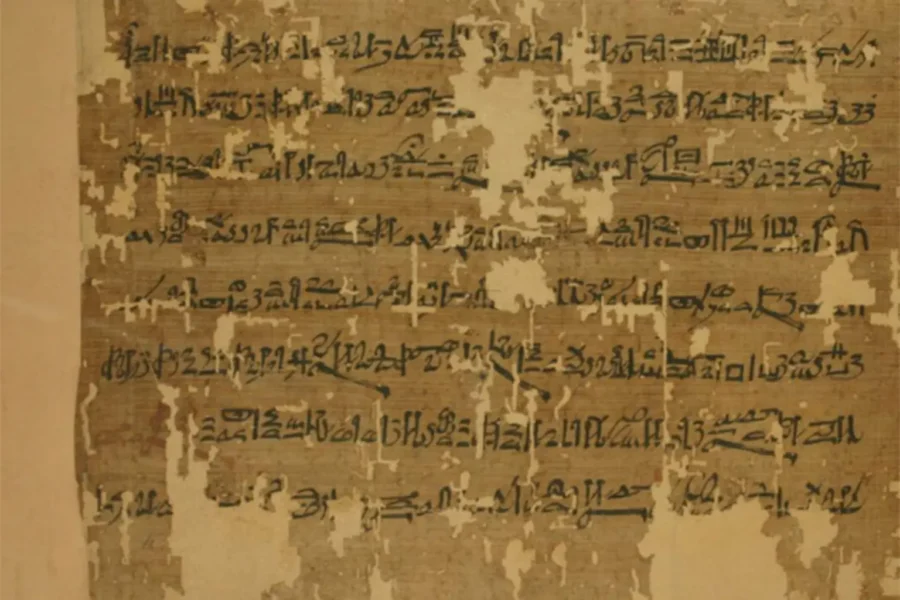
In a letter attributed to an Egyptian scribe, travelers are warned about dangers along a narrow mountain route. The text states the pass is “infested with Shosu concealed beneath the bushes; some of them are of four cubits or of five cubits, from head to foot, fierce of face, their heart is not mild, and they hearken not to coaxing.”
Using standard Egyptian measurements, those heights place the figures well above average for the ancient world.
The New York Post reported that the passage has reignited interest among biblical researchers, particularly the Pennsylvania-based Associates for Biblical Research, who argue the description closely resembles biblical accounts of giants. Scripture describes similar figures as “mighty men which were of old, men of renown.”
However, scholars remain divided. The British Museum characterizes Anastasi I as a historical document reflecting Egyptian military knowledge and does not endorse supernatural interpretations. Critics also argue the letter may have been written with satirical intent, exaggerating dangers to instruct less-experienced scribes.
Israel365 News reported that Egyptian records outside the Bible also reference formidable peoples in Canaan, including ritual texts and reliefs depicting unusually large captives.
A Resurgence of Nephilim Interest and a Biblical Question
Interest in the Nephilim has surged in recent years across theology, archaeology and popular culture. Ancient texts, newly digitized artifacts and renewed scrutiny of biblical passages have brought fresh attention to figures long dismissed by many as symbolic or mythical.
Jesus Himself framed the end times in striking terms. In the Gospel of Matthew, He said, “As it was in the days of Noah, so will it be at the coming of the Son of Man” (Matt. 24:37; Luke 17:26). Those days, according to Genesis, were marked by corruption, violence and the presence of the Nephilim.
That raises an unavoidable question for modern readers. If the ancient world recorded encounters with unusually large and fearsome peoples, and if Scripture places such beings at pivotal moments in history, could their reemergence be part of what Jesus was warning about?
The papyrus does not offer definitive proof. However, it challenges the assumption that biblical accounts of giants were isolated or purely theological inventions. As ancient records continue to surface and long-studied texts are reexamined, the line between biblical narrative and historical memory may be thinner than once believed.
And if the days of Noah are indeed a template for the end of days, many are left asking: Are we simply studying the past, or glimpsing what may return again?
James Lasher, a seasoned writer and editor at Charisma Media, combines faith and storytelling with a background in journalism from Otterbein University and ministry experience in Guatemala and the LA Dream Center. A Marine Corps and Air Force veteran, he is the author of The Revelation of Jesus: A Common Man’s Commentary and a contributor to Charisma magazine.