

When global leaders gather in Davos, the conversations rarely stay theoretical. Ideas discussed behind closed doors often become policies, systems and expectations that quietly shape everyday life. That is why recent discussions surrounding post-smartphone technology and human integration should not be dismissed as speculative futurism. As highlighted by the Lion of Judah Motivation group, what is being proposed represents a fundamental shift in how humanity understands itself.
At the World Economic Forum, executives and innovators have openly discussed a future where smartphones are no longer carried but replaced by technology embedded within the human body. The idea is presented as efficiency and progress. Beneath the language of innovation lies a deeper question we cannot ignore. Who holds authority when technology moves from something we use to something we become?
From Tools to Integration
A phone can be turned off. A device can be set aside. Even a wearable can be removed. Implanted technology changes the equation entirely. Once systems are integrated into the body itself, control no longer rests solely with the individual.
Updates, access and functionality are governed by whoever owns the software and the data. In that scenario, consent becomes less about choice and more about compliance. As Christians, we understand that authority over the body is not a small matter. Scripture is clear that our bodies are not our own in the way the world defines ownership.
History offers a sobering pattern. What begins as optional convenience often becomes essential infrastructure. Digital systems once marketed as helpful tools now determine access to banking, communication and travel. The concern raised by the video is not paranoia. It is precedent.
The Vanishing Boundary of Privacy
Privacy is another casualty in this progression. Modern technology already tracks behavior, location and spending. Implantable systems could monitor far more, including biological signals, emotional responses and neural activity.
Privacy requires distance. It requires a boundary between the individual and the system. When that boundary disappears, privacy ceases to exist in any meaningful sense. As believers, we should be asking hard questions now rather than after such systems become normalized.
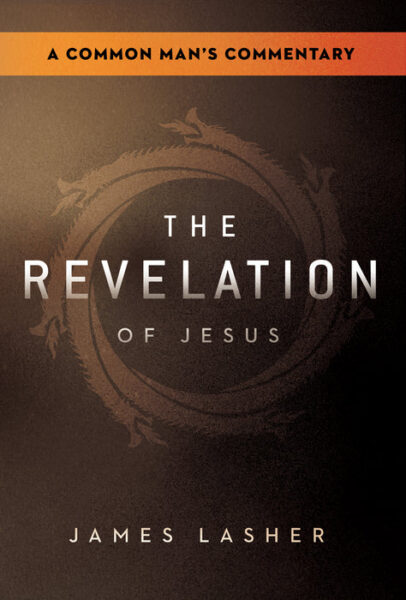
Order James Lasher’s New Book, “The Revelation of Jesus” on Amazon.com!
The Ideology Driving the Technology
Underlying these developments is an ideology identified in the video as transhumanism. This philosophy does not simply aim to heal what is broken but to enhance what already exists. It treats the human body as an unfinished project rather than a deliberate creation.
Intelligence must be augmented. Biology must be optimized. Mortality must be delayed or eliminated altogether. From a biblical worldview, this represents a serious departure. We believe humanity was created intentionally, not provisionally.
A Biblical Warning Revisited
Scripture teaches that humanity’s problem is not physical limitation but spiritual separation. Sin, not biology, is what fractured creation. Technology may repair the body but it cannot restore the soul. That is something we as Christians must remain clear-eyed about.
The video draws a parallel to the Tower of Babel, when humanity sought unity, permanence and power apart from God. That ancient ambition echoes in modern discussions about global systems, digital identity and the merging of man and machine.
The goal may be framed as progress but the impulse is familiar. Make a name for ourselves. Secure the future on our own terms. Remove the need for dependence on God.
Artificial Immortality Versus Eternal Life
At its core, the pursuit of technological immortality reveals an unspoken truth. Humanity knows death is not natural. The desire to live forever is woven into the human heart because eternity was always part of God’s design.
The tragedy is not that people want eternal life. It is that many are now searching for it in circuits and code rather than in Christ. As believers, we know that no machine can overcome what only the cross has conquered.
Why This Moment Matters
The Lion of Judah Motivation group argues that this moment demands discernment. Davos is not merely discussing technology. It is shaping a worldview where control replaces stewardship and innovation challenges creation itself.
The issue is not rejecting technology outright. It is recognizing when progress begins to demand allegiance. We are called to test the spirits, to measure every claim against Scripture and to remember who ultimately holds authority over life and death.
As systems advance and boundaries blur, we are reminded that eternal life has never been something humanity could build. It was something God gave. The world may be racing toward artificial solutions for mortality, but the promise of resurrection remains unchanged.
James Lasher, a seasoned writer and editor at Charisma Media, combines faith and storytelling with a background in journalism from Otterbein University and ministry experience in Guatemala and the LA Dream Center. A Marine Corps and Air Force veteran, he is the author of The Revelation of Jesus: A Common Man’s Commentary and a contributor to Charisma magazine.