
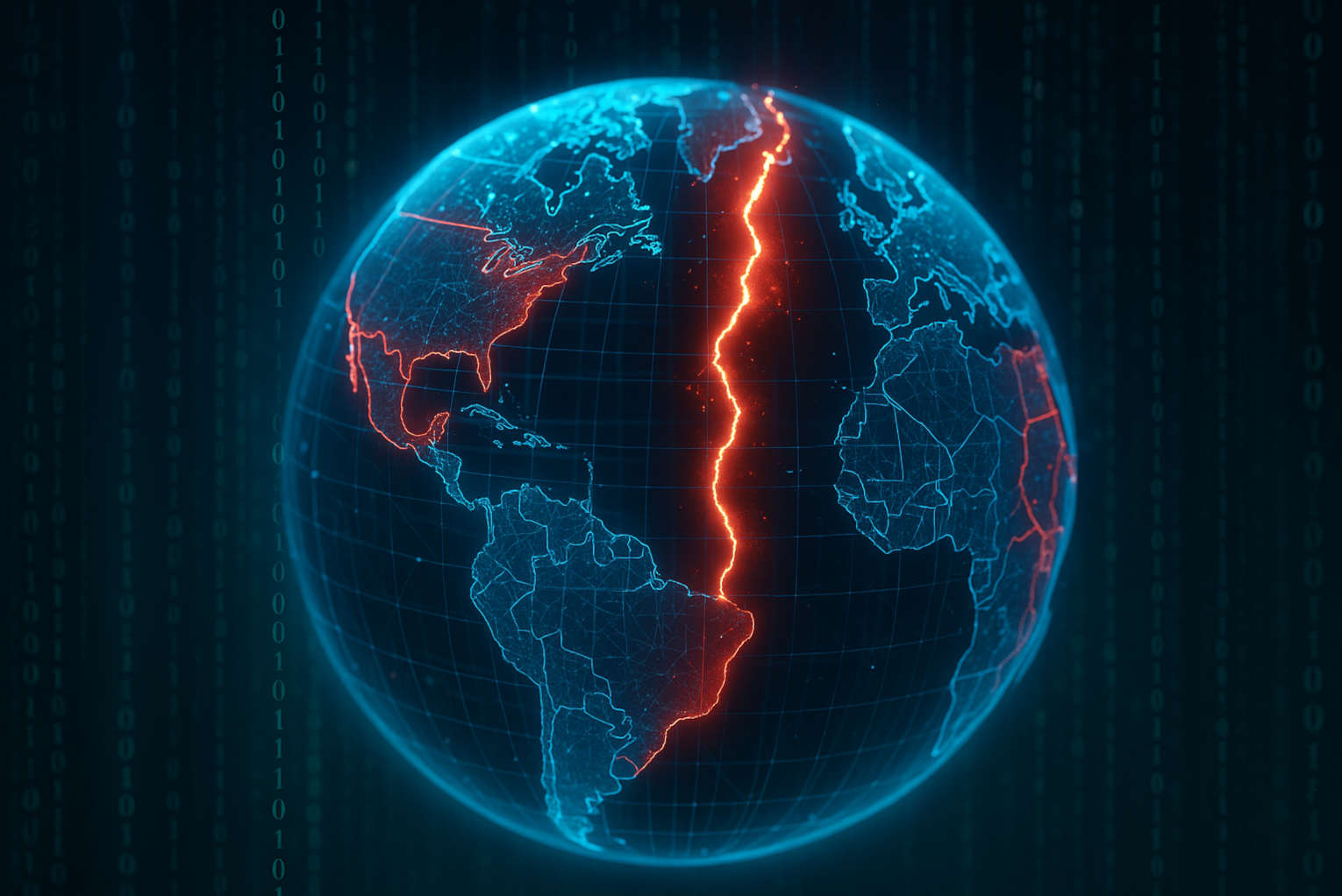

When “half the internet” went down early Monday morning, the world’s dependence on a few fragile digital backbones was exposed.
The outage, traced to Amazon Web Services’ data center in Northern Virginia, disrupted everything from banking apps to social media and video streaming. It also raised a larger question: was this merely a technical failure or part of a deeper digital conflict now unfolding between global powers?
Breaking News. Spirit-Filled Stories. Subscribe to Charisma on YouTube now!
According to the Daily Mail, Amazon confirmed that “most operations are succeeding normally now” but millions continued to experience issues long after the company declared the problem “fully mitigated.” The disruption stemmed from “an operational issue” at its us-east-1 data center, a critical hub that supports much of the world’s online infrastructure.
Tech expert Jake Moore told the outlet, “While a cyberattack can’t be ruled out until AWS releases its full post-incident report, there’s no current evidence of hacking, data breaches or coordinated attacks.” Still, he warned that the event showed how “fragile infrastructures with very limited backup plans” could fail in a cascading manner across the web.

Order Jonathan Cahn’s Newest Book, “The Avatar” on Amazon.com!
The outage also hit major British banks and government sites. Professor James Davenport of the University of Bath called it “worrying” that an issue in the United States could affect “UK banking apps including Lloyds and Halifax,” suggesting unexpected dependencies in how global systems are interlinked.
Just a day before, a separate report from Reuters revealed that China accused the United States of conducting long-term cyber operations against its National Time Service Center, the institute that generates and maintains China’s standard time.
The Chinese State Security Ministry alleged that the U.S. National Security Agency “stole secrets and infiltrated the country’s national time centre,” claiming the operation could have threatened “communication networks, financial systems, the power supply and the international standard time.”
Beijing said it traced the breach back to 2022, adding that the NSA “exploited a vulnerability in the messaging service of a foreign smartphone brand” to spy on Chinese researchers. The U.S. embassy in Beijing declined to address the allegations directly but countered that “China is the most active and persistent cyber threat to U.S. government, private-sector and critical infrastructure networks.”
Both stories, reported within a day of each other, highlight the growing volatility of a world increasingly governed by code and cloud servers. Whether or not the Amazon outage was related to any state-sponsored activity remains unknown. Yet the timing and scope of both incidents point to a deeper reality: the digital realm has become the new front line of geopolitical power struggles.
Join Charisma Magazine Online to follow everything the Holy Spirit is doing around the world!
Jesus warned that before the end, there would be “wars and rumors of wars.” Could those words now extend beyond the physical battlefield into cyberspace, where unseen conflicts rage for control, information and influence? The global struggle for digital dominance may be another sign of how prophecy continues to unfold in ways few imagined (Matt. 24:6).
James Lasher, a seasoned writer and editor at Charisma Media, combines faith and storytelling with a background in journalism from Otterbein University and ministry experience in Guatemala and the LA Dream Center. A Marine Corps and Air Force veteran, he is the author of The Revelation of Jesus: A Common Man’s Commentary and a contributor to Charisma magazine.