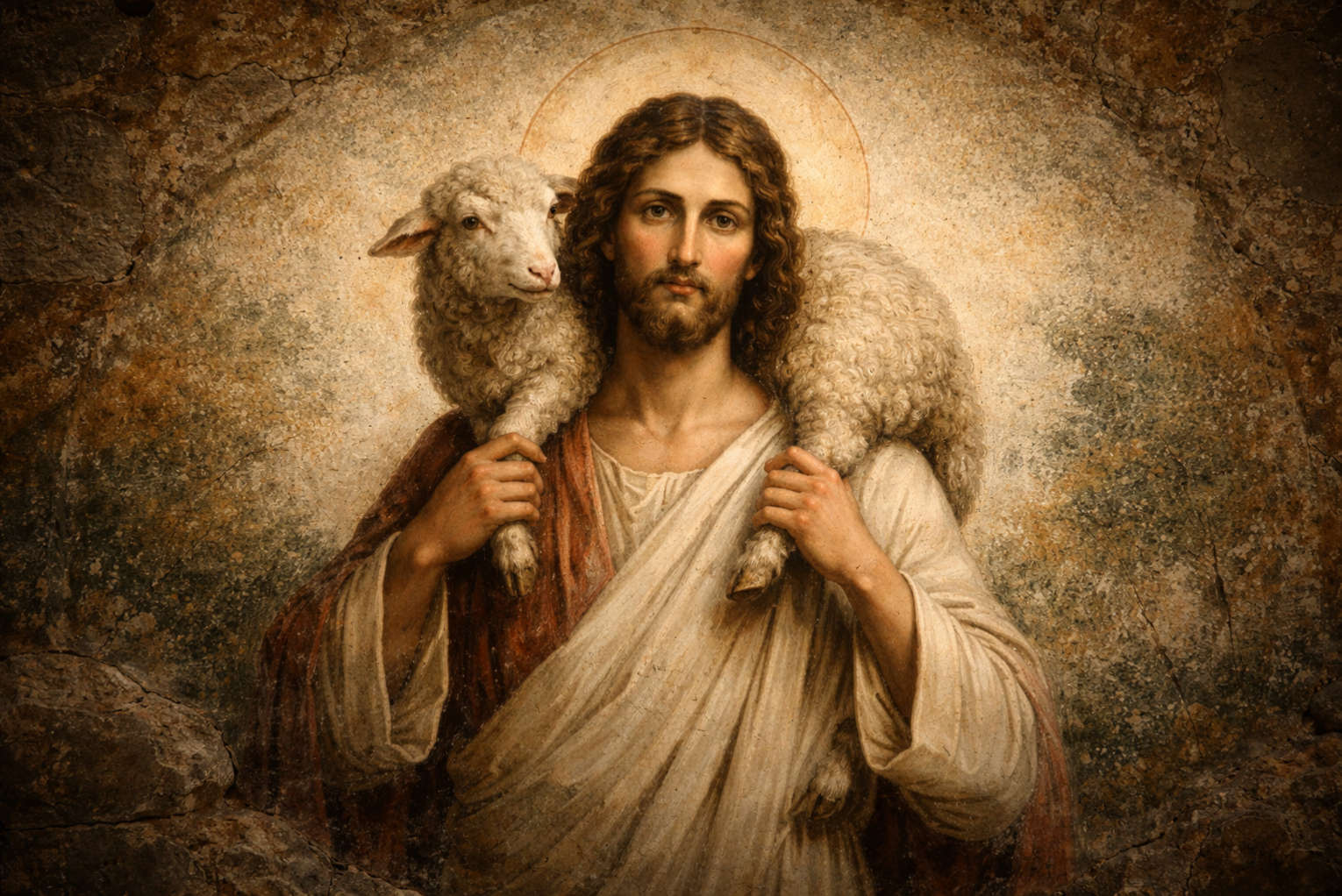

Archaeologists have uncovered a rare early Christian fresco depicting Jesus in Turkey, a discovery experts say sheds new light on how Christ was portrayed during the Roman era and underscores the deep historical roots of Christian belief.
The fresco, found in an underground tomb near Iznik, was discovered in August and is being hailed as “one of the most important finds from Anatolia’s early Christian era,” as reported by The New York Post. Iznik is the ancient city of Nicaea, where the Nicene Creed, a foundational statement of Christian faith, was adopted in A.D. 325.
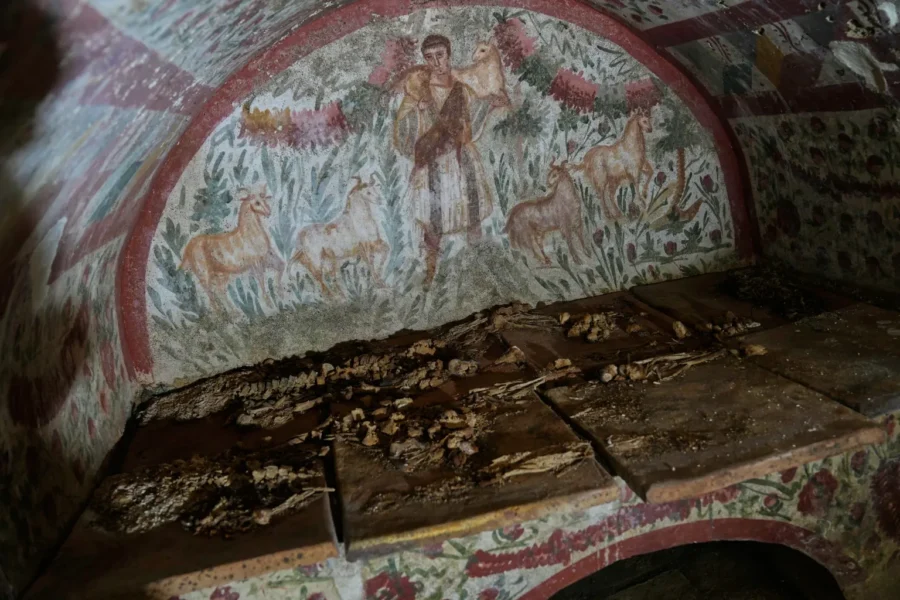
The artwork dates back to the third century, when Christians were still persecuted under Roman rule. It depicts a youthful, clean-shaven Jesus dressed in a toga and carrying a goat on His shoulders, an image known as the “Good Shepherd.”
According to researchers cited by The Associated Press, it is a rare example of Jesus being portrayed with Roman attributes in Anatolia.
The lead archaeologist on the project stated that the fresco may be the “only example of its kind in Anatolia,” underscoring its historical and theological significance for understanding early Christian art and identity.
Order Jonathan Cahn’s Newest Book, “The Avatar” on Amazon.com!
The discovery has taken on added significance following a recent visit to Iznik by Pope Leo XIV, who traveled to the site during his first overseas trip as pontiff to mark the 1,700th anniversary of the Council of Nicaea.
While there, Eastern and Western Christian leaders gathered to pray and recite the Nicene Creed together, which the pope described as being “of fundamental importance in the journey that Christians are making toward full communion.”
James Lasher, a seasoned writer and editor at Charisma Media, combines faith and storytelling with a background in journalism from Otterbein University and ministry experience in Guatemala and the LA Dream Center. A Marine Corps and Air Force veteran, he is the author of The Revelation of Jesus: A Common Man’s Commentary and a contributor to Charisma magazine.