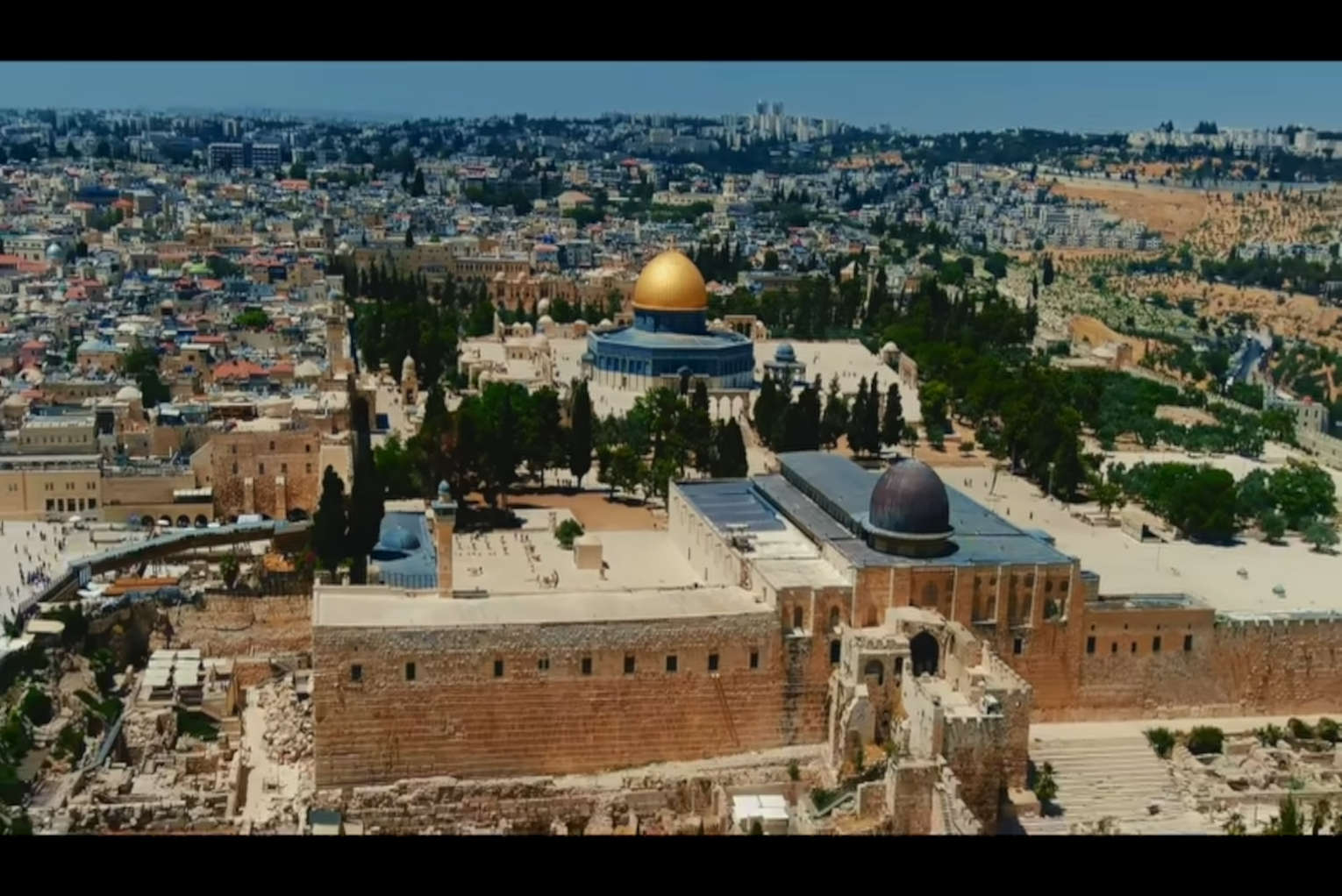

A popular claim says the Jewish temple did not stand on the current Temple Mount, but farther south in the City of David. The Israel Guys investigate that claim on the ground in Jerusalem, consulting archaeologists, reading Josephus, and walking the excavations.
Breaking News. Spirit-Filled Stories. Subscribe to Charisma on YouTube now!
Why the location debate matters
The temple’s location shapes how we read Scripture, understand Jewish history, and evaluate modern claims about the Temple Mount. It also affects how we interpret ancient sources that describe festivals, sacrifices, and the city’s defenses.

Order Jonathan Cahn’s Newest Book, “The Avatar” on Amazon.com!
What the video examines
- Antonia Fortress vs. Temple platform
The alternate theory moves the temple into the City of David and recasts the Temple Mount as the Roman Antonia Fortress. The video counters this with two points. First, the visible bedrock in the Mount’s northwest corner matches Josephus’ description of the Antonia’s rocky foundation. Second, the Greek term at issue points to a cohort sized garrison, not a full legion, so the fortress did not need the entire 35 acre platform. - Capacity and topography
Ancient sources describe festival crowds in the millions. A worship space that size needs a broad, engineered platform. The Temple Mount is roughly 35 acres. The City of David ridge is closer to 14 acres from crest to slope, which strains the idea that it could host the courts, altar, ramps, gates, and supporting traffic. - Water supply and purification
Critics say the Mount lacks a natural spring, so the temple could not function there. The video reviews evidence for massive water infrastructure under and around the Mount: large rock cut cisterns that store rainwater, First Temple era reservoirs below the Western Wall, and an aqueduct from the Solomon’s Pools near Bethlehem that fed the area. Together, they solve the water problem for sacrifices, cleaning, and ritual use. - Ritual baths in the right strata
Pilgrims were expected to immerse before ascending. Excavations at the foot of the Mount expose clusters of mikvahs and linked cisterns set along the pilgrimage road and southern approach. The video notes that an equivalent concentration in the correct period has not been uncovered in the proposed City of David temple zone. - Stairs built for worshippers, not soldiers
The southern steps rise in a deliberate pattern of long and short treads that force a measured pace. That design suits worshippers entering a holy space. It does not fit a “rapid response” military staircase that a fortress would require. - Stones, walls, and Jesus’ prophecy
The team addresses “not one stone will be left on another.” They argue the statement concerns the temple buildings, which were leveled, while retaining walls and city fortifications could remain in places. Second Temple paving, Herodian moldings, and stepped streets still seen today support widespread destruction without erasing every visible stone. - Archaeology that ties text to place
The Temple Mount Sifting Project has processed debris removed from the Mount, turning up priestly seal impressions, coins from the temple periods, mosaics, imported stone, and many burnt animal bones that fit sacrificial meals and offerings. Near the southwest corner, a fallen block bears a Hebrew inscription pointing “to the place of trumpeting,” aligning with Jewish practice of announcing times from the Mount.
The case summed up
- A rocky platform under the Mount’s northwest corner matches descriptions of the Antonia’s base, not a sprawling fortress that fills the entire Mount
- The Mount’s 35 acre footprint fits festival scale worship, while the City of David does not
- Cisterns, reservoirs, and aqueducts meet the temple’s heavy water needs
- Dense clusters of period correct mikvahs sit where pilgrims would prepare before ascending
- Architectural features and surviving stones fit a city largely razed while leaving parts of retaining works
- Artifacts recovered from the Mount and its approaches match temple period activity in both scale and kind
Join Charisma Magazine Online to follow everything the Holy Spirit is doing around the world!
The Bottom line
When archaeological remains, engineering capacity, water systems, pilgrim pathways, and artifact patterns are read together, they point to the traditional Temple Mount as the site of Solomon’s and Herod’s temples. The City of David relocation theory does not align with the physical and textual record presented on the ground.
Their conclusion is straightforward: the evidence points back to the traditional Temple Mount.
James Lasher, a seasoned writer and editor at Charisma Media, combines faith and storytelling with a background in journalism from Otterbein University and ministry experience in Guatemala and the LA Dream Center. A Marine Corps and Air Force veteran, he is the author of The Revelation of Jesus: A Common Man’s Commentary and a contributor to Charisma magazine.