

An artificial intelligence–driven study claims to uncover hidden linguistic patterns in some of the Bible’s oldest books, drawing attention and scrutiny as researchers apply modern technology to ancient Scripture.
As reported by Express UK, an international team of researchers used artificial intelligence to analyze the first nine books of the Hebrew Bible, known as the Enneateuch, in an effort to identify distinct writing styles within the text. The project was led by an international research team spearheaded by Duke University.
Researchers reported that the AI model identified “three entirely separate writing styles,” which they said point to “different authors or scribal groups” responsible for the biblical texts.
“We found that each group of authors has a different style, surprisingly, even regarding simple and common words such as ‘no,’ ‘which,’ or ‘king.’ Our method accurately identifies these differences,” said Thomas Römer, a professor at the Collège de France.
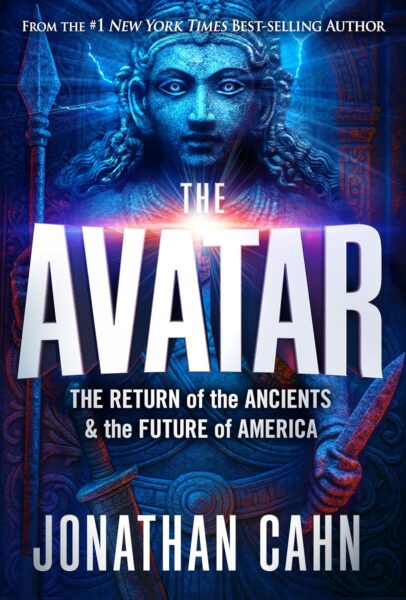
Order Jonathan Cahn’s Newest Book, “The Avatar” on Amazon.com!
The project was spearheaded by mathematician Shira Faigenbaum-Golovin, who began the research in 2010 by analyzing handwriting on ancient pottery shards dating back to 600 BC.
“We concluded that the findings in those inscriptions offer valuable clues for dating texts from the Old Testament,” Faigenbaum-Golovin said. “That’s when we started putting together our current team, who could help us analyze these biblical texts.”
According to the researchers, the AI identified three textual traditions within the biblical material: the Priestly source, the Deuteronomistic History and the Book of Deuteronomy itself. Researchers also reported that portions of the Ark Narrative in 1 Samuel did not align with any of the three styles.
“Portions of the Ark Narrative in 1 Samuel didn’t correspond to any of the three styles,” the team stated, describing the finding as “yet another mystery surrounding the Bible’s composition.”
The authors of the study said their work “sheds new light on the question of authorship of biblical texts by offering interpretable, statistically significant evidence of the existence of linguistic characteristics in the writing of biblical authors/redactors, that can be identified automatically.”
“Our methodology thus provides a new tool to address disputed matters in biblical studies,” they said.
Researchers also pointed to applications beyond biblical scholarship. “If you’re looking at document fragments to find out if they were written by Abraham Lincoln, for example, this method can help determine if they are real or just a forgery,” Faigenbaum-Golovin said.
Despite the technological claims, artificial intelligence does not operate independently of human input. It functions within frameworks shaped by programmers, training data and underlying assumptions. The researchers described their work as “a unique collaboration between science and the humanities” and “a surprising symbiosis.”
“It’s such a unique collaboration between science and the humanities,” Faigenbaum-Golovin said. “It’s a surprising symbiosis, and I’m lucky to work with people who use innovative research to push boundaries.”
As technology continues advancing at an unprecedented rate, any analysis that contradicts the Word of God warrants caution and discernment rather than unquestioning trust in technology. Scripture states that the end times will be marked by deception, reinforcing the need to test every claim, including those produced by artificial intelligence, against the truth already revealed in God’s Word.
James Lasher, a seasoned writer and editor at Charisma Media, combines faith and storytelling with a background in journalism from Otterbein University and ministry experience in Guatemala and the LA Dream Center. A Marine Corps and Air Force veteran, he is the author of The Revelation of Jesus: A Common Man’s Commentary and a contributor to Charisma magazine.