
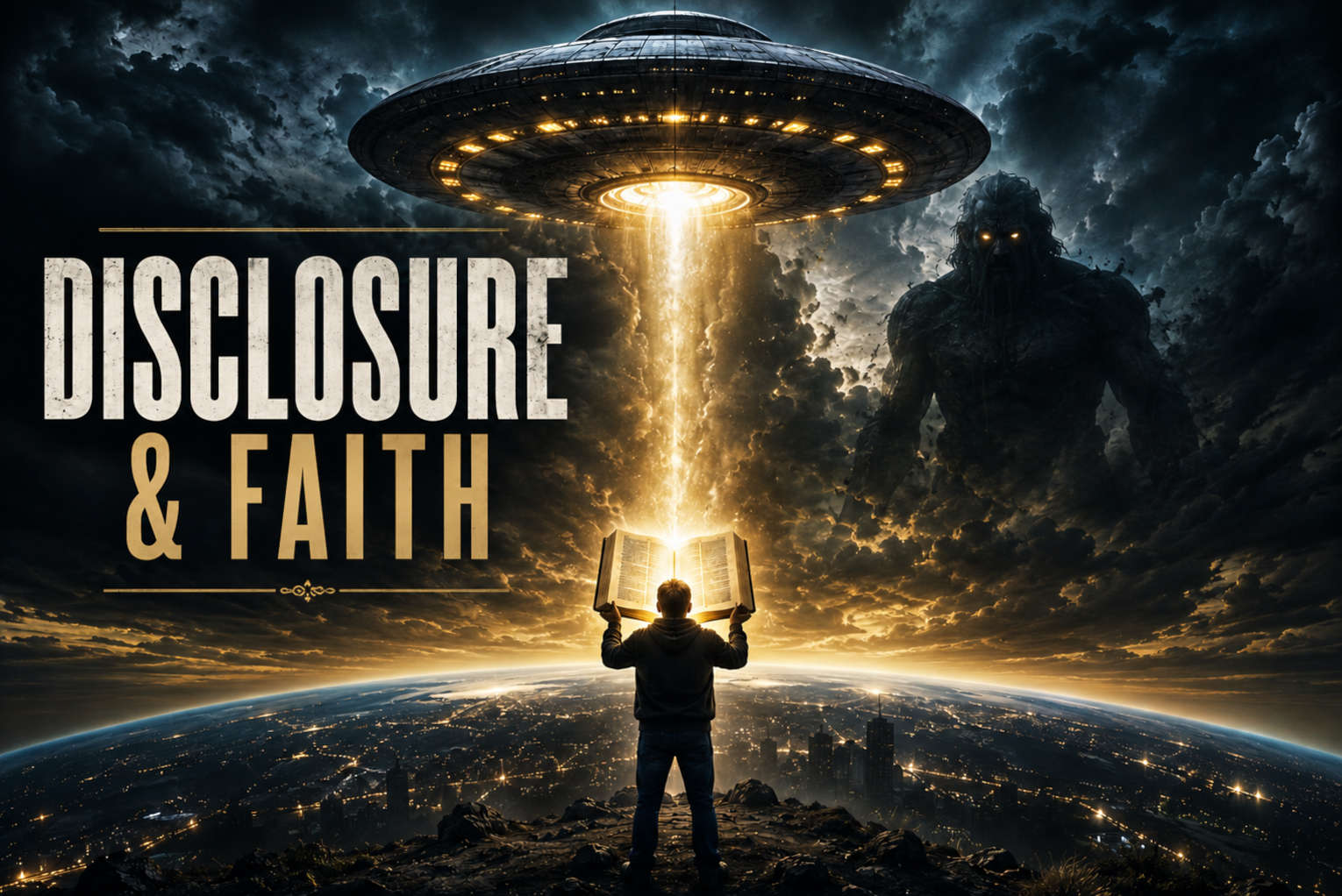
The conversation surrounding UFOs, unidentified anomalous phenomena (UAPs) and the possibility of nonhuman intelligence has undergone a dramatic transformation in recent years. Subjects that were once largely confined to science-fiction films, fringe researchers and late-night radio programs now occupy a prominent place in public discourse. Military pilots have testified about encounters with unexplained aerial objects. Intelligence officials have made extraordinary claims before Congress. Government agencies have released footage of phenomena they acknowledge they cannot fully explain. Major news organizations now cover stories that, not long ago, would have been dismissed outright.
Whether one views these developments as evidence of advanced technology, extraterrestrial visitation, spiritual activity or something else entirely, it is clear that the cultural landscape has changed. The UFO question is no longer a niche topic discussed by a small group of enthusiasts. It has become part of a broader conversation about humanity’s origins, our place in the universe and the possibility that reality may be more complex than most people have assumed.
This changing environment provides the backdrop for the release of Disclosure Day, Steven Spielberg’s latest film exploring themes of government secrecy, nonhuman intelligence and humanity’s response to extraordinary revelations. The significance of the film extends beyond its box office potential or entertainment value. Spielberg remains one of the most influential storytellers of the modern era, and his projects often shape the way millions of people think about a subject. When a filmmaker of his stature returns to the UFO topic at a time when public interest is surging, it is worth paying attention to the larger cultural moment in which the film appears.
What makes the current discussion particularly noteworthy is that it differs substantially from previous waves of UFO fascination. During much of the 20th century, reports of strange lights in the sky or alleged encounters with unidentified craft were often treated as curiosities. They generated brief headlines before fading from public attention. Today, however, the discussion has moved beyond isolated sightings and anecdotal reports. Questions are increasingly being asked about the nature of the phenomenon itself and what it might mean if humanity is forced to confront the existence of an intelligence beyond our own.
This shift has given rise to a growing number of competing explanations. Some researchers argue that advanced civilizations from distant star systems may be visiting Earth. Others suggest the phenomenon may involve dimensions of reality that science has only begun to explore. Still others believe the answer may lie in spiritual realities that have been described throughout human history but interpreted differently by various cultures and religions. While there is little agreement regarding the source of the phenomenon, there is growing agreement that the subject can no longer be ignored.
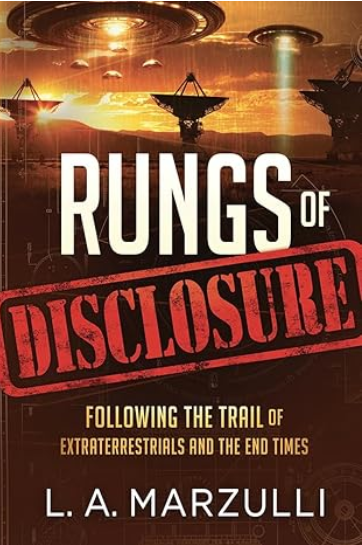
Order L.A. Marzulli’s Best-Selling Book, “The Rungs of Disclosure” on Amazon.com!
An equally important development is the way the disclosure conversation is being framed. For decades, popular culture often portrayed alien encounters as hostile invasions that threatened humanity’s survival. Movies frequently depicted extraterrestrials as conquerors arriving from distant worlds to destroy civilization or enslave mankind. More recent narratives have taken a different approach. Increasingly, stories involving nonhuman intelligence emphasize concepts such as empathy, enlightenment, unity and personal transformation. Rather than presenting these entities as enemies, many modern narratives portray them as guides, teachers or catalysts for humanity’s next stage of development.
That shift in messaging deserves careful examination because ideas often shape public expectations long before major events occur. Throughout history, societies have been prepared to accept new concepts through stories, entertainment and cultural narratives. Long before people embrace a particular explanation for a phenomenon, they are frequently introduced to a framework through which that phenomenon should be understood. As a result, the disclosure conversation has become about far more than strange objects in the sky. It has evolved into a discussion about human identity, spiritual truth and the future of civilization itself.

For Christians, this raises important questions that extend beyond the debate over whether UFOs are real. Scripture does not call us to accept every claim uncritically, nor does it encourage us to ignore developments taking place around us. Instead, believers are instructed to exercise discernment and evaluate ideas according to the truth of God’s Word. That means the central question is not merely whether unusual phenomena exist, but how those phenomena should be interpreted.
The Bible repeatedly warns that deception often presents itself in appealing forms. Throughout Scripture, spiritual counterfeits rarely announce themselves as falsehoods. Instead, they frequently appear attractive, persuasive and even beneficial. Because of this, Christians must carefully consider not only the existence of unexplained phenomena but also the explanations being offered to account for them. The worldview behind an idea can ultimately prove more significant than the phenomenon itself.
As disclosure continues moving into mainstream culture through government investigations, media coverage and major Hollywood productions, believers will increasingly encounter friends, coworkers and family members who are asking questions about these subjects. Many of those conversations will revolve around science, technology and the possibility of life elsewhere in the universe. Yet beneath those discussions lies a deeper issue involving humanity’s origins, purpose and relationship to the Creator.
Those questions are not new. In fact, they reach back to some of the oldest and most mysterious passages in Scripture. Long before modern governments held hearings about nonhuman intelligence or filmmakers produced movies about disclosure, the Bible described a supernatural conflict that unfolds throughout the biblical narrative. Understanding that conflict provides a framework through which many Christians interpret the growing fascination with UFOs, nonhuman entities and the possibility of contact with other intelligences.
To understand why these issues have become so significant for many believers, it is necessary to return to the opening chapters of Genesis and examine a biblical storyline that some researchers believe remains central to the spiritual battle taking place in the world today.
The Seed War and the Forgotten Story of Genesis 3:15
For many Christians, discussions about UFOs, nonhuman intelligence and unexplained phenomena often begin with questions about technology, space exploration or the possibility of life on other planets. Yet for a growing number of researchers, theologians and Bible students, the framework for understanding these issues begins in a much different place. Rather than looking to the stars, they look to the opening chapters of Genesis.
At the center of this perspective is a passage that is frequently overlooked despite its enormous significance. Genesis 3:15 records God’s judgment upon the serpent after the fall of mankind: “I will put enmity between you and the woman, and between your seed and her Seed; He shall bruise your head, and you shall bruise His heel.”
For centuries, Christians have recognized this verse as the first prophetic announcement of the coming Messiah. The promise ultimately points to Jesus Christ, who would defeat Satan through His death and resurrection. Yet many scholars and Bible teachers have also noted that the passage introduces another theme that runs throughout Scripture: the conflict between the seed of the woman and the seed of the serpent.
Viewed through this lens, the Bible tells the story of an ongoing spiritual war that extends far beyond the temptation in the Garden of Eden. The conflict is not merely between good and evil in a general sense. It is a battle over humanity itself, a struggle that repeatedly appears throughout the biblical narrative and reaches its climax in the victory of Christ.
This perspective becomes especially significant when readers arrive at Genesis 6, one of the most debated passages in Scripture. The chapter describes a period before the Flood when the “sons of God” took wives from among the daughters of men and produced offspring known as the Nephilim. The passage has generated centuries of debate, with some interpreting the sons of God as fallen angels and others viewing them as human descendants of Seth.
Those who see Genesis 6 as describing the activity of fallen angels argue that the passage represents a dramatic escalation of the conflict introduced in Genesis 3:15. In this interpretation, the corruption that spread across the earth before the Flood involved more than human wickedness. It included an attempt to corrupt humanity itself through the introduction of a hybrid lineage that was never part of God’s created order.
This understanding helps explain why the Flood occupies such a central place in biblical history. Scripture describes a world that had become thoroughly corrupt, violent and spiritually polluted. God’s judgment came not only because of widespread sin but because creation itself had been defiled. Noah and his family became the means through which God preserved humanity and carried forward the line through which the promised Messiah would eventually come.
It is impossible to deny that Genesis 6 raises profound questions about the relationship between the human and supernatural realms. The passage stands apart from nearly everything else in Scripture, describing events that many modern readers find difficult to understand but that ancient Jewish and early Christian writers frequently discussed.
The significance of these events becomes even more apparent when Jesus speaks about the conditions that will exist before His return. In Matthew 24, Christ declares that “as the days of Noah were, so also will the coming of the Son of Man be.” Similar statements appear in Luke 17, where Jesus compares the last days to the period immediately preceding the Flood.
Many Christians understandably focus on the moral dimensions of those passages. The days of Noah were characterized by violence, corruption and widespread rebellion against God. Those themes certainly remain relevant today. Yet some researchers believe Jesus’ reference to Noah may also point to the unusual supernatural activity described in Genesis 6. If that interpretation is correct, then the days preceding Christ’s return could involve more than moral decline. They could include renewed deception involving the interaction between humanity and supernatural powers.
This possibility leads many students of prophecy to another intriguing passage found in Daniel 2. While interpreting Nebuchadnezzar’s vision of the statue composed of various metals, Daniel describes a future kingdom symbolized by iron mixed with clay. Daniel 2:43 states: “They will mingle themselves with the seed of men, but they will not cling to one another, just as iron does not mix with clay.”
The identity of the “they” in this passage has been debated for generations. Many commentators understand the verse as describing political alliances that ultimately fail to hold together. Others suggest the wording points to something more unusual. They note that Daniel does not simply describe nations mingling with nations. Instead, he refers to entities mingling with “the seed of men,” language that some believe echoes the conflict first introduced in Genesis.
Those who connect Daniel 2:43 to Genesis 3:15 and Genesis 6 see a consistent pattern emerging across Scripture. In their view, the Bible presents a long-running conflict involving attempts to corrupt, alter or counterfeit God’s design for humanity. The battle begins in Eden, escalates before the Flood, reappears throughout biblical history and ultimately reaches its conclusion in the last days.
This framework has led some Christian researchers to view modern reports of alien encounters, abduction experiences and hybridization narratives through a spiritual rather than extraterrestrial lens. They point out that many of the themes reported by alleged experiencers bear striking similarities to concepts already found in Scripture and ancient writings. Rather than viewing these accounts as evidence of visitors from distant planets, they interpret them as manifestations of the same supernatural conflict described throughout the Bible.
Such conclusions remain controversial even within Christian circles. Faithful believers disagree on the interpretation of Genesis 6, Daniel 2 and other passages related to the Nephilim. Yet the growing interest in these subjects reflects a broader recognition that the UFO discussion cannot be separated from larger questions about theology, anthropology and biblical prophecy.
At its core, the issue is not merely about strange lights in the sky or mysterious encounters. It is about competing explanations for the nature of reality. If humanity is being presented with a new understanding of its origins and place in the universe, Christians must carefully evaluate whether that understanding aligns with Scripture or contradicts it.
This is why the discussion surrounding disclosure has become so significant for many believers. The debate is no longer limited to whether unexplained phenomena exist. It has become a conversation about the nature of the spiritual realm, the authority of God’s Word and the possibility that ancient biblical warnings may have direct relevance to the modern world.
As the disclosure movement continues to gain momentum, these questions become increasingly difficult to ignore. If the Bible describes a long-running conflict involving deception, counterfeit spiritual experiences and efforts to draw humanity away from the truth, then believers must consider how those warnings apply in an age increasingly fascinated with nonhuman intelligence. That challenge brings us to perhaps the most important question of all: What happens if disclosure becomes the foundation for a new spiritual narrative that competes directly with the gospel itself?
The Coming Battle for Truth
The growing fascination with disclosure is often presented as a scientific issue. Public discussions typically focus on government transparency, military encounters, advanced technologies and the possibility of life beyond Earth. Yet beneath those conversations lies a much deeper question. If humanity is eventually confronted with evidence of nonhuman intelligence, how will that revelation reshape the way people understand themselves, their origins and their future?
That question sits at the heart of the current disclosure movement. The issue is no longer simply whether unidentified phenomena exist. Increasingly, the discussion centers on what those phenomena mean and how humanity should respond to them. As a result, disclosure is becoming more than a conversation about objects in the sky. It is becoming a conversation about worldview.
This shift is evident across popular culture, media and even government circles. In recent years, public officials, intelligence personnel, military officers and researchers have repeatedly suggested that humanity may not be alone. Documentaries, television programs and bestselling books have explored similar themes. Stories once confined to speculative fiction are increasingly being discussed as possibilities worthy of serious consideration.
At the same time, a growing number of voices are proposing that contact with nonhuman intelligence could fundamentally transform civilization. Some envision a future in which humanity gains access to advanced knowledge, new technologies or a deeper understanding of the universe. Others suggest such a revelation could unite the world around a common purpose and help humanity move beyond many of its divisions.
What makes these ideas especially significant is that they often carry spiritual implications. The conversation is no longer limited to science and technology. It increasingly touches on questions that have traditionally belonged to theology. Where did humanity come from? Why are we here? What is our purpose? Who possesses ultimate authority? These are not merely scientific questions. They are foundational questions about truth itself.
For Christians, this is where the disclosure conversation becomes particularly important. Scripture teaches that mankind was created in the image of God and that our identity, purpose and destiny are inseparable from our relationship with Him. Any worldview that seeks to redefine humanity’s origins will inevitably challenge the biblical narrative. That does not mean every discussion of nonhuman intelligence is inherently false, but it does mean believers must carefully evaluate the assumptions that often accompany such discussions.
One of the most influential narratives gaining traction today is the idea that humanity may have been guided, engineered or influenced by advanced intelligences throughout history. Variations of this concept have appeared in books, documentaries and television programs for decades, but the theory has become increasingly mainstream. Ancient monuments, religious experiences and even the origins of civilization are frequently reinterpreted through the lens of extraterrestrial intervention.
The implications of such a worldview are enormous. If humanity comes to believe that advanced beings created us, guided our development or seeded civilization, the authority of Scripture would inevitably come under attack. The biblical account of creation would be replaced by an alternative origin story. God’s role as Creator would be diminished or eliminated entirely. The spiritual history recorded in Scripture would be reinterpreted through a completely different lens.
This is one reason many Christians view the disclosure movement with caution. The concern is not simply that people might believe in extraterrestrial life. The greater concern is that humanity could be encouraged to embrace a new spiritual framework that competes directly with the gospel. Throughout history, false religions and deceptive philosophies have often emerged by offering alternative explanations for humanity’s origins and purpose. The modern disclosure movement has the potential to do the same on a global scale.
The New Testament repeatedly warns that spiritual deception will increase as history moves toward its conclusion. In 1 Timothy 4:1, Paul writes that “the Spirit expressly says that in later times some will depart from the faith, giving heed to deceiving spirits and doctrines of demons.” The warning is striking because it does not describe people abandoning the faith due to persecution or hardship alone. It describes individuals being drawn away by ideas and teachings that appear convincing but ultimately lead them away from the truth.
Similarly, 2 Thessalonians speaks of a great falling away and a powerful deception that will accompany the rise of the lawless one. While Christians have long debated the details of these passages, there is broad agreement that Scripture anticipates an increase in spiritual confusion and deception in the last days. Believers are repeatedly urged to remain grounded in the truth and to test every spirit and every teaching against the Word of God.
When viewed through that lens, the disclosure conversation takes on a different significance. The issue is not whether advanced technologies exist or whether unexplained phenomena deserve investigation. The issue is whether humanity is being prepared to accept explanations that ultimately undermine biblical truth. A society that no longer believes it was created by God will naturally seek another explanation for its existence. A culture that rejects divine revelation will inevitably look elsewhere for answers.
This does not mean Christians should respond with fear. Scripture never calls believers to panic in the face of uncertainty. In fact, the Bible consistently reminds us that God remains sovereign over history and that nothing takes place outside His knowledge and authority. The rise of disclosure narratives, no matter how dramatic they may appear, does not threaten God’s plan or diminish the victory Christ secured through His death and resurrection.
Instead, these developments present an opportunity for the church. As public interest in the supernatural continues to grow, many people are asking questions that materialism cannot answer. Conversations about nonhuman intelligence often lead to discussions about spiritual realities, human purpose and the existence of a Creator. In a culture increasingly fascinated with mysteries beyond the physical world, Christians have an opportunity to point people toward the One who created both the seen and unseen realms.
This moment also highlights the importance of biblical literacy. Many believers are familiar with popular theories surrounding disclosure but have spent far less time studying what Scripture actually says about spiritual warfare, deception and the nature of the unseen realm. The stronger our foundation in God’s Word becomes, the less vulnerable we are to confusion when new ideas emerge. Discernment is not developed through fear of deception; it is developed through a deep knowledge of the truth.
As disclosure continues to dominate headlines, inspire films and shape cultural conversations, Christians should resist the temptation to respond with either blind acceptance or dismissive indifference. Instead, we are called to approach these issues with wisdom, discernment and confidence in God’s Word. The Bible provides a framework for understanding reality that remains trustworthy regardless of how technology advances or what discoveries may lie ahead.
The central issue has never been UFOs, nonhuman intelligence or government disclosure. The central issue is truth. Every generation faces competing narratives that seek to answer life’s biggest questions. Our generation is no different. The challenge before us is to remain anchored to the unchanging truth of Scripture while thoughtfully engaging with the questions and uncertainties of our time.
Whatever revelations the future may hold, Christians can move forward with confidence because our hope does not rest in governments, scientific discoveries or contact with other intelligences. Our hope rests in Jesus Christ, the Creator of all things visible and invisible, who has already triumphed over every power of darkness and whose kingdom will ultimately prevail.
This article is derived from Charisma Media’s interview with L.A. Marzulli.
Prepared by Charisma Media Staff.
