
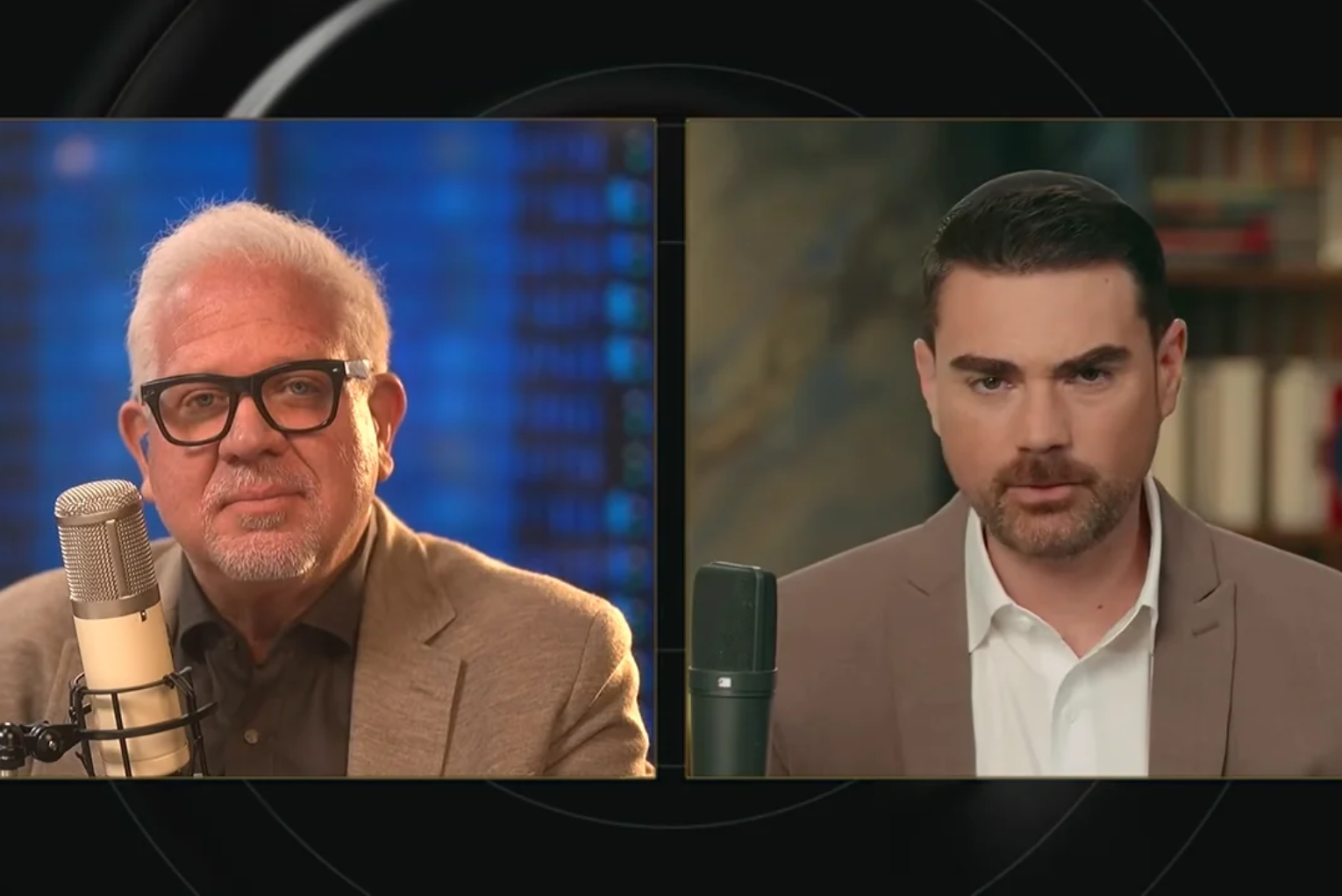
What happens when a society decides it no longer needs God? According to Ben Shapiro, the consequences go far beyond declining church attendance. They strike at the very foundation of human freedom.
During a recent conversation with Glenn Beck, Shapiro discussed his new film starring Rob Lowe, James Franco and Nick Nolte, which explores the brutality of Soviet communism and the spiritual convictions of those who resisted it.
But what caught Beck’s attention wasn’t simply the film’s political message. It was the unmistakable presence of the Christian gospel in a movie written by a Jewish conservative commentator.
“I don’t know if you know this, Ben, but you’re Jewish,” Beck joked before delivering his assessment.
“This is one of the best Christian films I’ve ever seen. I mean, you know the gospel.”
And Shapiro’s explanation revealed why Christianity wasn’t merely an addition to the story. It was essential to telling it.
Why Christianity Could Not Be Removed
The film follows Lowe’s character, a disgraced former Russian literature professor and KGB informant who faces interrogation over his connection to a dissident priest. As the story unfolds, he must confront his failures as a husband and father while deciding whether he will finally stand for something greater than himself.
Shapiro explained that although he is not a Christian, portraying the character’s faith authentically was critical.
“Rob’s character believes in the truth of Christianity,” Shapiro said.
He emphasized that the Christian resistance to communism was not simply about religion providing social stability or encouraging better behavior. It was rooted in believers’ convictions about God and truth.
“Realistically speaking, if you’re talking about spiritual resistance to communism, that was coming overwhelmingly from religious Christians,” Shapiro said.
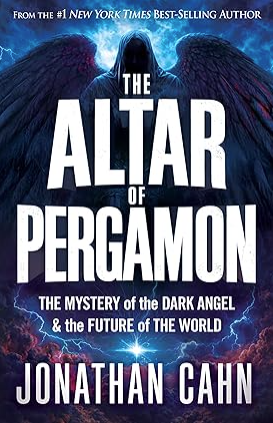
To order Jonathan Cahn’s new book, The Altar of Pergamon, visit Amazon.com.
He pointed to Pope John Paul II’s historic 1979 visit to Poland, recalling how crowds demanded God rather than political or economic reform alone.
For Shapiro, removing the gospel from the film would have distorted both the character and the history behind the story.
‘The First Thing the Communists Had to Kill Was God’
Perhaps the most striking moment came when Shapiro explained what he believes makes Marxism fundamentally incompatible with biblical faith.
He argued that the conflict is not merely economic or political. It begins with two radically different understandings of what it means to be human.
Marxism, he said, is rooted in a materialistic worldview that reduces human beings to products of the systems governing them. Biblical faith, by contrast, declares that humanity was created in God’s image, with inherent worth, moral responsibility and the ability to choose.
“God made human beings in his own image, which means that we are flawed, but it also means that we have the capacity for will and creativity, and it means that we have innate human rights,” Shapiro explained.
He described a pivotal exchange in the film between Franco’s communist interrogator and Lowe’s character. When the interrogator dismisses the existence of the soul, Lowe’s character challenges him to recognize that human beings are more than physical matter.
For Shapiro, that distinction strikes at the heart of the ideological conflict.
“The minute that you admit that human beings have innate value and that value has to be spiritual because it can’t just be material, once you realize that, then Marxism goes right out the window,” he said.
Then came his conclusion:
“And that’s why the first thing that the communists had to kill was God.”
Rob Lowe’s Emotional Response to the Script
The film’s spiritual message also appears to have made a profound impression on its leading actor.
Shapiro revealed that Lowe wasn’t initially his first choice for the role. However, after receiving the screenplay, the actor called him with an emotional response.
“I think God has touched me…in my life before. I think this script is the third,” Lowe reportedly told Shapiro.
After finishing the screenplay, Lowe called again and personally asked to play the character.
Shapiro said Lowe even offered to shave his head and learn an accent to portray the troubled professor.
Beck praised the performance, arguing that the film deserved recognition far beyond conservative audiences. Shapiro, meanwhile, claimed Hollywood’s political divisions contributed to the film’s rejection by major festivals and distributors.
Yet beyond the awards and industry politics, the movie raises a question that reaches directly into the spiritual condition of America.
A Warning Beyond the Movie Screen
Later in their conversation, Beck suggested that the ultimate target of totalitarian movements is not simply religious institutions or particular groups of believers, but the God of Abraham, Isaac and Jacob.
Shapiro agreed with the spiritual argument, pointing again to Genesis and the declaration that humanity bears God’s image.
Their discussion underscored a central question: What happens when governments or ideologies claim authority over the very identity, worth and conscience of human beings?
For Christians, the answer begins with a truth established long before any political movement or government existed.
Human dignity does not originate with the state. It begins with the Creator.
As Shapiro’s film seeks to demonstrate, defending that truth can come at a tremendous personal cost.
Abby Trivett is a writer and editor for Charisma Media and has a passion for sharing the gospel through the written word. She holds two degrees from Regent University, a B.A. in Communication with a concentration in Journalism and a Master of Arts in Journalism. She is the author of the newly released book, The Power of Suddenly: Discover How God Can Change Everything in a Moment. For interviews and media inquiries, please contact [email protected]. Learn more about Abby at abbytrivett.com.