
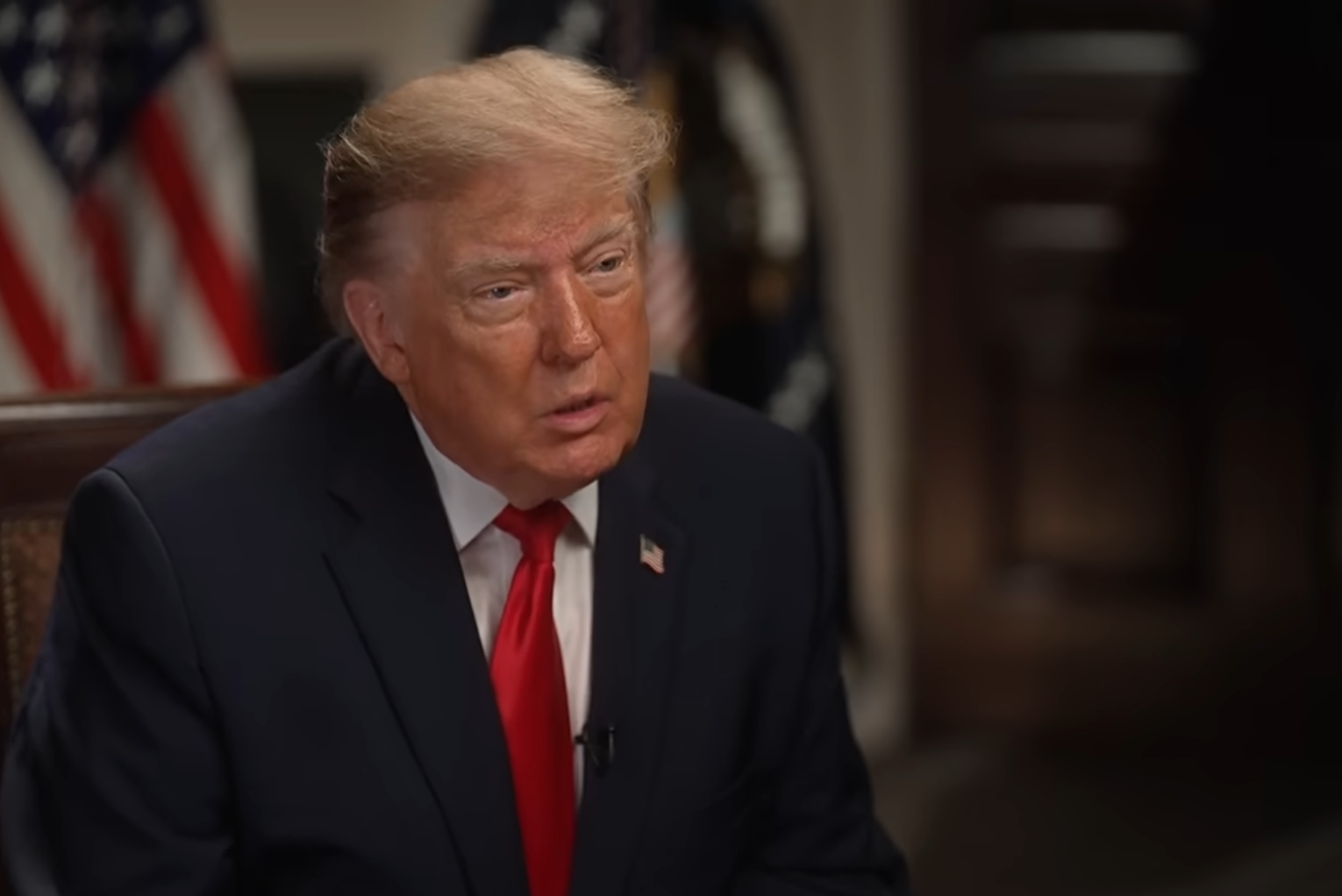
During an extended 60 Minutes interview, President Donald Trump faced a question far more consequential than the latest political battle: Where does he believe he will spend eternity?
Near the conclusion of the interview with Ross Douthat, Trump was asked what he believes happens after death, particularly after surviving multiple assassination attempts.
“Well, I’m a religious person. So, in theory I go to heaven,” Trump said.
When pressed about whether he actually believes he will enter heaven, the president replied, “I hope so. I don’t want to go to hell.”
The conversation then quickly turned to one of Christianity’s most challenging commands: forgiving those who have wronged us.
Douthat referenced Erika Kirk’s remarks about Christian forgiveness during Charlie Kirk’s memorial service, contrasting her message with Trump’s previous admission that he hated his political opponents.
The interviewer then presented Trump with a sobering hypothetical: What if forgiving political enemies like James Comey and Nancy Pelosi were necessary to enter paradise?
“The answer is no. I want to be honest,” Trump responded.
Douthat pressed further, asking whether that answer would remain the same even “before the judgment throne of God.”
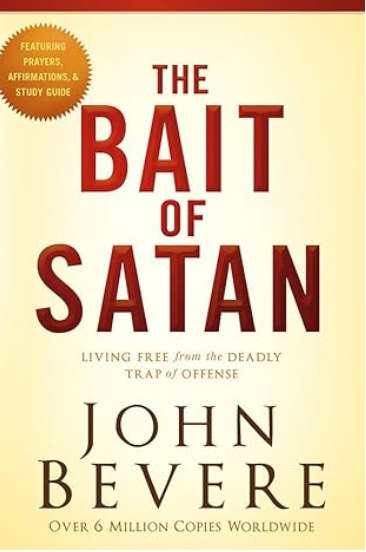
To order John Bevere’s bestsellling book, The Bait of Satan, visit Amazon.com.
“Before the judgment. No, I think they were very bad people,” Trump replied, acknowledging that he hated some of his enemies.
Douthat challenged him again, asking how someone who had experienced so much success and opportunity could still refuse to forgive his enemies when confronted with God’s judgment.
“I probably cannot do that, no. Because I do hate some of my enemies, and I always will,” Trump admitted.
The exchange raises a sobering spiritual issue that extends far beyond Washington. Jesus warned in Matthew 6:14-15 about the importance of forgiving others and the consequences of refusing to forgive.
Evangelist Franklin Graham responded to the interview on X, emphasizing that the question of eternity is far greater than politics.
“Heaven has borders. Heaven has unique and very strict entrance requirements,” Graham wrote.
He explained that entering heaven requires acknowledging sin, repenting of it and placing faith in Jesus Christ, who died for humanity’s sins and rose again.
“Religion can’t save you—only a relationship with the Savior, Jesus Christ, can save you,” Graham wrote.
Graham’s message points directly to the heart of the gospel: Eternal life is not secured through political power, personal accomplishments or religious identification, but through repentance and faith in Jesus Christ.
For Christians, Trump’s remarks should be more than another political talking point. They should be a call to prayer.
Pray that President Trump would not merely hope for heaven, but would truly know Jesus Christ as his Lord and Savior, walk closely with Him and experience the transforming power of His grace. Pray for God to soften his heart, heal the wounds of the past and give him the strength to forgive those he considers his enemies.
Ultimately, Trump’s greatest victory would not come at the ballot box or on the world stage, but through a life fully surrendered to Jesus Christ.
Abby Trivett is a writer and editor for Charisma Media and has a passion for sharing the gospel through the written word. She holds two degrees from Regent University, a B.A. in Communication with a concentration in Journalism and a Master of Arts in Journalism. She is the author of the newly released book, The Power of Suddenly: Discover How God Can Change Everything in a Moment. For interviews and media inquiries, please contact [email protected]. Learn more about Abby at abbytrivett.com.
