
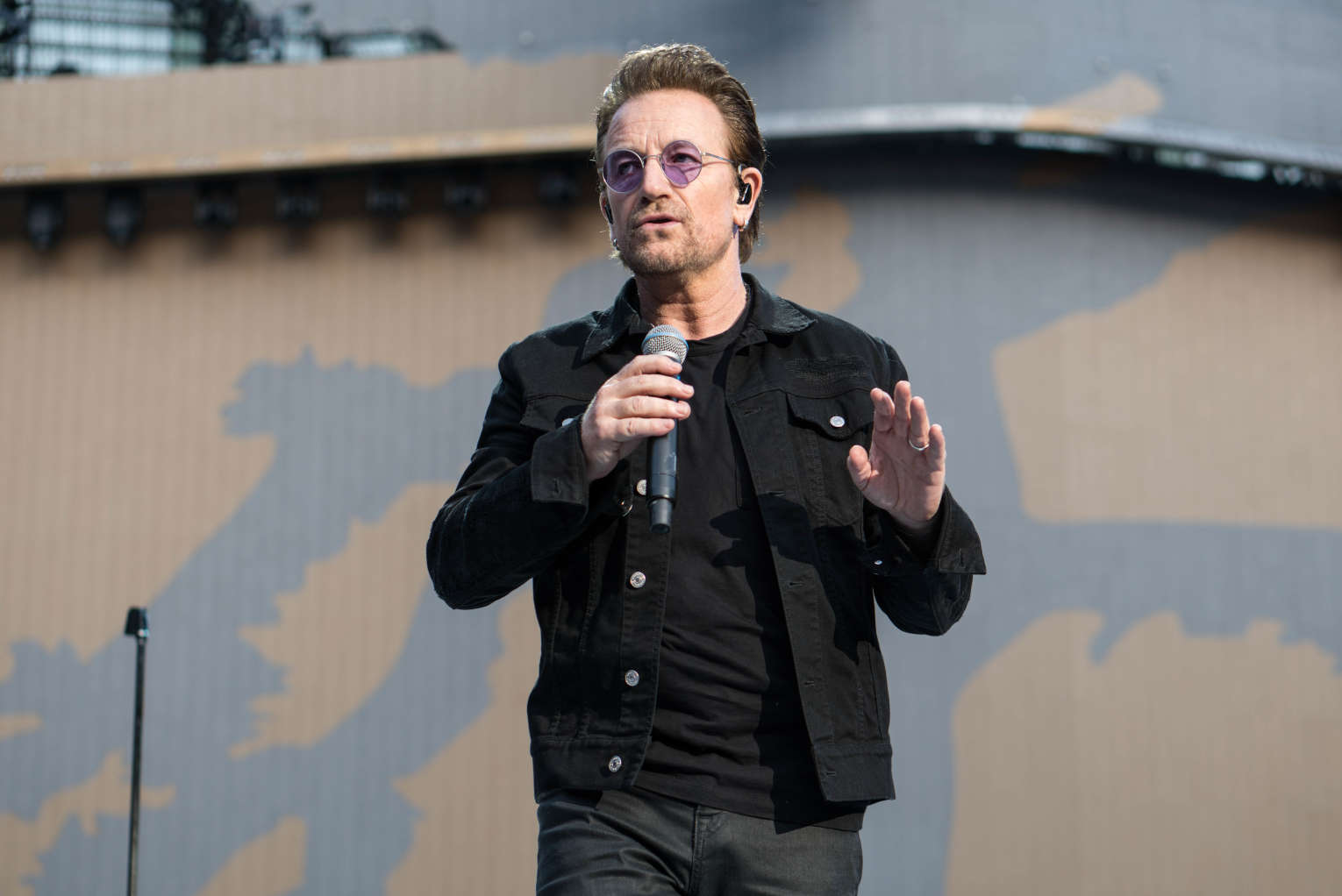
There’s nothing quite like a wealthy celebrity lecturing ordinary Americans about their religious obligations.
And U2 frontman Bono apparently has some thoughts about what Christians and Jews should believe when it comes to government spending.
During an interview with The New York Times, the Irish rock star took aim at people of faith who support cuts to the U.S. Agency for International Development, or USAID, under the Department of Government Efficiency.
“What Christian household, what Catholic household, what Jewish, religious — anyone of faith, in fact, anyone of conscience — would allow the hemorrhaging of human life that is going to happen as a result of these DOGE cuts?” Bono asked. “I mean, it’s just, it is unconscionable.”
That’s quite the accusation. Apparently, supporting efforts to rein in government spending is now evidence of a deficient moral compass.
And it’s particularly curious that Bono singled out Christians and Jews before expanding his criticism to everyone else.
But here’s a rather simple explanation for why a Christian or Jewish household might support cuts to USAID — faith and fiscal responsibility are not mutually exclusive.
Orde Alexander Pagani’s New Book, “Discerning the Demonic” on Amazon.com!
In fact, the Bible has plenty to say about responsible stewardship. Luke 16:10 teaches that whoever can be trusted with very little can also be trusted with much. And in the Parable of the Talents, found in Matthew 25, Jesus praises servants who responsibly manage the resources entrusted to them.
Those principles don’t suddenly disappear when the money belongs to American taxpayers. Christians can believe wholeheartedly in helping the poor while also demanding accountability from the government agencies entrusted with that mission.
And let’s not pretend the federal government has earned some sterling reputation for responsible spending.
To be fair, Bono’s concerns about the humanitarian consequences of cutting foreign aid deserve serious consideration. Nobody should be indifferent to preventable suffering, particularly when children are involved. But that’s an argument for carefully examining which programs save lives, not for treating government spending as a religious sacrament.
The interview then took an even stranger turn when The New York Times asked Bono whether he loved the people responsible for what he considered unconscionable decisions.
“Yeah, I love these people because I believe God loves them and Christianity calls us not only to love our neighbor, but to love our enemies,” Bono responded.
“But what’s going on with the man whose name shall not be mentioned is something way bigger than the man,” he continued, presumably referring to President Donald Trump. “It’s going on all over the world.”
Oh, grow up.
If Bono genuinely wants to persuade Americans that particular USAID programs deserve continued funding, invoking some Voldemort-esque refusal to name a conservative bogeyman is not exactly a compelling argument.
It makes an ostensibly serious humanitarian discussion sound like another petty feud involving extraordinarily wealthy celebrities and politicians.
And speaking of wealth, Bono is hardly powerless to help the people he’s so worried about. He has spent years advocating for humanitarian causes, and there’s nothing stopping him from continuing to put his considerable resources, influence, and connections toward that work.
Charity is a Christian virtue. So is stewardship.
And Americans of faith are perfectly capable of embracing both without taking moral instruction from a rock star who seems to confuse disagreement over government spending with indifference to human suffering.
Bono is entitled to his convictions. But he might consider extending that same courtesy to the Christians and Jews whose faith he so casually calls into question.
This article originally appeared on The Western Journal and is reposted with permission.
