
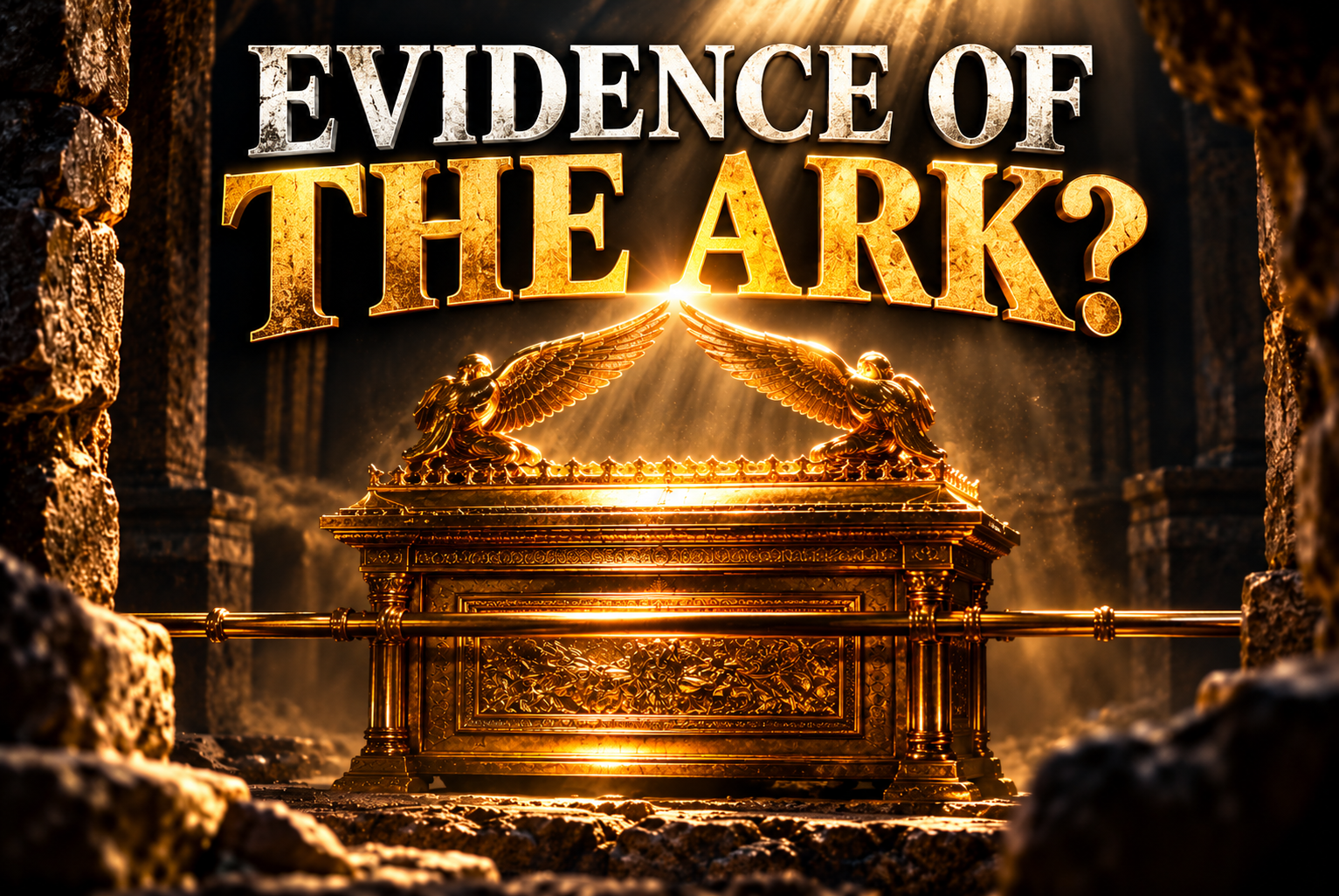
For centuries, the Ark of the Covenant’s whereabouts have remained one of the Bible’s greatest unanswered mysteries. But what if one of Scripture’s most famous lost treasures never traveled as far as many have assumed?
Author and filmmaker Dinesh D’Souza recently explored that possibility during a conversation with Shabbos Kestenbaum on PragerU’s “Theological,” pointing to a theory that places the Ark surprisingly close to its ancient home.
“The Ark of the Covenant and Noah’s Ark are two—if either of those were found—[it] would be straight out the biggest discovery in biblical archaeology of all time,” D’Souza said.
The Ark of the Covenant held an extraordinary place in Israel’s history, representing God’s presence among His people. Yet its ultimate fate remains uncertain.
D’Souza noted that, unlike some of the Temple’s enormous treasures and fixtures, the Ark was designed to be transported. With Jerusalem facing destruction at the hands of the Babylonians, he suggested it is reasonable to consider whether someone could have moved it before catastrophe struck.
“There was a lot of gold in the Temple,” D’Souza said. “Some of it on the walls. Some of that … is hard to take down. I would imagine that if there is a panic and you know that the Babylonians are coming and they’re going to burn the Temple, you’re going to want to move the Ark out.”
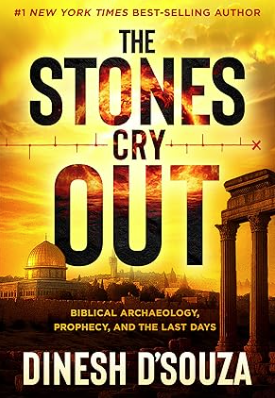
To order Dinesh D’Souza’s new book, The Stones Cry Out, visit Amazon.com.
One theory holds that the Ark was carried far from Jerusalem, perhaps toward Babylonia or another remote location. But D’Souza highlighted another possibility: What if it never went very far at all?
“There is a school of thought that the Ark will be found—and soon—because it is in a location, let’s just say somewhere within the confines of the City of David,” he said.
D’Souza was careful not to present that possibility as archaeological fact.
“I’m not endorsing this theory,” he said. “I don’t know enough about it whether to … give it credence or not.”
That distinction matters.
Biblical archaeology is full of sensational claims, and D’Souza stressed the importance of provenance—establishing where an artifact came from and tracing its history. He said he deliberately excludes disputed artifacts from his own work when the evidence is insufficient.
The location of the Ark of the Covenant remains unknown. But as D’Souza points out, finding it wouldn’t merely be another archaeological headline.
It would be the biblical discovery of a lifetime.
Abby Trivett is a writer and editor for Charisma Media and has a passion for sharing the gospel through the written word. She holds two degrees from Regent University, a B.A. in Communication with a concentration in Journalism and a Master of Arts in Journalism. She is the author of the newly released book, The Power of Suddenly: Discover How God Can Change Everything in a Moment. For interviews and media inquiries, please contact [email protected]. Learn more about Abby at abbytrivett.com.
