
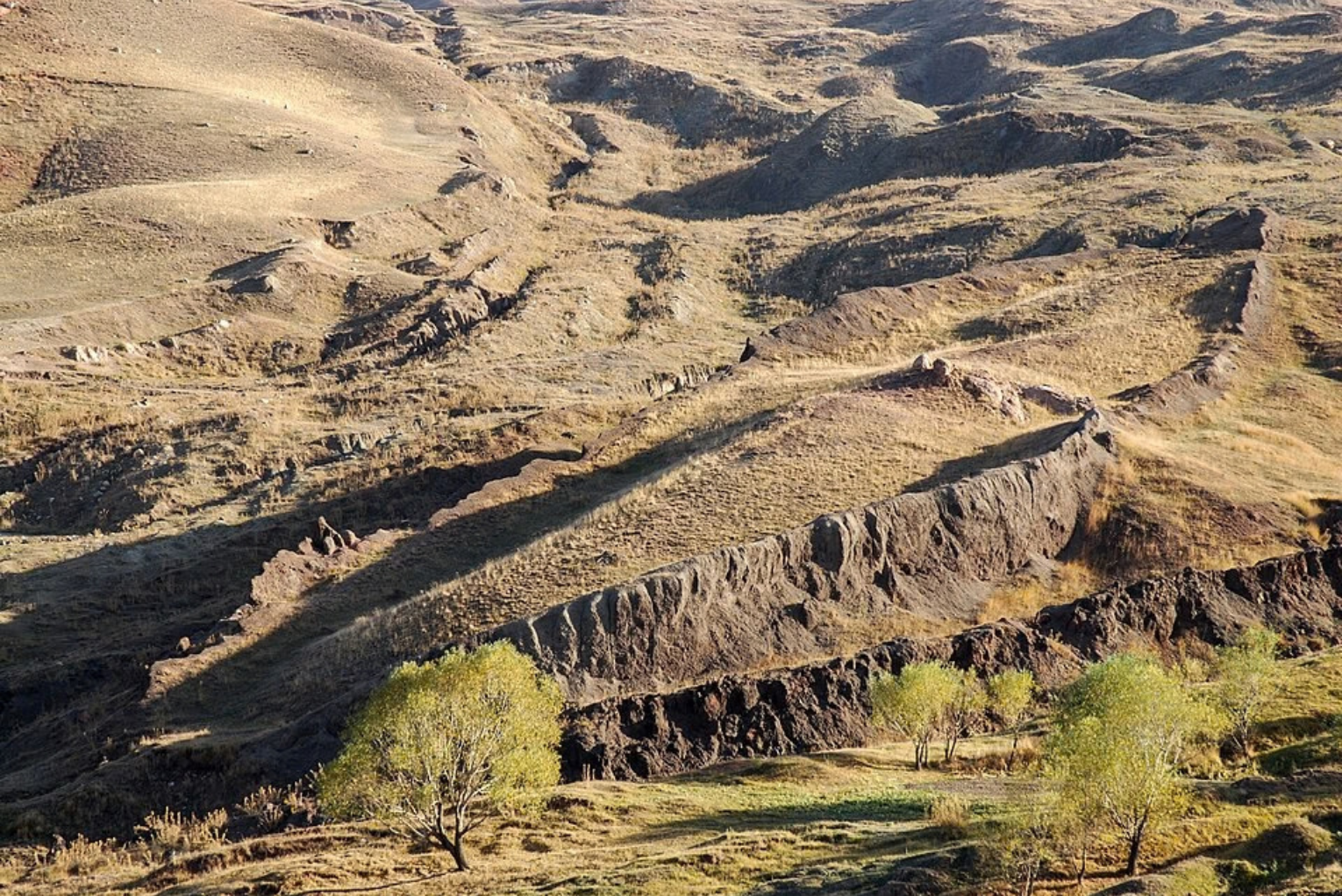
A new report says that the group of researchers hoping to find the remains of Noah’s Ark beneath a Turkish rock formation have found initial evidence that the site has more than rock beneath the surface.
According to the Daily Mail, the researchers have “100 percent confirmed” that the Durupinar Formation near Mount Ararat is a “man-made object.”
The report said scans prior to drilling showed “structural layers, straight lines, right-angle intersections and large cavity-like spaces at multiple depths.”
Drilling found one underground layer contained organic material, which is being tested to determine if it could have decayed wood in it.
Andrew Jones, the founder of Noah’s Ark Scans, said neither limestone nor solid bedrock were detected.
“This destroys the theory the site is a solid limestone block shaped into a boat by glaciers and weathering after coming down the mountainside, and it also refutes the theory that this is bedrock around which mud flowed to form the shape,” he said.
Jones said it was too early to claim he has found evidence the ark is buried there. But said, “I firmly believe the Durupinar Formation represents the buried remains of Noah’s Ark.”
He called the latest finds a “compelling new line of evidence.”
The Durupinar formation, a 515-foot-long, boat-shaped geological feature near the border ot Turkey and Iran, was first identified in aerial photographs in 1959 and has been the focus on research related to the ark for years.

To order Dinesh D’Souza’s new book, The Stones Cry Out, visit Amazon.com.
Researchers plan to collect core samples from the formation, while a drone called GOPHER is expected to examine its interior later this week.
Jones has been touting the site as the resting place of the ark for some time.
“We have a shape of a ship, and then you look at the size of it … exactly 300 royal Egyptian cubits,” Jones told NewsNation last year “That’s what Moses wrote in the book of Genesis.”
This hunt for the ark has skeptics as well as supporters.
A rebuttal to this can be found in a 2025 article for Answers in Genesis.
Ken Ham argued that the evidence being publicized does not establish that the formation is Noah’s vessel. Ham cited geologist Andrew Snelling, who has studied the site for decades and argued that the features seen in geophysical scans could have natural explanations.
This article originally appeared on The Western Journal and is reposted with permission.
