

Breaking free from the chains that bind our minds is crucial in the journey of casting out demons. As believers we often face mental strongholds—deeply ingrained patterns of thinking that keep us from experiencing the fullness of God’s freedom. Romans 12:2 (NIV) urges us, “Do not conform to the pattern of this world but be transformed by the renewing of your mind. Then you will be able to test and approve what God’s will is—his good, pleasing, and perfect will.” By renewing our minds with God’s truth, we can demolish these strongholds, remove the footholds demons exploit, and walk in the freedom and authority that Christ has given us. An unseen battle is going on in the mind that must be understood to live a life of lasting freedom.
The main battlefield for most people is not in the spiritual realm but in the mind. The danger of this war that takes place in the mind is that it is easy to hide from the people around you.
When you’re fighting addiction, most of the people around you know it; when you’re fighting demonic spirits, most of the people
around you know it. Exterior struggles are easy to discern, but this battle is much different, as it takes place in an area that’s easy to hide from others. The battle that goes on in the mind is a very complex thing, a labyrinth of thoughts and emotions that is often misunderstood and underestimated. People often battle in their minds for years before having a breakdown, and then the people around them say, “I didn’t even realize they were going through this!” That’s because the battle was happening in secret.
Mental Fortresses
Mental strongholds are fortresses the enemy builds in our minds to keep us trapped in cycles of sin and wrong thinking patterns. These strongholds are often easy to identify, as they manifest as persistent issues or thoughts we can’t seem to overcome. Even after experiencing deliverance from a demon, being born again, and serving God passionately, we may still struggle with these mental barriers. These lingering struggles are what we refer to as strongholds.
Another way to think about it is that the devil has a stronghold on you. It may feel as if anxiety is gripping you, and you succumb to it. Maybe it’s fear; maybe it’s depression; maybe it’s irrational thoughts. These are mental strongholds. It all starts with lies that Satan plants in our minds, which we believe as truth, even though they are not. When we listen to these lies and accept them as reality, a stronghold is established. These strongholds are usually built over time, but they can also arise from traumatic experiences.
I began learning about mental strongholds when I encountered people who believed they had demons. They would go through deliverance, but nothing would manifest. I found myself puzzled, thinking, “If this isn’t a demon, what is it?” The problem was that they continued in wrong thinking patterns, remaining bound by toxic emotions and mindsets. I realized that something deeper
was at play—something that wasn’t a demon, a curse, or merely a battle with the flesh. For many their thought life was something
they would be horrified for others to know about. If our thoughts were projected onto a screen for all to see, it would be shocking.
Thankfully, we are not judged by our thoughts alone but by our actions. However, our thoughts often turn into actions, and many
people give in to their thoughts because they don’t understand how to find mental freedom. God desires that we be free not just
spiritually but also mentally.
Strongholds are often issues we’ve struggled with for years, and the longer they’ve been there, the harder they seem to be to destroy because they’ve been built up over time. It’s like a castle that someone adds bricks to every week; after several years (or
even decades) it becomes massive and difficult to demolish. To tear it down, you’d need some powerful equipment. Thankfully,
we have the most powerful weapons in existence: God’s Word and God’s power. Second Corinthians 10:3–6 (NKJV) says,
For though we walk in the flesh, we do not war according to the flesh. For the weapons of our warfare are not carnal but mighty in God for pulling down strongholds, casting down arguments and every high thing that exalts itself against the knowledge of God, bringing every thought into captivity to the obedience of Christ, and being ready to punish all disobedience when your obedience is fulfilled.
Although we walk in the flesh, we go to war in the spirit. The good news is that in this war we have weapons—powerful spiritual weapons—at our disposal.
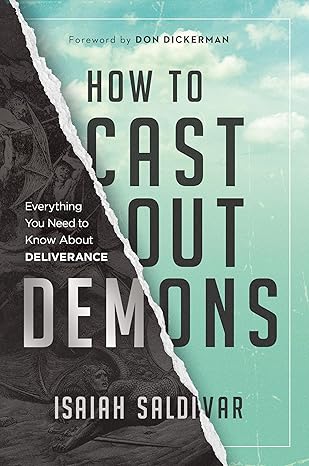
Order Isaiah Saldivar’s Book, “How to Cast Out Demons” on Amazon.com!
The first thing Paul charges us to do is cast down our imaginations. Imagination involves forming new ideas, concepts, and principles. We get in trouble when we create doctrines or ideas in our minds that violate God’s Word but accept them as right.
For example, we may think, “I can do this wrong thing but still serve God,” or, “I can watch this but still be holy,” or, “I can serve God on Sundays, live carnally all week, and still be faithful,” or, “I can pick and choose from God’s Word.” These are all imaginations we’ve created. Recognizing their error is the first step. Then we must cast these things down. Part of this process is repenting, which is changing the way we think and turning from our sinful ways.
Next we must destroy arguments and opinions against the knowledge of God and take every thought captive. This speaks directly to the mind. Be cautious not to go down rabbit holes, learning about demonic doctrines that create strongholds. Taking thoughts captive is essential. I will discuss later how to consecrate and purify our thoughts, but for now, notice the language Paul uses: Take the thoughts captive, bind the thoughts, arrest the thoughts. These thoughts are like wild animals that must be caged and tied up. If you don’t, they will run wild and cause damage to your life.
Psalm 94:19 (AMP) says, “When my anxious thoughts multiply within me, your comforts delight me.” Can anyone relate to what David is talking about? We all experience those loops of thought where the more you think about something, the more anxious you become. You might start with a small concern, like noticing a spot on your body, and ten minutes later you’re worrying if it’s cancer and if you’re going to die. Or you might start thinking about the economy, and before you know it, you’re worried about
losing your job, your home, and everything you’ve worked so hard for. The longer you dwell on these thoughts, the more they
multiply. That’s why it’s crucial to bind them and capture them before they get out of control.
All of us are made of three parts: our physical bodies, our spirits, and our souls. Our physical bodies are what other people see when they look at us. Our spirits are where God dwells when we repent and are born again. Our souls comprise our minds, wills, and emotions. When we are born again, God breathes His Spirit—the Holy Spirit—into us, and our spirits become alive. We were created to then “walk in the Spirit,” meaning we submit our bodies, minds, wills, and emotions to the Spirit of God, who is now alive in us. The more we allow the Holy Spirit to move in our lives, the more our minds, wills, and emotions are transformed.
Suddenly, I want to do things for God—that’s my will being renewed and changed by God’s power. My mind no longer dwells on earthly things but on things above. I stop thinking of lustful things and plotting against people, and instead of seeing the worst in people, I begin to see the best in them—that’s my mind being renewed. Emotions are a huge area of transformation because many of us have damaged emotions from childhood trauma, life experiences, letdowns, and toxic relationships.
I remember not crying for nearly ten years. My heart was so hard, and my emotions were so messed up. But when I encountered God, I bawled like a baby. Now I can be in prayer, start crying, and not even know why. This is God restoring and renewing my emotions.
First Thessalonians 5:23 (KJV) explains this beautifully: “May the very God of peace sanctify you completely. And I pray to God that your whole spirit, soul, and body be preserved blameless unto the coming of our Lord Jesus Christ.” The Greek word trans-
lated as “completely” in this verse is holoteles, meaning “perfect, complete in all respects.” Think about this: Paul is praying that
we reach a point where our souls are undamaged and perfect, complete and whole through and through. This is God’s will for our lives, or Paul wouldn’t be praying it. God doesn’t want you to be damaged; you’re not damaged goods. You might say, “Isaiah,
I’m emotionally damaged from a relationship.” You’re in a perfect position for God to heal you. He wants you to be undamaged.
This is the God we serve—He is a God who makes all things new.
Ephesians 4:22–24 (AMP) illustrates Paul’s powerful message:
Strip yourselves of your former nature [put off and discard your old unrenewed self] which characterized your previous manner of life and becomes corrupt through lusts and desires that spring from delusion; and be constantly renewed in the spirit of your mind [having a fresh mental and spiritual attitude], and put on the new nature (the regenerate self) created in God’s image, [Godlike] in true righteousness and holiness.
To walk in personal victory over mental strongholds, we must lay down our old selves, strip off our sinful nature, and disarm the evil lusts, desires, and thoughts of the flesh. Paul emphasizes that we must actively participate in this process; we can’t just sit back and expect it to happen automatically. You may think, “Well, this is God’s will.” But the truth is, you need to put effort into
stripping off the old sinful nature.
The world continually tries to impose its ways on us while God calls us to keep stripping them off. It’s not a one-time event; it’s a constant process of shedding the influences the world tries to impose on us. God wants to restore, renew, and cleanse your thought life completely. To get more specific, let me outline a few mental strongholds that are most prevalent in this generation.
The stronghold of anxiety and fear
Anxiety, by definition, is the body’s response to stress and fear. With so many of us juggling a multitude of responsibilities, there’s always something to worry about. What if things go wrong? What if they don’t go as planned? What if this? What if that? Worry only serves to fuel the flames of anxiety. Interestingly, the word worry stems from an Old English term meaning strangle. It’s an apt description, as many of us have felt as though the worries of life have choked the passion, vitality, time, and energy out of us. Those bound by fear often find themselves living to please others, unable to fulfill the unique destiny God has designed for them.
Freedom from this cycle only comes when we shift our focus from worrying about people’s opinions to caring about what God thinks. As 2 Timothy 1:7 (NKJV) says, “For God has not given us a spirit of fear, but of power and of love and of a sound mind.” Fear and anxiety create noise and chaos in the mind, but God desires to bring peace and clarity. One strategy that has helped me overcome anxiety is to focus solely on today. Jesus speaks to this in Matthew 6:34 (BSB): “Therefore do not worry about tomorrow, for tomorrow will worry about itself. Today has enough trouble of its own.” It’s important to understand that most of the things you’re afraid of happening will never actually happen. When you come to this realization and allow the peace of God to flood your mind, you will begin to get freedom from this stronghold.
I want you to know today that no matter what trauma you have experienced, Christ wants to bring healing and wholeness to your mind. Despite the plans, schemes, and traps of Satan, the finished work of the cross has the power to remove and eradicate every tormenting thought and traumatic stronghold completely. God is fighting for you and is ready to wash and cleanse your mind. Let me give you some practical steps to demolish mental strongholds.
1. Spend time with the Holy Spirit.
You become like those you spend time with. When you spend time with the Holy Spirit, He goes in and destroys strongholds in your life. Conversely, the less time you spend with Him, the less like Him you will be. You are who you hang out with, and if you
want to see your future, look at the people you surround yourself with. As you spend time in prayer, you will—often without real-
izing it—take on the mind of Christ. The only way to know His mind is to hear His voice, which happens in prayer. Your old patterns of thinking will be replaced by God’s thoughts. The longer you spend with someone, the more you start thinking like them, talking like them, and acting like them.
Many of us spend little to no time with the Holy Spirit and then wonder why we aren’t more like Him. Schedule time if you have to; get alone with Him. Invite Him into the activities of your day. The Holy Spirit likes to be invited. Jesus went to the wedding banquet because He was invited—don’t expect Him to come without an invitation. If you are going to work, say, “Holy Spirit, I invite You.” If you are going to school, say, “Holy Spirit, I invite You.” In your home invite Him in. Make it a practice in your life to invite and host the presence of God. Be aware of Him throughout the day. Acknowledge His presence by saying, “I recognize You are here,” or, “I appreciate Your presence.” You don’t have to pray in tongues all day—this is a relationship. Sometimes just sitting in someone’s presence is enough because you love them.
It’s impossible to spend time with Him and not change. You might find yourself saying, “I don’t want to watch porn anymore,” or, “I don’t want to be angry anymore.” You may no longer feel anxious, depressed, bitter, or resentful. We have access to someone the world does not have access to—He is our peace, our helper, our rest, our refuge in the storm. Don’t limit your encounters with Him to Sundays. If that’s the only time you seek Him, you’re missing out on the richness of a daily relationship with the Holy Spirit. Make a habit of seeking Him every day, inviting Him into every part of your life, and watch as He transforms you from the inside out.
2. Speak and listen to God’s Word.
The only way to undo wrong thinking is to cultivate right thinking. Jesus fought the devil with “It is written,” wielding the sword of the Spirit with His words. We need to do the same by memorizing Scripture so that when the enemy comes, we can defeat him quickly. You won’t always have time to look things up.
Romans 12:2 (NASB) says, “Do not be conformed to this world, but be transformed by the renewing of your mind, so that you may prove what the will of God is, that which is good and acceptable and perfect.” Strongholds exist in the mind, and the renewing of the mind breaks them. What does it mean to be transformed? It means to be changed into the likeness of Christ. This transformation doesn’t occur in our physical appearance. God isn’t trying to make us look physically like Jesus; He is working to change our inner character and life into the likeness of Christ. How does this happen? Through the renewing of our minds changing our way of thinking. God makes us think the way He thinks through His Word.
The Bible reveals God’s way of thinking. If you want to know God’s perspective on money, adultery, theft, cheating, jealousy, selfishness, humility, pride, or any other matter, read the Bible. The answers are there. When Jesus came to earth, He was called
the Word of God. We are told that the Word became flesh. This means that if you want to know what God thinks about anything,
look at the life of Jesus, and you will have the answer.
God wants us to embody His Word so that others can see it in us. Second Corinthians 3:2–3 (AMP) says,
You are our letter [of recommendation], written in our hearts, known and read by everyone. You show that you are a letter from Christ, delivered by us, written not with ink but with the Spirit of the living God, not on tablets of stone but on tablets of human hearts.
People are reading our lives!
To break strongholds, listen to the Word of God. Practically speaking, turn on an audio Bible or listen to sermons. Many people have said, “Isaiah, your sermons have completely changed the way I think.” They say, “So many strongholds in my mind have been broken through listening to God’s Word preached.” By immersing yourself in God’s Word—both speaking and listening—
you will begin to see a transformation in your life. Your thoughts will align more with God’s thoughts, and the strongholds that
once held you captive will be destroyed.
3. Confess your sins to God and others.
First John 1:9 (NKJV) says, “If we confess our sins, He is faithful and just to forgive us our sins and to cleanse us from all unrighteousness.” The condition for forgiveness is first confessing our sins, admitting they’re wrong, acknowledging our need for
forgiveness, and deciding not to continue with them. So why wouldn’t we just confess? The main reason is pride. Many people don’t believe they are wrong or are unwilling to confront the fact that they are in sin. Most people could be instantly forgiven if they recognized their true state. Unfortunately, the “American cupcake gospel” often fails to show us our true state of sin and depravity.
The Holy Spirit brings illumination and conviction, making us feel the weight of our sin. This conviction draws us to Christ, not away from Him.
Confession is not merely admission or saying, “I’m sorry.” The original word for confess means “to say the same thing” or “agree.” This means that confession is me agreeing with God, seeing my actions, my sins, and my compromises the way God sees them. It involves viewing everything—movies, music, relationships—the way God sees it. In confession I align my perspective with God’s perspective on my actions. James 5:16 (NIV) instructs, “Therefore confess your sins to each other and
pray for each other so that you may be healed. The prayer of a righteous person is powerful and effective.” The devil thrives
in the darkness. When you expose him by confessing your sins to others, he loses his ability to continue building that specific
stronghold in your life.
By confessing our sins to God and others, we bring light to the darkness and dismantle the enemy’s strongholds. This practice of confession helps us receive forgiveness, healing, and ultimately freedom from the bondage of sin.
4. Make fasting a part of your life.
The Old Testament word for fast is tsuwm, which literally means to cover the mouth. This implies that no food is consumed during a fast. Think about it: Nothing can go in if you cover your mouth. Similarly, when you fast, nothing should enter your mouth. This act of abstaining from food is a physical expression of seeking spiritual nourishment and cleansing.
In Matthew 6 Jesus names three practices that believers should engage in: “When you pray…when you give…when you fast” (Matt. 6:2, 5, 16, NIV). Notice He says “when,” not “if.” This signifies that every believer is called to pray, give, and fast. Fasting brings numerous spiritual benefits. It is an act of setting ourselves aside solely for the Lord and teaches us to deny our flesh so we can receive more of God. Fasting empowers our prayers and increases our spiritual discernment. It positions us to hear and recognize God’s heart, voice, and timing more clearly. By denying our flesh, fasting brings us to a greater level of humility. Our faith is increased as we discover that we do not live by bread alone. Fasting positions us to see victory in battles and in seemingly impossible situations. When we fast, we experience breakthroughs against darkness.
One of the physical benefits of fasting is that it helps remove toxins and impurities from the body. When you stop eating, your body starts to look for food from within, consuming toxins and stored waste accumulated from unhealthy eating habits. This is why even people who are not religious will fast for health reasons. But fasting does more than cleanse your body; it also purifies you spiritually. When you fast, God begins to clear out all the spiritual toxins that have entered your life through movies, music, culture, and various experiences. He cleanses and washes you during fasting. As you deny your flesh, your spirit gains strength and begins to take control.
The Bible provides various examples of fasting durations:
One-day or partial-day fasts: Judges 20:26; 1 Samuel 7:6; 2 Samuel 1:12; 3:35; Nehemiah 9:1; Jeremiah 36:6
A one-night fast: Daniel 6:18–24
Three-day fasts: Esther 4:16; Acts 9:9
Seven-day fasts: 1 Samuel 31:13; 2 Samuel 12:16–23
A fourteen-day fast: Acts 27:33–34
A twenty-one-day fast: Daniel 10:3–13
Forty-day fasts: Deuteronomy 9:9; 1 Kings 19:8; Matthew 4:2
Fasts of unspecified lengths: Matthew 9:14; Luke 2:37; Acts 13:2; 14:23
These examples show that fasting can vary in length, and you can choose a duration that aligns with your spiritual goals and convictions.
Start small, but be intentional. Fasting may begin with a single meal or a day, but the impact it has on your spiritual life can be profound. Make fasting a regular part of your walk with God, and watch as He brings transformation and victory into your life.
5. Spend time thinking about good things.
Philippians 4:8 encourages us: “Finally, brothers, whatever is true, whatever is honest, whatever is just, whatever is pure, whatever is lovely, whatever is of good report, if there is any virtue, and if there is any praise, think on these things.” What are we thinking about? We need to think about good things intentionally. The Greek word for think here implies a concentrated, focused effort. Paul is telling us to fix our minds on things that reflect and reveal the nature of God.
Don’t let your mind wander aimlessly. Notice that the first thing Paul says to think about is what is true. The Greek word for true is alēthēs, which means real, truthful, honest, and having integrity. The problem is that many of us focus not on what is true, real, and honest but on things that worry and concern us. To experience peace and reflect God’s character, we must make a concentrated effort to focus our thoughts on what is true and positive, aligning our minds with God’s truth.
Second Corinthians 10:4–5 tells us, “The weapons we fight with are not the weapons of the world. On the contrary, they have divine power to demolish strongholds.” By consistently applying these spiritual principles, we can align our thoughts with God’s truth, break free from the enemy’s lies, and walk in the freedom and authority Christ has given us. True transformation begins in the mind, and with God’s help you can live a life of lasting freedom and victory. Remember, you’re not alone in this journey—God is with you every step of the way, ready to help you break down these strongholds and live a life full of His peace and joy.
This article was excerpted from Isaiah Saldivar’s book, “How to Cast Out Demons” available on Amazon.com!
Isaiah Saldivar preaches a message of revival and repentance. His ministry reaches 6 to 8 million people each week through his social media platforms including his YouTube channel with over 1 million subscribers. He also hosts a weekly podcast called “Revival Lifestyle,” currently in the top 1% of podcasts in the world. Isaiah and his wife, Alyssa, have five daughters and reside in central California. His book, “How to Cast Out Demons,” is available now.
