
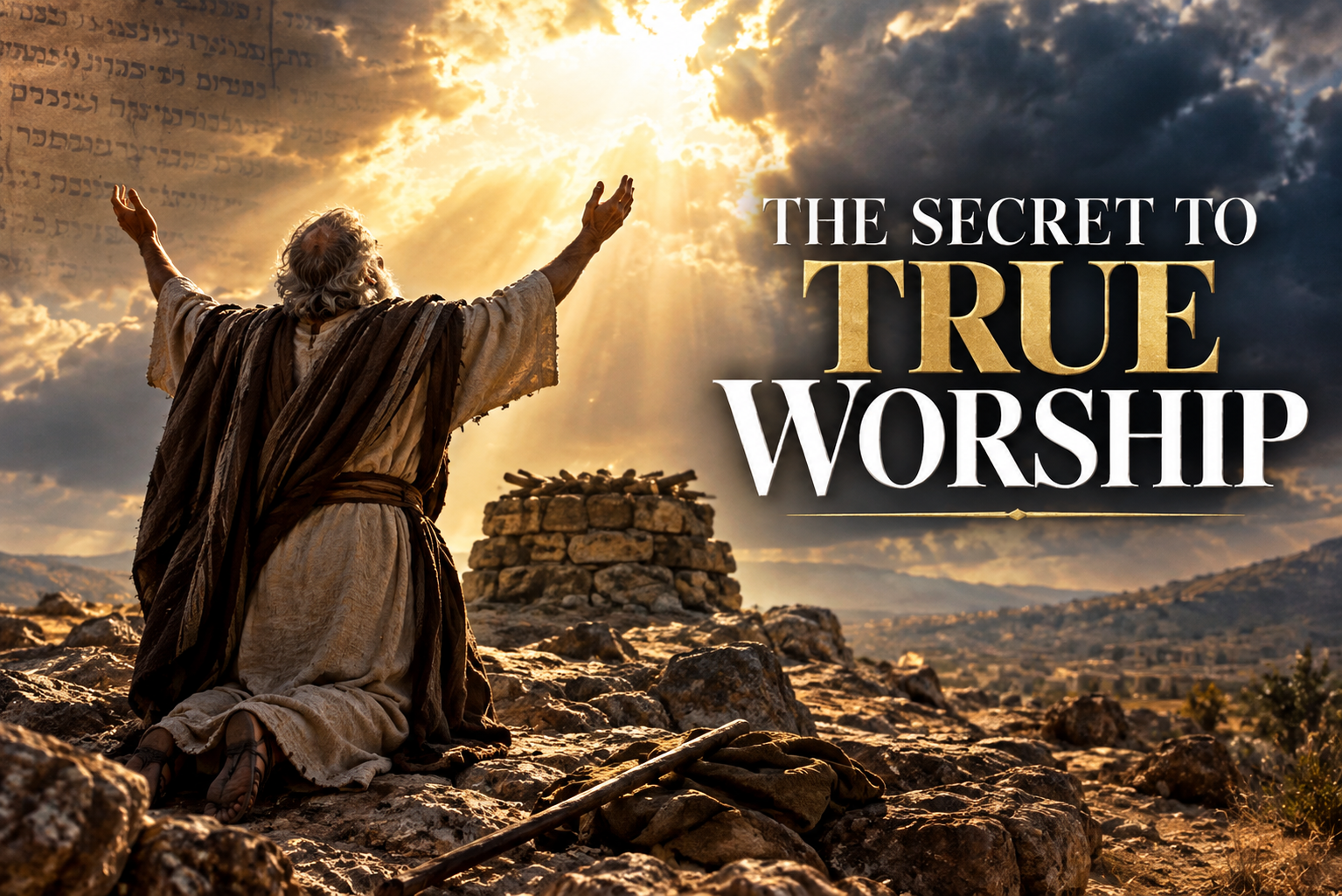
The modern church has worship songs, worship teams, worship leaders, worship nights and worship services. But according to Messianic Jewish worship leader Paul Wilbur, believers need to ask a far more important question: Do we actually have worship?
During a recent conversation with Sid Roth on It’s Supernatural!, Wilbur challenged Christians to reconsider what it truly means to worship God, arguing that biblical worship goes far beyond music, emotion or raised hands.
After nearly 50 years as a worship leader, Wilbur said his search for the meaning of worship brought him to Jesus’ words in John 4, where Christ declares that the Father seeks those who will worship Him “in spirit and in truth.” But surprisingly, Wilbur says God ultimately directed him somewhere else for the answer: Genesis 22.
That is where Abraham takes Isaac up Mount Moriah in obedience to God’s command.
“You want to be a worshipper, you’re going to be tested,” Wilbur said.
Yet tucked inside this harrowing account is something easy to overlook. Abraham tells his servants that he and Isaac are going up the mountain to worship.
There was no guitar. No keyboard. No choir. No stage. No perfectly rehearsed worship set.
To order Sid Roth’s new book, The Glory Story, visit Amazon.com.
There was simply Abraham, Isaac, an altar—and a command from God.
Wilbur says that changes everything about how Christians should understand worship.
“What is worship? Worship is the obedience,” he said. “We bow to adore, but we also bow to listen, to hear, and then we stand to obey.”
That kind of obedience was embodied in Abraham’s response to God: hineni, meaning “Here I am.”
According to Wilbur, the Hebrew expression communicates something far weightier than merely announcing one’s presence. It represents complete availability before God: “You have my full attention,” Wilbur explained. “All that I have, all that I am, is now available to you.”
But this message carries another challenge for the church today: Where has the fear of the Lord gone?
Wilbur points to the moment when Abraham raises the knife, and the angel of the Lord stops him. Abraham’s willingness to surrender what was most precious revealed the depth of his reverence toward God.
“What we need in the church today is a return of the fear of God,” he said. “It’ll change the way we speak, the way we dress, the way we act. Um, even some of our theology.”
This fear does not drive us away from God. Wilbur describes it as the fear of disappointing the One who has given everything for us—a holy reverence born from encountering His presence.
He connects that presence to the Hebrew word panim, or “face,” pointing to Moses’ cry in Exodus 33 that God’s presence must go with Israel. For Wilbur, seeking God’s presence means coming face-to-face with Him.
Perhaps that is the uncomfortable question facing the church.
Have we learned how to produce worship, or how to be worshippers?
True worship does not end when the music stops. It begins when God speaks, and His people answer: Here I am.
Then they obey.
Abby Trivett is a writer and editor for Charisma Media and has a passion for sharing the gospel through the written word. She holds two degrees from Regent University, a B.A. in Communication with a concentration in Journalism and a Master of Arts in Journalism. She is the author of the newly released book, The Power of Suddenly: Discover How God Can Change Everything in a Moment. For interviews and media inquiries, please contact [email protected].
