
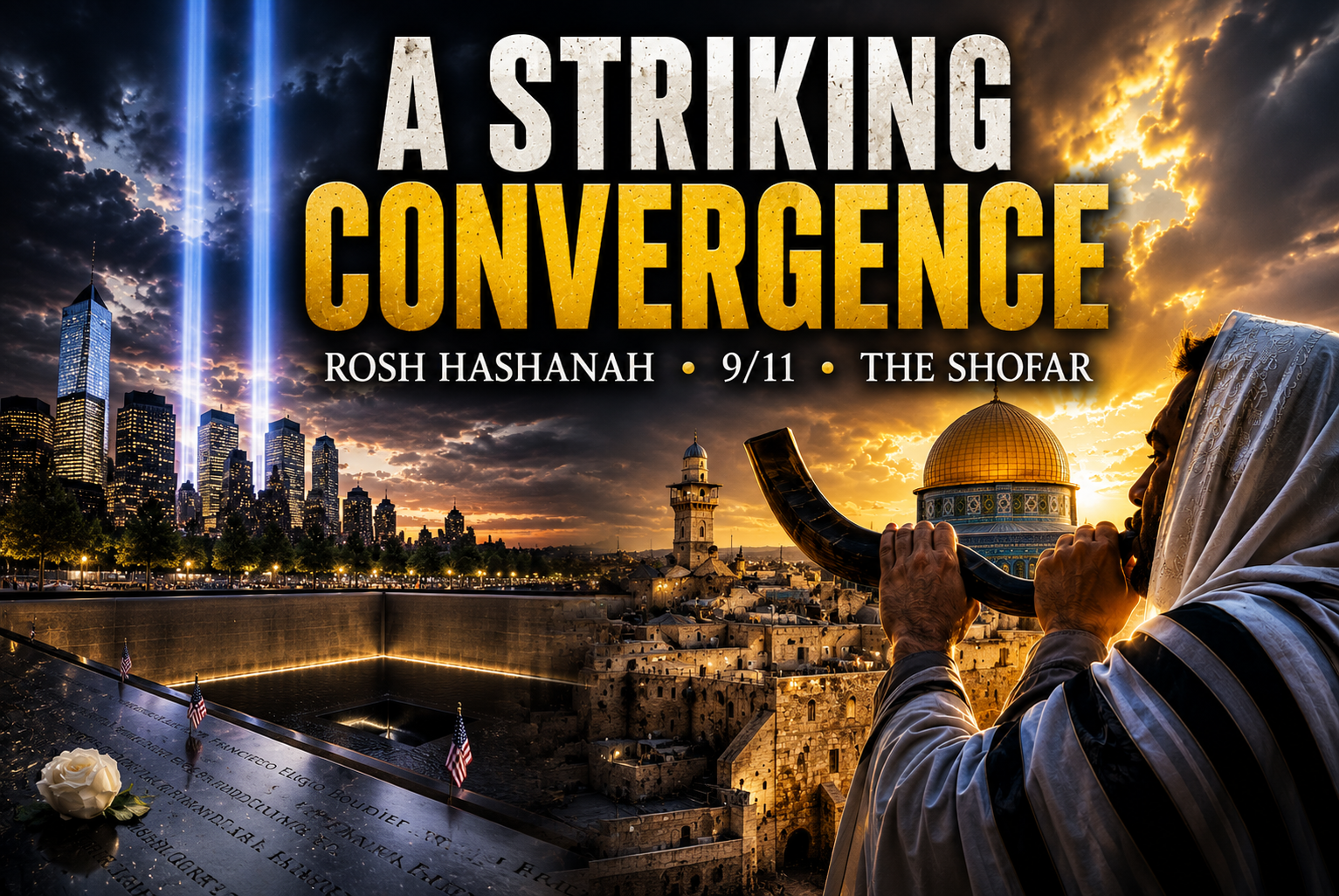
This September, an extraordinary convergence of dates, biblical tradition and modern history will unfold as Rosh Hashanah begins on the 25th anniversary of the Sept. 11 terrorist attacks. This will take place as a group seeks to revive the ancient Sanhedrin, an institution that has largely disappeared from Jewish practice for centuries.
Rosh Hashanah begins at sundown Sept. 11, ushering in the Jewish year 5787. According to Israel365 News, this will mark only the second time since the attacks in 2001 that the Jewish New Year has overlapped with the anniversary of 9/11.
The timing carries particular weight because Rosh Hashanah is traditionally understood in Judaism as a day of divine judgment. Jewish liturgy during the High Holy Days speaks of judgment being written on Rosh Hashanah and sealed on Yom Kippur.
Now, 25 years after nearly 3,000 people were killed in the attacks on the World Trade Center, Pentagon and aboard Flight 93, that anniversary will arrive as the Jewish people enter this solemn season of repentance, reflection and judgment.
Another unusual development is the addition of a biblical dimension to this year’s observance.
The first full day of Rosh Hashanah, Sept. 12, falls on Shabbat. Under longstanding Jewish practice, the shofar is not normally sounded when Rosh Hashanah falls on the Sabbath.
Israel365 News reports, however, that Rabbi Yisrael Ariel will lead a three-member rabbinic court to sound the shofar anyway at the Temple Institute in Jerusalem.
Ariel, founder of the Temple Institute, has been involved in efforts to reestablish a rabbinical body modeled after the ancient Sanhedrin.
The reasoning behind the court’s decision stretches back nearly 2,000 years.

To order Amanda Grace’s book, Brace For Impact, visit Amazon.com.
The Mishnah records that when the Temple stood in Jerusalem, the shofar could be sounded there even when Rosh Hashanah occurred on Shabbat. After the Temple’s destruction, Rabban Yochanan ben Zakkai allowed the practice where an authorized rabbinical court, or beit din, was assembled.
Eventually, as the Sanhedrin ceased functioning, the practice disappeared.
Ariel’s court argues that its assembly qualifies under those ancient requirements, opening the door to what the group views as the restoration of a practice from the Temple era.
The shofar itself carries a powerful, prophetic meaning. It appears throughout Scripture at moments of warfare, warning, worship and divine intervention.
All of this makes the timing difficult to overlook.
On the anniversary of a day permanently etched into America’s memory, the biblical calendar will turn to a season centered on judgment and repentance. While shofars across much of the Jewish world remain silent on Shabbat, a small group in Jerusalem intends to sound one, believing an ancient practice can be heard once again.
If you are watching Israel and the biblical calendar, the convergence offers a sobering reminder: Scripture repeatedly connects the sound of the trumpet with awakening, warning and preparation.
The question worth asking is whether we are listening.
Abby Trivett is a writer and editor for Charisma Media and has a passion for sharing the gospel through the written word. She holds two degrees from Regent University, a B.A. in Communication with a concentration in Journalism and a Master of Arts in Journalism. She is the author of the newly released book, The Power of Suddenly: Discover How God Can Change Everything in a Moment. For interviews and media inquiries, please contact [email protected].
