
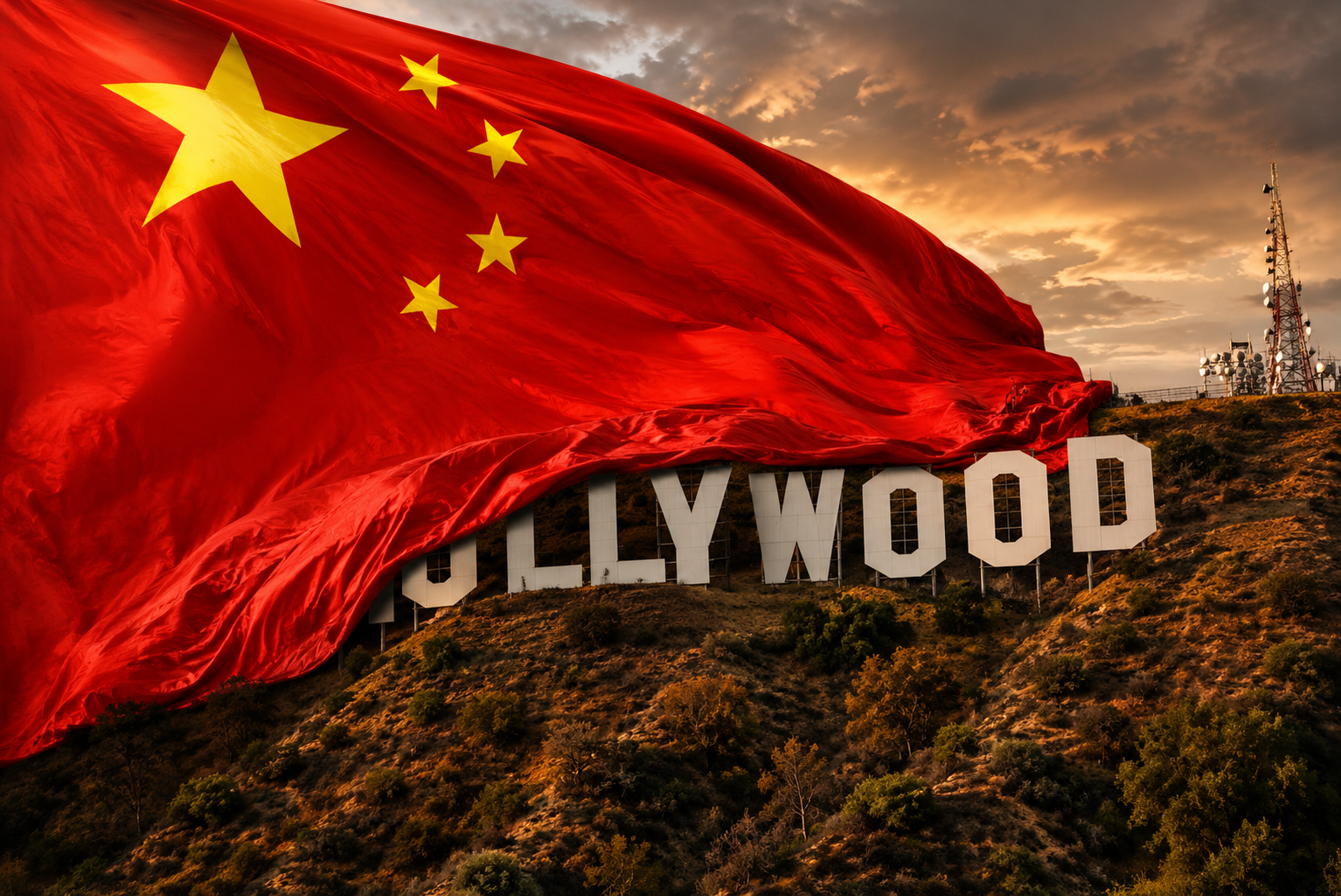
A Hollywood producer who spent years courting China to support American film studios is now speaking out against Tinseltown’s attempts to work with the communist nation.
Christopher Fenton, producer of the new film, “Bad Counselors,” told CBN News Hollywood is always trying to find new businesses and new sources of capital to help make expensive films and projects possible.
“Then, on top of it, on the output side of things … once you actually get it into theaters, are there markets there that we haven’t explored?” he said, detailing the questions executives are often faced with. “Are there potential ways to generate new revenue?”
Decades ago, he said the U.S. approach to China started to shift, with America opening up more relations with the nation. While America initially had a “frozen relationship” with China, an idea took root: that the more products and services the U.S. could get into the nation, the “more we would spread the aspirational quality of democracy inside of a communist country.”
In addition to growing the economy in the U.S., Fenton said there was a higher mission and purpose in engaging China and opening up the market.

To order Jonathan Cahn’s new book, The Altar of Pergamon, visit Amazon.com.
“What we found over time … is that aspirational quality of democracy inside a communist country plan hasn’t really worked out all that well,” he said.
Fenton said jobs were generated and GDP growth came, but that it was only a “sugar high” that didn’t last. Overall, he said Hollywood’s market share in China has been lost. The initial plans simply didn’t pan out the way he and others wanted.
“The initial thought was the more products and services we could get in that country, the better, no matter what it took to get them in,” he said. “So it was like an ends-justify-the-means plan.”
While 99% of people seeking to engage China in this way were looking to help the U.S., he said the other “1% was very willing to sell out the soul of America to make a buck.”
Regardless of the mission, there was an unintended consequence of the relationship between China and the U.S. — and it involved bias and a quest for the communist party to push its ideologies on the masses.
“For the most part, we were under this other higher mission,” he said. “And part of that for Beijing and the entertainment content space was to placate them and their directives in terms of messaging and narrative, the way they wanted their system of government presented to their own people to essentially make that 1.3 billion people just happy enough that they don’t revolt and have another Tiananmen Square incident like June 4, 1989.”
But it didn’t end there.
To read the full story, visit our content partners at Faithwire.
Reprinted with permission from faithwire.com. Copyright © 2026 The Christian Broadcasting Network Inc. All rights reserved.
