
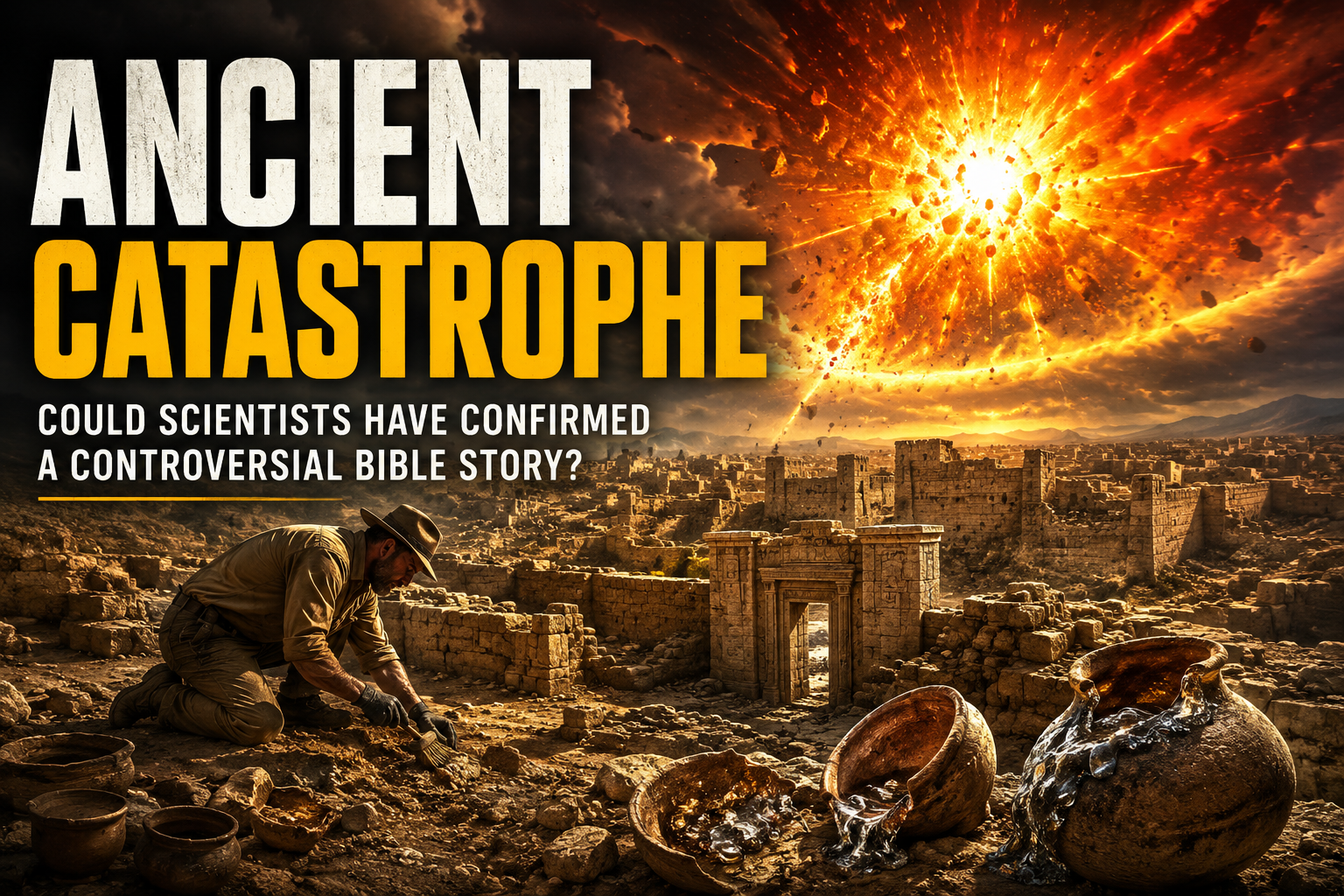
For generations, skeptics have dismissed the biblical account of Sodom and Gomorrah as little more than an ancient cautionary tale—a dramatic story of fire, judgment and destruction never meant to be taken literally.
But what if the evidence buried beneath the earth tells a very different story?
Archaeologist Dr. Steven Collins says the location, destruction and archaeological remains of the ancient city he identifies as Sodom align in remarkable ways with the Genesis account.
“When you do science, you don’t rely on belief,” Collins told Joel Rosenberg on “The Rosenberg Report.” “It doesn’t matter what I believe or what somebody else believes. The only thing that really matters is: What is the evidence on the ground?”
Collins has spent more than two decades studying and excavating Tall el-Hammam, an enormous archaeological site northeast of the Dead Sea. He believes the biblical text itself led researchers directly to the location.
According to Collins, Genesis provides numerous geographical indicators identifying where the cities of the plain were situated. He argues that these details contradict the traditional theory that Sodom was located at the southern end of the Dead Sea.
“The biblical text put us at this site,” Collins said. “We just simply navigated around the geography. This is where we were.”
What researchers reportedly found there was staggering.
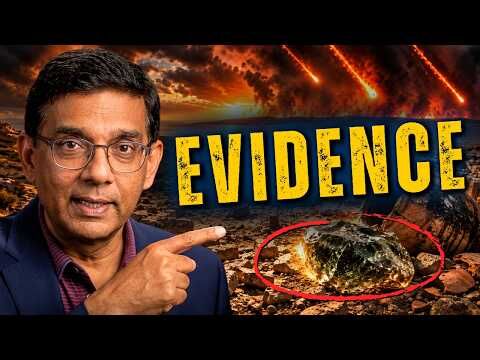
During an excavation of a Middle Bronze Age destruction layer, Collins’ team uncovered pottery that appeared to have been melted by an extraordinary burst of heat. The surface had briefly liquefied into glass before cooling.
“It was obviously a flash heat,” Collins said.
To order Dinesh D’Souza’s new book, The Stones Cry Out, visit Amazon.com.
A worker familiar with the aftermath of the Trinity nuclear test reportedly compared the material to trinitite—the glasslike substance created when the first atomic bomb melted desert sand.
Collins said a team of 21 researchers later concluded that a massive cosmic airburst devastated the region, destroying cities across approximately 400 square kilometers.
“A large piece of space debris, like an asteroid or comet fragment, came into the atmosphere,” Collins said. “It exploded, hit upon the ground as plasma and wiped out an entire civilization.”
The destruction was so severe that the region remained largely uninhabited for roughly 700 years.
Tall el-Hammam was not an insignificant settlement. Collins described it as one of the largest and most heavily fortified Bronze Age cities in the southern Levant. Excavations revealed massive walls, an enormous gateway, a temple complex and a palace with a footprint slightly larger than the White House.
Researchers also discovered a stone bench near the city gate—a compelling detail because Genesis 19:1 says Lot was sitting at the gateway of Sodom when the angels arrived.
For Rosenberg, the implications stretch far beyond archaeology.
“If Sodom is real, then what happened to it is real,” he said. “And why it happened would be real.”
Yet Collins emphasized that Scripture’s indictment of Sodom was broader than one category of sin. Referencing Ezekiel 16, he noted that the city was condemned for arrogance, excess, neglect of the poor and detestable behavior.
“They were arrogant, overfed, and they were not taking care of the widows and the orphans,” Collins said.
The ruins of Sodom may therefore carry a sobering message for the modern world. A society can appear wealthy, secure and unstoppable while drifting dangerously far from God.
The question is no longer merely whether Sodom existed. The deeper question is whether we are willing to hear its warning.
Abby Trivett is a writer and editor for Charisma Media and has a passion for sharing the gospel through the written word. She holds two degrees from Regent University, a B.A. in Communication with a concentration in Journalism and a Master of Arts in Journalism. She is the author of the newly released book, The Power of Suddenly: Discover How God Can Change Everything in a Moment. For interviews and media inquiries, please contact [email protected].






































Wondering why you did not reference the book that Collins wrote, Discovering the City of Sodom: The Fascinating, True Account of the Discovery of the Old Testament’s Most Infamous City (Howard Books/Simon & Schuster)?