

For many of us, the book of Revelation can feel intimidating.
It is filled with vivid imagery, mysterious symbols and prophetic events that Christians have debated for centuries. Faithful believers have landed on different conclusions about the end times, and that is nothing new. As Joe Kirby of Off the Kirb Ministries points out, studying prophecy should always be done with humility.
So let’s open the discussion together.
Kirby recently shared his thoughts on the famous Four Horsemen of Revelation. Whether you ultimately agree with every conclusion or not, his observations invite us to take another careful look at what Scripture actually says.
Is the first horseman really Jesus?
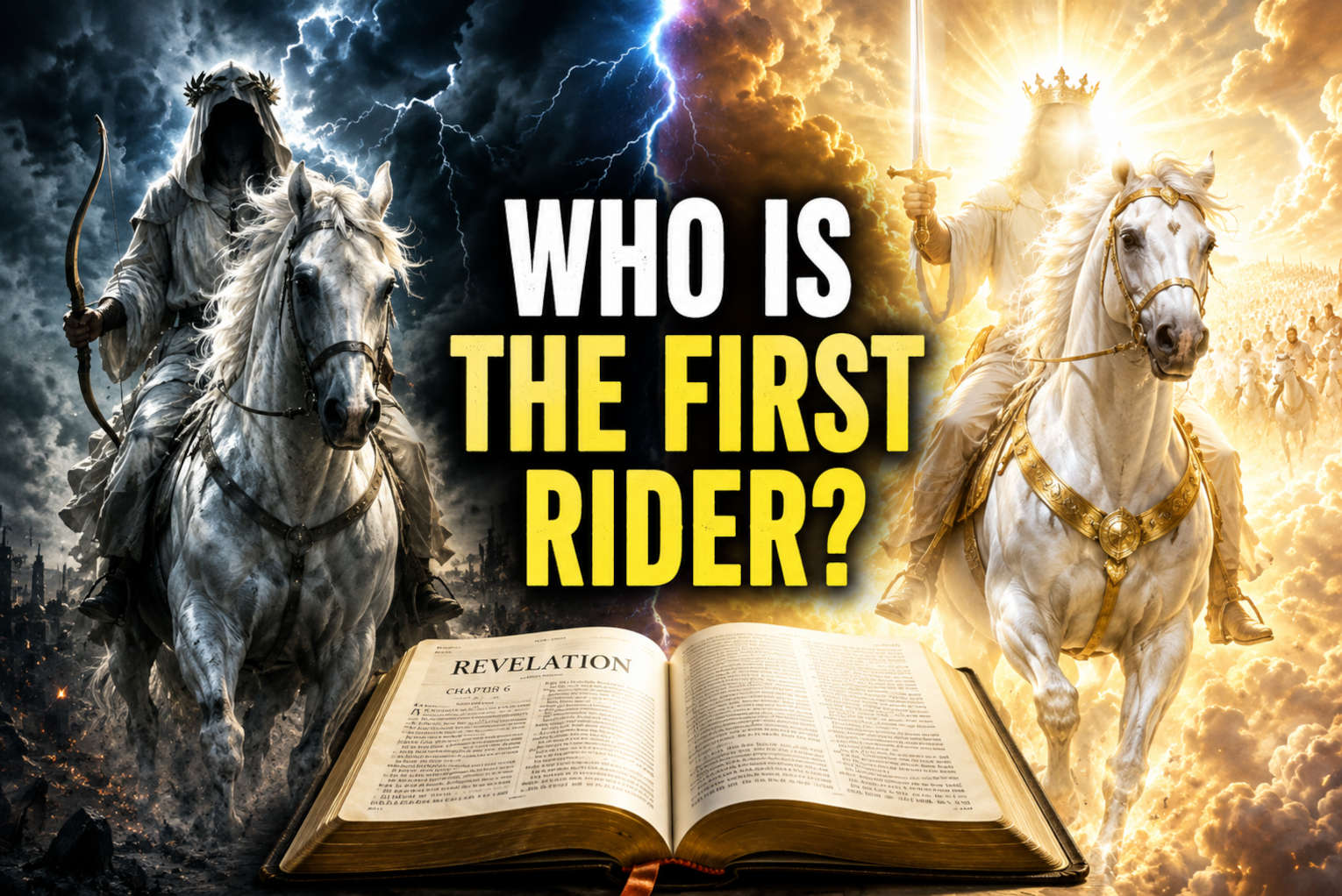
One of Kirby’s biggest arguments centers on the rider of the white horse in Revelation 6.
While some Christians have identified the rider as Christ, Kirby believes the description fits the Antichrist instead.
“But here’s the thing: I don’t believe this rider is actually a good guy. Many Christians believe that this rider is the Lord Jesus, but personally, I think the rider is the Antichrist.”
Kirby points to several differences between this rider and Christ’s return later in Revelation.
“When this rider arrives on his white horse, he wears a temporary crown, a wreath that will wilt and wither. And as he arrives to the scene, he ushers in tribulation.”
By contrast, he notes that Jesus returns very differently.
“But when Christ, when the Lord Jesus arrives on his white horse, he doesn’t wear a temporary crown. He has many crowns. And when he arrives, he brings peace to the earth, and his peace ends all of this carnage.”
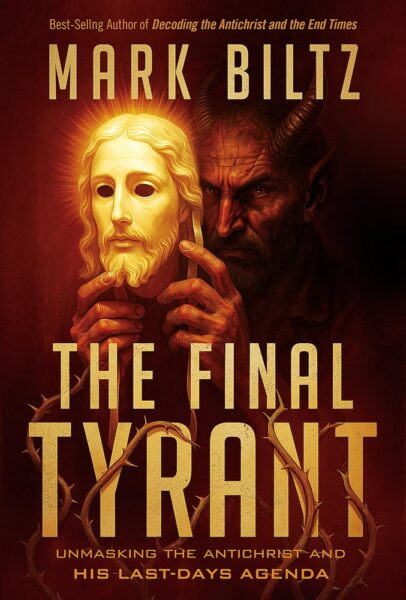
Order Mark Biltz’s New Book, “The Final Tyrant” on Amazon.com!
A surprising interpretation of the bow
Kirby also offers one of his most unusual interpretations.
He emphasizes several times that this is simply his own understanding and could be wrong.
“So, once more, I do just want to emphasize this. This is Joe Kirby’s interpretation and I could be way off on this one.”
His idea centers on the Greek word translated as “bow.”
“But could it be? Could it be that when the Antichrist arrives on his white horse, in his hand he is holding a rainbow. And anyone who does not bow down to the rainbow agenda of the Antichrist, to his system, that person will become a problem and that person will need dealing with.”
Whether readers agree with that conclusion or not, Kirby repeatedly reminds viewers that it is an interpretation rather than settled doctrine.
What about the other three horsemen?
While Kirby spends most of his teaching discussing the identity of the first horseman, he also offers a brief overview of the remaining three riders in Revelation.
He believes the fiery red horse represents Satan’s work of removing peace from the earth, resulting in worldwide conflict unlike anything humanity has experienced before.
“This horse will have one job. When this horse gallops through the earth, it will do one thing. It will destroy any peace that was currently on the earth. Any peace treaties that the Antichrist has set up will be destroyed.”
Kirby then points to the black horse as a picture of famine following war. As food becomes scarce, he says the Antichrist will exploit desperate populations through economic control.
“People can’t find bread to eat. Food is scarce, and people have to start rationing out because the people in the tribulation, they will have very little to eat.”
Finally, Kirby says the pale horse represents death on an unprecedented scale. He notes that Revelation describes one-fourth of the world’s population dying through war, famine, disease and “the beasts of the earth.” While he suggests those “beasts” could even refer to microscopic organisms that spread plague, he stresses that this is simply one possible interpretation.
“I don’t know, I’m just speaking out loud right now.”
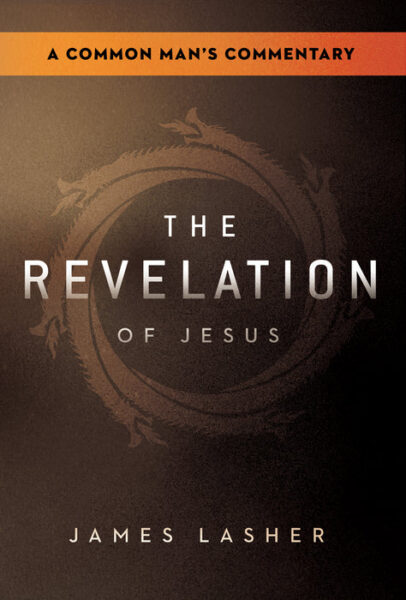
Order James Lasher’s New Book, “The Revelation of Jesus” on Amazon.com!
A reminder to approach prophecy humbly
Perhaps one of the most refreshing moments in the teaching comes when Kirby acknowledges that respected Bible teachers disagree with him.
“And although I personally do believe in a literal 7-year tribulation, I do want to say this. I actually might be wrong.”
He continues:
“And I think all of us who preach, teach, or even study the scriptures, when we look at the things of God, we should tremble because we’re holding precious truths here. And we should remember that we are just fallen men and women, and we all make mistakes.”
That is an attitude worth remembering whenever we study biblical prophecy. Revelation is God’s Word, but sincere Christians have wrestled with its meaning for generations. We should never be afraid to open the Scriptures together, examine them carefully and sharpen one another in love.
The horsemen ultimately point us to Christ
Kirby concludes by reminding us that prophecy is ultimately meant to point us to Jesus Christ.
“If you fear death and Hades, I want to tell you about a man who holds the keys to both.”
He then points to Christ’s sacrifice and resurrection.
“The third day he rose from the grave, showing that he’s triumphant, showing that he is the boss over death, and that he alone is the one that we can trust and obey because he’s conquered the grave. He’s conquered death itself.”
No matter where we land on the identity of the first horseman or the timing of the events in Revelation, that truth remains unchanged. We can study prophecy, discuss differing interpretations and sharpen one another as we search the Scriptures together. But our hope has never rested in having every prophetic detail figured out.
Our hope rests in Jesus Christ—the One who has already defeated sin and death and who will one day return in victory.
James Lasher, a seasoned writer and editor at Charisma Media, combines faith and storytelling with a journalism background from Otterbein University and ministry experience in Guatemala and at the LA Dream Center. A Marine Corps and Air Force veteran, he is the author of The Revelation of Jesus: A Common Man’s Commentary and a contributor to Charisma magazine. For interviews and media inquiries, please contact [email protected].