
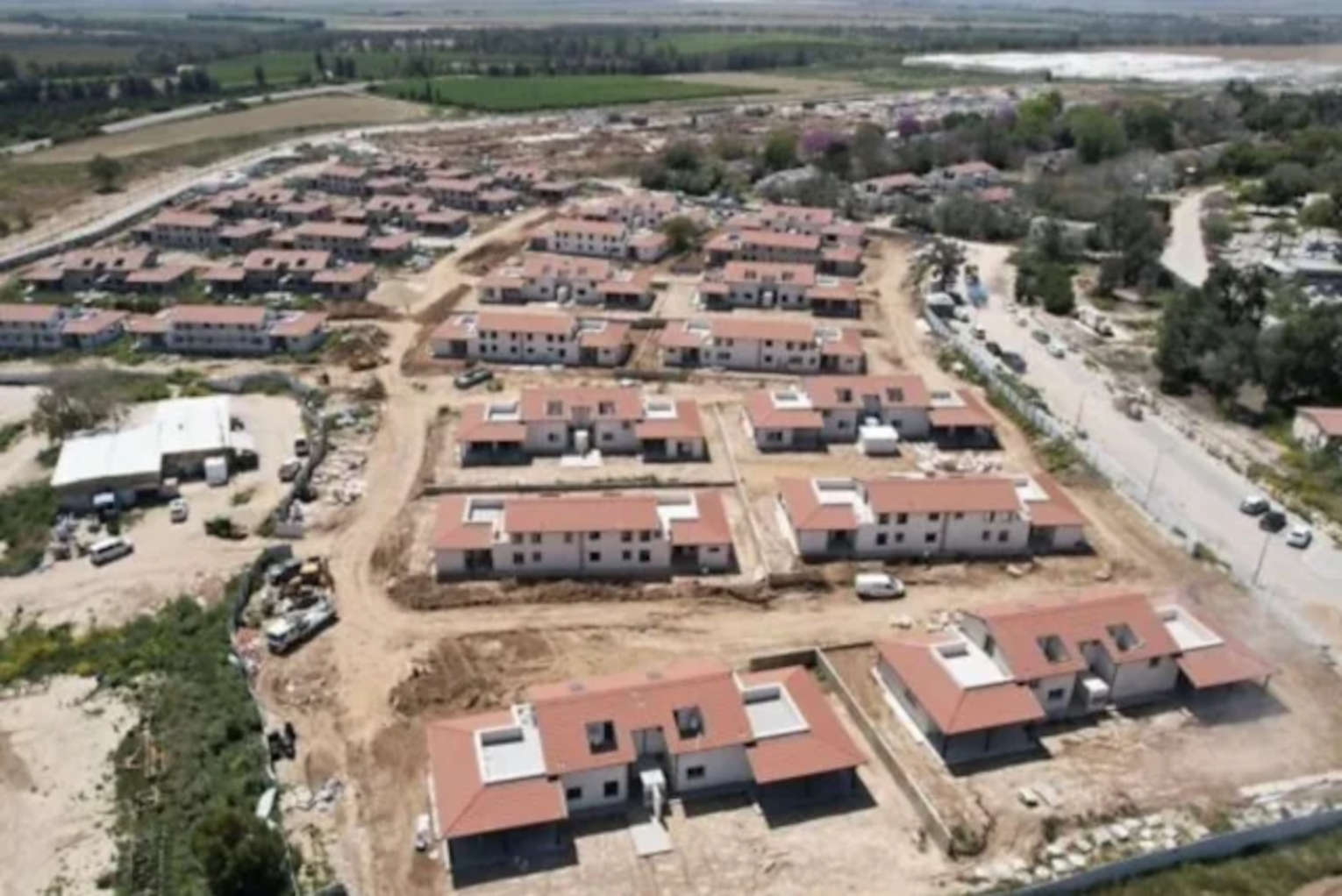
Wednesday marked the 1,000th day since Hamas’ Oct. 7, 2023, attack on Israeli communities near the Gaza Strip, as a new government report showed significant progress in rebuilding the devastated region while highlighting the work that still remains.
The report, released by the Tkuma Directorate, which is leading the rehabilitation of the communities hardest hit in the attack, found that more than 92% of evacuated residents have returned home, thousands of new residents have moved to the area, and billions of dollars have already been invested in reconstruction.
“Alongside the memory, pain, and loss that have been with us since that day, we see the communities returning and renewing, the settlements being rebuilt, and the trust in the future of the Gaza Envelope,” declared Tkuma Directorate chief Aviad Friedman.
The Directorate has a budget of NIS 17 billion ($5.7 billion) from the national government, to be spent over five years beginning in 2024. According to the report, by the end of 2025, NIS 11.6 billion ($3.9 billion) – around two-thirds of the total allocation – had already been spent.

Order Jonathan Cahn’s New Book, “The Altar of Pergamon” on Amazon.com!
The total does not include hundreds of millions of dollars contributed by private organizations and donors worldwide for rehabilitation projects in the region, including several prominent Christian Zionist organizations.
The report also found that more than 92% of residents who were evacuated in the immediate aftermath of the attacks have returned to their homes, while approximately 5,000 new residents have moved into the area.
The government has set a goal of growing the region’s population to 124,000 residents by 2030 – roughly double the number of people living there before the Oct. 7, 2023 massacre.
Among the most notable recent milestones was the return of most residents of Kibbutz Kissufim, who had spent nearly three years living in temporary housing in and around Beersheba.
Their return brings the number of Gaza Envelope communities whose residents have come home to 43 of the 47 communities that required evacuation.
The four remaining communities awaiting residents are those that suffered the most extensive destruction during the Oct. 7 attack. They include Kibbutz Holit and Kibbutz Kfar Aza, which are expected to be ready for residents to return sometime in August. Kibbutz Be’eri is expected to be ready by December, while Kibbutz Nir Oz is projected to welcome residents back in 2027.
According to the report, more than 1,000 reconstruction projects have been launched, with additional initiatives in development.
The work includes security upgrades, agricultural investments, incentives for industrial infrastructure and factories that will create local jobs, healthcare and educational facilities, community centers, social services, housing, and extensive repairs or reconstruction of water, sewage, electrical, and transportation infrastructure.
Friedman said the Directorate’s long-term goal is not simply to rebuild what was lost, but to create a stronger and more prosperous region through cooperation between the government, local communities, and private organizations.
“Facing the devastating events of October 7th, we are setting a clear future of growth and hope,” he wrote in a post on the Tkuma Directorate’s website.
Friedman also said public and private sector partners are working together to achieve that vision and emphasized that the Directorate’s efforts would be carried out “in coordination, agreement, and for the benefit of the communities and councils.”
He concluded that “The revival of the TKUMA region is the commitment of all of us, the Government of Israel, the Directorate, and the entire nation.”
The All Israel News Staff is a team of journalists in Israel.
This article originally appeared on ALL ISRAEL NEWS and is reposted with permission.
