
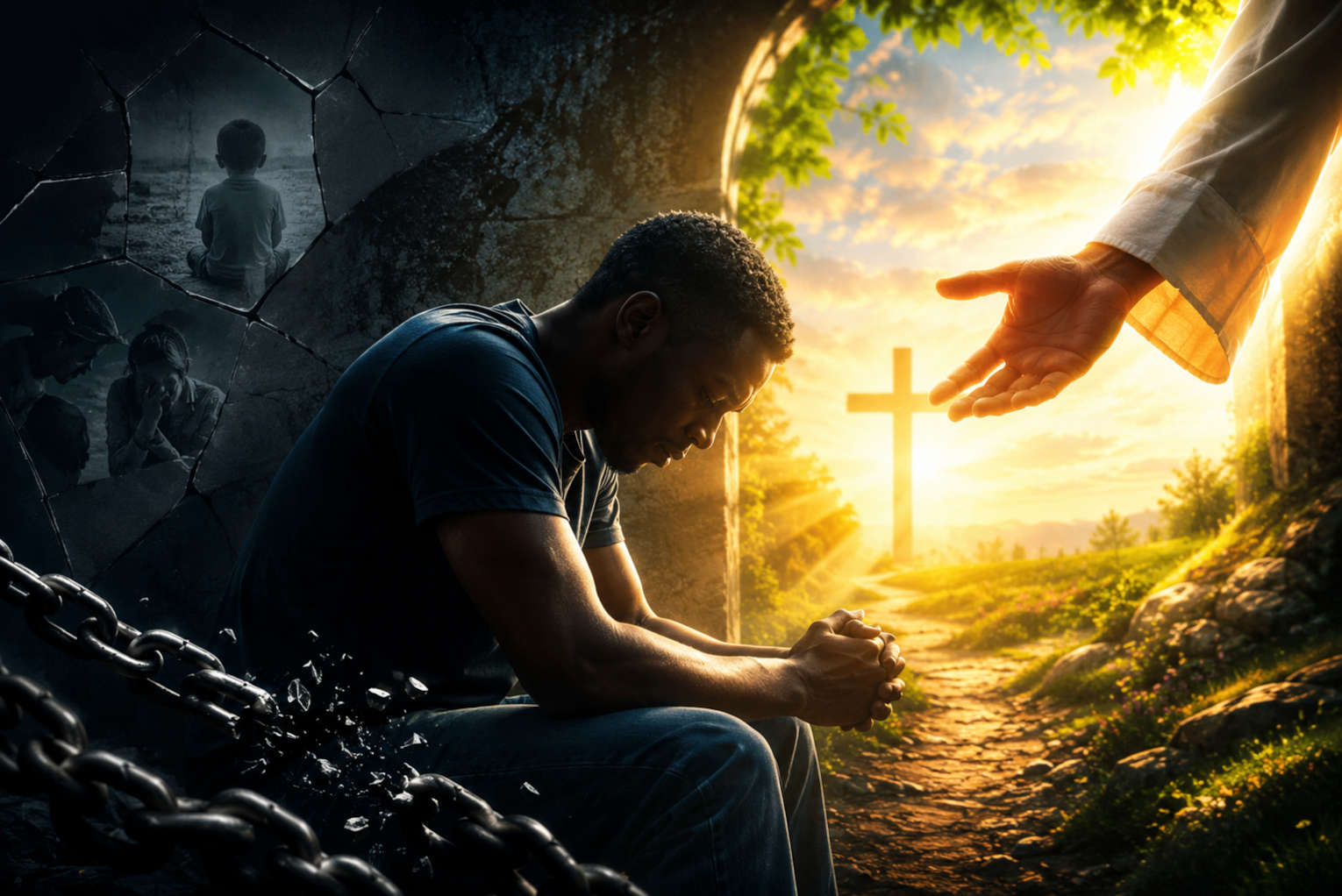
We want to start by saying something clearly: We know you’ve been hurt. The pain and trauma you have endured have felt completely unfair. You did not choose to have those formative experiences, and yet they have become a weight you’ve been forced to carry.
Unconfronted pain and trauma do not simply fade with time. They don’t disappear because we love Jesus or dissolve because we’ve been born again. Left unaddressed, they continue to inform how we show up in the world—how we relate, communicate, cope and survive. Pain becomes the unseen narrator of our lives.
We also want to acknowledge this up front: Everybody’s story is not the same. Not everyone who struggles with same-sex attraction has the same kind of pain. We are not interested in reducing anyone’s story to a single origin. Some people can point to specific traumatic moments, while others cannot. Some experienced abuse. Others experienced neglect, rejection, or simply silence—the absence of someone saying this isn’t your fault.
But after talking with so many people battling same-sex attraction, we know that we all have experienced some form of pain or trauma, and it has shaped us in ways we may not fully understand yet. For some of us, the pain was so deep or happened so early that we don’t even remember it. The mind learned how to survive by blocking it out. But even when the memory is gone, the impact remains. Our bodies remember. What we cannot recall still influences us.
We have heard time and time again about the childhood moments with people we trusted when lines were crossed. At the time, we didn’t always know what was happening. Some experiences felt confusing; others felt normal, even consensual. We didn’t yet understand that what felt “OK” really wasn’t OK. For many of us, it wasn’t until later in life that we realized something had been taken from us.
Yet pain and trauma do not come only through sexual experiences. They can be inflicted verbally, physically, or emotionally. For some, simply existing with same-sex attraction—and dealing with the judgment, rejection, and isolation that came with it—was traumatic in itself.
We did not all respond to this trauma the same way. Some of us became curious and felt a draw toward same-sex attraction. Others spent years womanizing, trying to prove that what happened to us wasn’t who we were. Some numbed themselves. Others learned to perform.
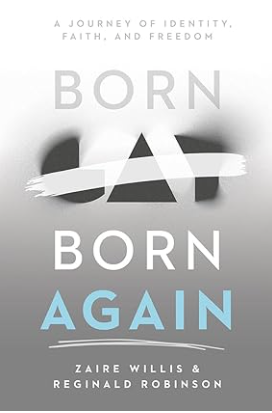
Order “Born Gay, Born Again” By Zaire Willis and Reginald Robinson Jr. on Amazon.com!
We have walked with hundreds of men over the years. In one men’s group we are part of, an anonymous survey revealed that over 40 percent of the men secretly struggled with same-sex attraction. Pain pushed many of these men into hiding, convincing them there was a part of them too dangerous to be seen.
Sometimes it isn’t only same-sex attraction that keeps us hidden. It’s what trauma awakened in us desires and fantasies so uncomfortable that we wouldn’t dare confess them to God, let alone to other people. Even in spaces that claim to be open, these desires can feel too dark and shameful to name. And yet we have to sit with this truth: Many of these desires were born not from rebellion but from pain, confusion, exposure and survival.
As if all this weren’t enough, we also have to acknowledge the trauma created by the internal war itself. It is painful to love God while fighting something inside you that feels powerful and relentless. You wake up every day trying to surrender, trying to obey, and trying to believe, while everything in you seems to pull in the opposite direction. This conflict is exhausting, it is traumatizing, and over time it can leave us weary and confused.
This is not about reliving your pain. It is about understanding how pain shaped the ways you learned to survive. It is about facing what has been hurting you, not to shame you but to free you. Trauma does not negate the truth that you really have been born again. God really did make you new. But unaddressed pain can slow the sanctifying work God desires to do in your life.
You are not broken; you were hurt. And the same God who saved you is patient enough to heal the places that are still bleeding.
Living Like Mephibosheth
If you are honest, you have been hemorrhaging since you were a child. There is a way children experience the world that adults often forget. As a child you do not have context. You have only momentary experiences. However, those moments make you feel what you believe.
In Scripture there is a man named Mephibosheth. As a child he was dropped by the one who was responsible for carrying him. The fall left him disabled in both feet (2 Sam. 4:4). His injury wasn’t due to rebellion, nor was it a decision he made. It was a wound inflicted by someone who was supposed to protect him. And that moment marked him for the rest of his life.
By the time we see Mephibosheth as an adult, he is living in a place called Lo-debar, a name that literally means no pasture, no word, no nothing (2 Sam. 9:4–5). It was a barren place. Though he was royalty by birth, he lived like someone who had been forgotten.
This story mirrors the reality of many men battling same-sex attraction today. Something happened to us
early—a fall, an experience we did not understand, or a series of experiences that shaped us before we were mature enough to process them. And though we may not remember all of it clearly, the impact followed us. What happened to the boy shaped the man.
As we’ve shared, for some of us, the label gay was spoken over us because of the way we walked, talked, gestured, or expressed emotion. People started calling us something we didn’t even understand, and the bullying, jokes, and name-calling only reinforced it. When a child hears something long enough, he begins to wonder whether it’s true. Questions arise, not from genuine desire but from repetition. Identity wasn’t discovered. It was suggested. And over time that suggestion begins to feel like confirmation.
For others, pain came through boundaries that were crossed too early. The experiences didn’t feel violent or wrong in the moment because we didn’t yet know what wrong was. For children who were hypersexualized by abuse, interactions with neighbors, cousins, or friends didn’t always register as abuse at the time. Some moments felt confusing. Some felt normal. Some even felt wanted.
It was only later that we realized something had been taken from us. Growing up and suddenly understanding that what happened wasn’t OK is traumatic in itself. Realizing you were hurt before you knew you were allowed to say no creates a deep internal fracture.
Physical abuse does the same. Being punished with violence or living in fear of the next outburst teaches the body that love is unsafe. Verbal abuse leaves marks no one sees. Being mocked, harshly corrected, or torn down teaches a child who he is not allowed to be. Emotional neglect—being unseen, unheard, or unprotected—teaches a child that his needs do not matter.
Sometimes the deepest trauma isn’t what happened. It’s what never happened—the absence of affirmation, guidance, and someone saying, “This isn’t your fault.”
We’ve named many of the pains and traumas we faced growing up, but there is one experience many people overlook: early exposure to pornography. Pornography is often treated as innocent curiosity. But it is not neutral. Early exposure may not leave visible scars, but it can be deeply traumatic. Being shown pornography or discovering it as a child is a form of sexual exploitation of the developing mind and body.
Porn becomes a private teacher. It introduces sexual images before the brain is capable of processing them. It shapes desire before discernment ever has a chance to form. It floods a developing mind with stimulation that it was never designed to handle, wiring arousal to confusion, secrecy, and shame. And the child doesn’t know how to tell anyone, so they learn how to cope but never how to heal.
Then one day, the man looks up and realizes he is Mephibosheth—alive but living in Lo-debar. He’s still
breathing, still functioning, and still spiritually royalty, yet he’s emotionally stalled and psychologically stuck in the place his pain carried him.
Arrested Development
You cannot become the man God has called you to be without addressing the boy you once were. This is not to blame or shame him but to finally tell the truth about what he has dealt with alone. What happened to you wasn’t fair. But healing begins when you stop pretending that it didn’t affect you, because until you can identify where you were hurt, you will continue to live from the place and stage of development that was formed in pain.
You can be sincere, committed, and surrendered, and you can still respond to the world like the boy who learned how to survive before he ever learned how to be safe. Growing older doesn’t mean we grow whole. Time passed, but there were parts of us that never moved forward because they were never tended to.
There is a kind of brokenness that doesn’t look broken at first. You grow up. You get older. You function. You work. You serve. You love God. And then something happens, and your reaction feels bigger than the situation. Something small feels threatening. A look, a tone, or a perceived rejection sends you spiraling. You don’t understand why it hits you so hard. You just know what you feel. This is what arrested development looks like.
When pain or trauma happens at a specific point in your life and goes unaddressed, part of you stops growing there. Your body keeps aging. Your responsibilities increase. But emotionally, mentally and relationally, something inside you is still operating from the age when the wound occurred.
So you end up with grown men carrying the unmet needs of boys. This may show up as a deep fear of abandonment, an intense longing for affirmation, an inability to set boundaries—or setting boundaries that are too rigid—a constant need to keep the peace, or a tendency to appease rather than express. These aren’t adult responses. They are evidence that the needs of our younger selves still require care.
When we look at it through this lens, we begin to see that many of our adult patterns are not acts of rebellion against God. They are attempts to soothe the wounds of a younger self. People pleasing; avoidance; extreme submission; the sexualization of relationships; wanting to feel chosen, safe, wanted, and seen—these behaviors didn’t form because we were evil. They formed because at some point they worked. They kept us safe and connected. They kept us from being abandoned again. But what protected us as boys can imprison us as men.
This is where the story of Mephibosheth continues to speak. He was injured as a child, and though he grew older, the effects of the fall followed him into adulthood. He lived with the posture of someone shaped by what happened early—royal by birth but living as if he expected nothing.
That is what arrested development does. It doesn’t stop time. It suspends growth.
For men who wrestle with same-sex attraction, identifying this is especially important because when part of you is stuck at a younger age, sexual desire often expresses itself from that stage of development. It becomes less about lust or attraction and more about finding the safety, affirmation, or connection that was missing when it mattered most.
This is why healing is emotional and not just spiritual.
Sanctification does not only correct behavior, but it also matures what pain froze. God does not shame the boy who adapted to survive. He reparents the heart and teaches the parts of us that never learned how to be safe, trust, and rest.
While that process is beautiful, it is also deeply disorienting. You may love God deeply and still feel emotionally young in certain areas. That does not mean regeneration failed. It means sanctification is touching a deeper layer.
Arrested development is not permanent. It is interruptible. You are not broken because you are struggling. Some parts of you simply stopped growing when pain told them to, and God is patient enough to meet you there.
Zaire Willis is the co-founder of Brand New You and Executive Pastor of VEIR–The Church at Huntsville, bringing excellence and compassion across worship, administration, and discipleship. Shaped by his own journey of deliverance, he mentors men toward freedom, healing, and purpose rooted in God’s Word. He lives in Huntsville, Alabama, with his wife.
Reginald Robinson, Jr. is the founder of Brand New You and Senior Pastor of VEIR–The Church at Huntsville, known for strategic leadership, prophetic insight, and a heart for discipleship. Formerly in urban planning and workforce development, he now mentors men to break cycles, grow in emotional intelligence, and walk in God-given purpose. He lives in Huntsville, Alabama, with his wife and three children.
Willis and Robinson Jr.’s new book, Born Gay, Born Again: A Journey of Identity, Faith, and Freedom is available on Amazon.com.
