


Are we actually living in the season of Christ’s return?
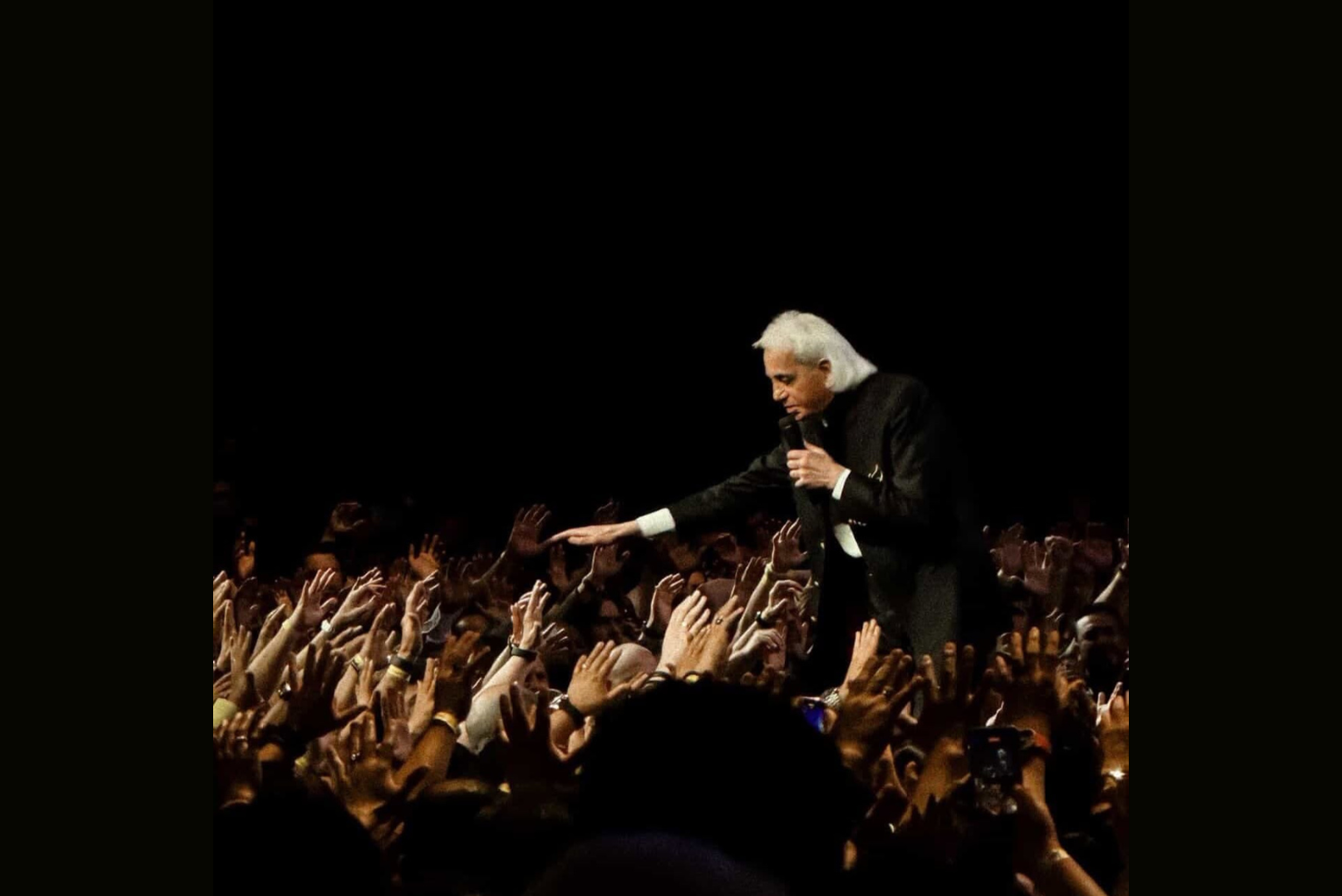
That is the question John Bevere and his son Arden wrestled with in a recent episode of the John Bevere Podcast. Not with hype. Not with date setting. But with Scripture. Lots of it.
Bevere makes it clear from the start that no one knows the day or the hour. Jesus said that plainly. But Scripture also says believers are not meant to be in the dark about the season. From the Mount of Olives to the writings of Peter to the early church fathers, Bevere argues that several biblical timelines are lining up at once.
He highlights three in particular.
Timeline 1: The Fig Tree and This Generation
The first timeline begins with Jesus’ teaching in Luke 21 and Matthew 24.
After describing the destruction of the temple and signs of His coming, Jesus tells His disciples to look at the fig tree and all the trees. When they begin to blossom, summer is near. In the same way, when certain prophetic events begin to unfold, the kingdom of God is near.
Bevere focuses on Luke 21:24 where Jesus says Jerusalem would be trampled by the Gentiles until the times of the Gentiles are fulfilled. For nearly 1,900 years Jerusalem was ruled by Gentile powers. Romans. Byzantines. Arab caliphates. Crusaders. Ottomans. The British Empire.
Then came May 14, 1948. Israel was born as a nation in one day, just as Isaiah 66:8 describes. But Bevere points to June 1967 as the key prophetic marker. During the Six-Day War, Israel regained control of Jerusalem.
For the first time since A.D. 70, Jewish leadership ruled the city Jesus specifically mentioned.
From there Bevere turns to Jesus’ statement: “This generation will not pass away until all these things take place.”
What is a generation? He leans toward a 100-year framework based on longevity and historical patterns. If 1967 marks the beginning of that generation, that places the outer edge around 2067.
This points to a season. A defined window of time calling for spiritual alertness.
Timeline 2: The 6,000-Year Pattern and the Millennial Rest
The second timeline moves from modern history to a much broader biblical framework.
Psalm 90:4 says a thousand years in God’s sight are like a day. Second Peter 3:8 repeats the same concept. Bevere connects this to the creation account. God created in six days and rested on the seventh.
Early Jewish teachers and several early church fathers taught that human history would span 6,000 years followed by a 1,000-year reign of Messiah. Six “days” of human labor. One “day” of rest.
Bevere cites figures such as Irenaeus and others who wrote that creation’s six days symbolically pointed to 6,000 years of history before the millennial kingdom.
He also references genealogical studies that date Adam’s creation around 3925 B.C. By adding successive 2,000-year segments, major redemptive transitions cluster around those boundaries, including events surrounding the first century and the destruction of the temple.
Multiple streams of biblical thought point toward humanity approaching the close of a 6,000-year period.
The seventh “day” aligns with the millennial reign described in Revelation 20, when Christ rules and Satan is bound.
Timeline 3: Hosea’s Two Days and the Revival of Israel
The third timeline centers on Hosea 5 and 6.
In Hosea 5:15, the Lord says He will return to His place until His people acknowledge their guilt. In Hosea 6:2, Israel declares, “After two days He will revive us. On the third day He will raise us up.”
Bevere connects this to the same day equals 1,000 years principle found in Psalm 90 and 2 Peter 3. After roughly 2,000 years of dispersion and global focus on the Gentiles, God’s redemptive attention shifts back toward Israel in a climactic way.
The apostle Paul writes in Romans 11 that a partial hardening has come upon Israel until the fullness of the Gentiles has come in, and then all Israel will be saved.
In this framework, the two “days” of Hosea represent approximately 2,000 years. The third “day” points to the millennial kingdom. This aligns broadly with the other timelines converging within the same historical window.
Living Ready
Bevere emphasizes that prophecy is not meant to create panic. It is meant to create preparation.
He points to 1 Thessalonians 5:4 where Paul says believers are not in darkness that the day should overtake them like a thief. He highlights Peter’s warning that scoffers would mock the promise of Christ’s return. He urges Christians to respond with spiritual maturity and urgency.
The focus is not charts or calculations. It is transformation.
If these timelines are converging, the call is clear. Stay filled with the Holy Spirit. Stay devout. Stay expectant. Live like a wise bride waiting for her groom.
The season calls for awakening. It calls for holiness. It calls for hope.
James Lasher, a seasoned writer and editor at Charisma Media, combines faith and storytelling with a background in journalism from Otterbein University and ministry experience in Guatemala and the LA Dream Center. A Marine Corps and Air Force veteran, he is the author of The Revelation of Jesus: A Common Man’s Commentary and a contributor to Charisma magazine. For interviews and media inquiries, please contact [email protected].