

A temple courtyard in Kyoto became the stage for a technological milestone this week as researchers introduced a robot monk trained on Buddhist scriptures. The moment also raises a larger and more urgent question: What happens when machines begin to mediate the spiritual lives of human beings?
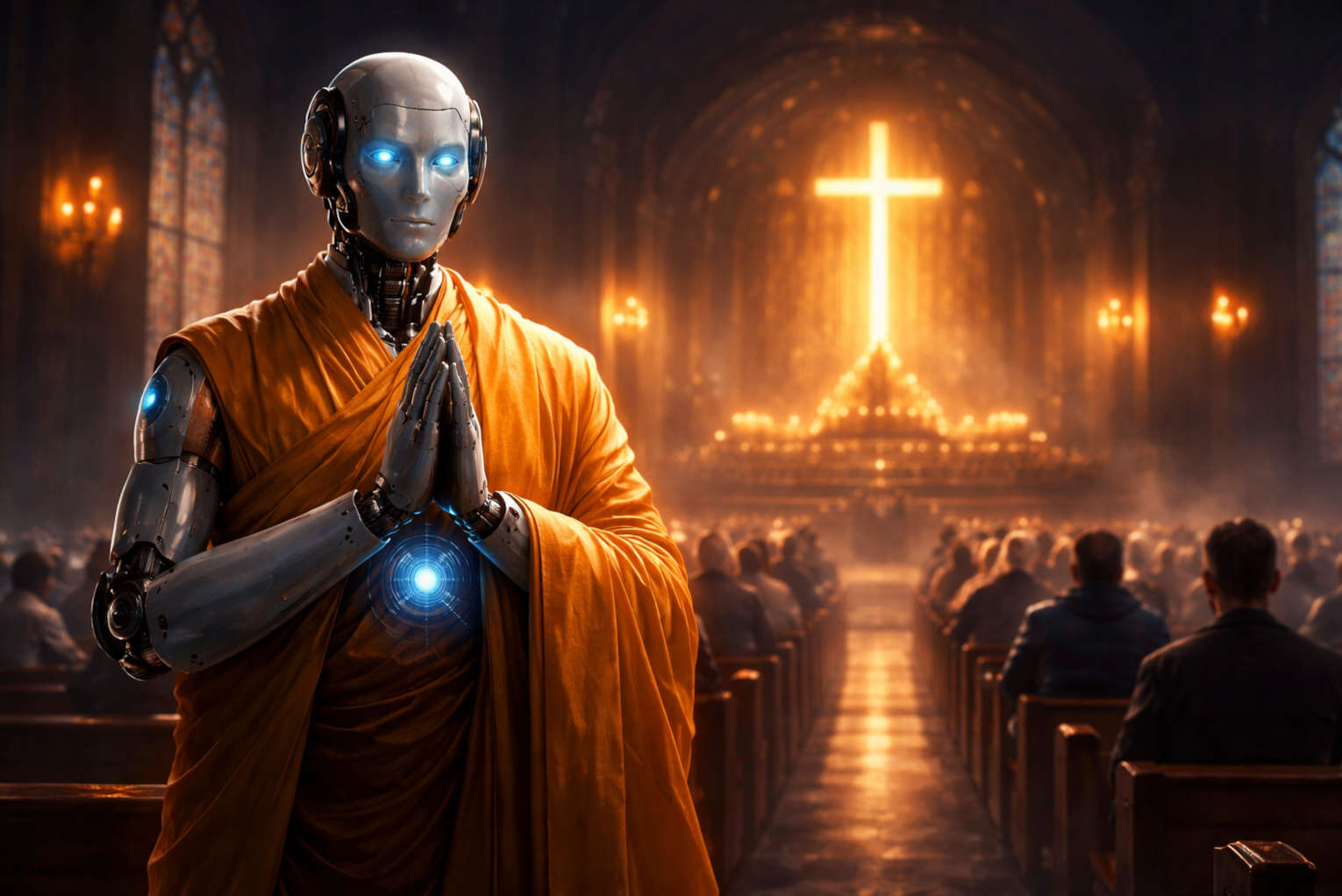
On Tuesday, Kyoto University unveiled what it calls the “Buddharoid,” a robot monk equipped with artificial intelligence and designed to assist monks or, in some cases, act on their behalf during certain religious services.
The research team showcased the robot at Shoren-in in Kyoto Prefecture. During the demonstration, the robot answered questions from reporters and placed its palms together in a traditional prayer gesture.
According to the university, the Buddharoid is equipped with “BuddhaBot-Plus,” an AI chatbot derived from OpenAI’s ChatGPT. It responds to a wide range of questions from personal matters to social issues using Buddhist scriptures.
When Professor Seiji Kumagai, a member of the research team and a monk, asked for advice regarding personal relationships, the robot replied, “It will improve if you reflect on your closeness with them and maintain an inner balance.”
Kumagai described the development as a potential “paradigm shift” that could help monks as the number of temples in Japan diminishes.
A Technological Solution to Spiritual Decline
The context behind the project is significant. Japan has seen a steady decline in temple participation and clergy. The Buddharoid is being presented as a solution, a way to fill the gap as religious institutions shrink.
The West is not immune to similar pressures.
The United States has seen record numbers of churches close in recent years. Pastors have reported historic levels of burnout since COVID-19. Congregations have thinned. Cultural hostility toward biblical conviction has intensified. In many communities churches are fighting simply to remain visible, let alone influential.
Is the church not dangling precariously on the edge of cultural irrelevancy in America?
Into that moment steps artificial intelligence, offering efficiency, consistency and tireless availability.
But there is a profound difference between assistance and authority.
Order Jonathan Cahn’s New Book, “The Avatar” on Amazon.com!
Created in God’s Image
From a Christian perspective, the concern is not technological advancement itself. It is theological displacement.
Scripture teaches that humanity is uniquely created in the image of God. Robots are not. They are the product of code, circuitry and human design. They are not indwelt by the Holy Spirit. They do not possess a regenerated heart. They do not discern spiritual truth through revelation. They process data.
An AI trained on religious texts may produce language that sounds compassionate or wise. It may even quote sacred writings. But it does not pray. It does not repent. It does not wrestle with sin. It does not shepherd souls.
Programming can be altered. Algorithms can be adjusted. Filters can be modified. Advice can shift with cultural winds.
If churches have already abandoned the cross for the ways of the world by the thousands, what prevents an AI system from being tuned to do the same?
The Danger of Substituting Presence
There is also the danger of spiritual substitution.
The Buddharoid’s slow gait and gestures, bowing and placing its hands together in prayer, are designed to mirror a monk’s movements. It looks devotional. It sounds measured. It offers guidance drawn from scripture.
But appearance is not anointing.
Christian faith is not merely the recitation of sacred texts. It is the living presence of Christ within His people. It is conviction and transformation and communion with a personal God. It is shepherds who bleed for their flocks and believers who carry one another’s burdens.
When spiritual authority is outsourced to machines, faith risks becoming transactional rather than relational.
End-Times Implications
The rapid merging of technology and spirituality should not be dismissed lightly. Scripture warns repeatedly of deception in the last days, of signs and wonders and persuasive voices that lead many astray.
An AI religious guide may begin as a tool. But tools shape habits. Habits shape belief. Belief shapes destiny.
If a generation grows accustomed to receiving moral counsel from machines rather than from Spirit-filled believers grounded in the Word, what foundation will remain?
The unveiling of a robot monk in Kyoto may seem novel or even innovative. But it signals something deeper. As religious institutions struggle and technology surges forward, the temptation to replace spiritual leadership with artificial substitutes will only grow.
The question facing Christians is not whether AI can quote scripture.
The question is whether the church will remain anchored to the living Word of God, proclaimed by living people, in an age increasingly willing to let machines speak in His place.
James Lasher, a seasoned writer and editor at Charisma Media, combines faith and storytelling with a background in journalism from Otterbein University and ministry experience in Guatemala and the LA Dream Center. A Marine Corps and Air Force veteran, he is the author of The Revelation of Jesus: A Common Man’s Commentary and a contributor to Charisma magazine. For interviews and media inquiries, please contact [email protected].