
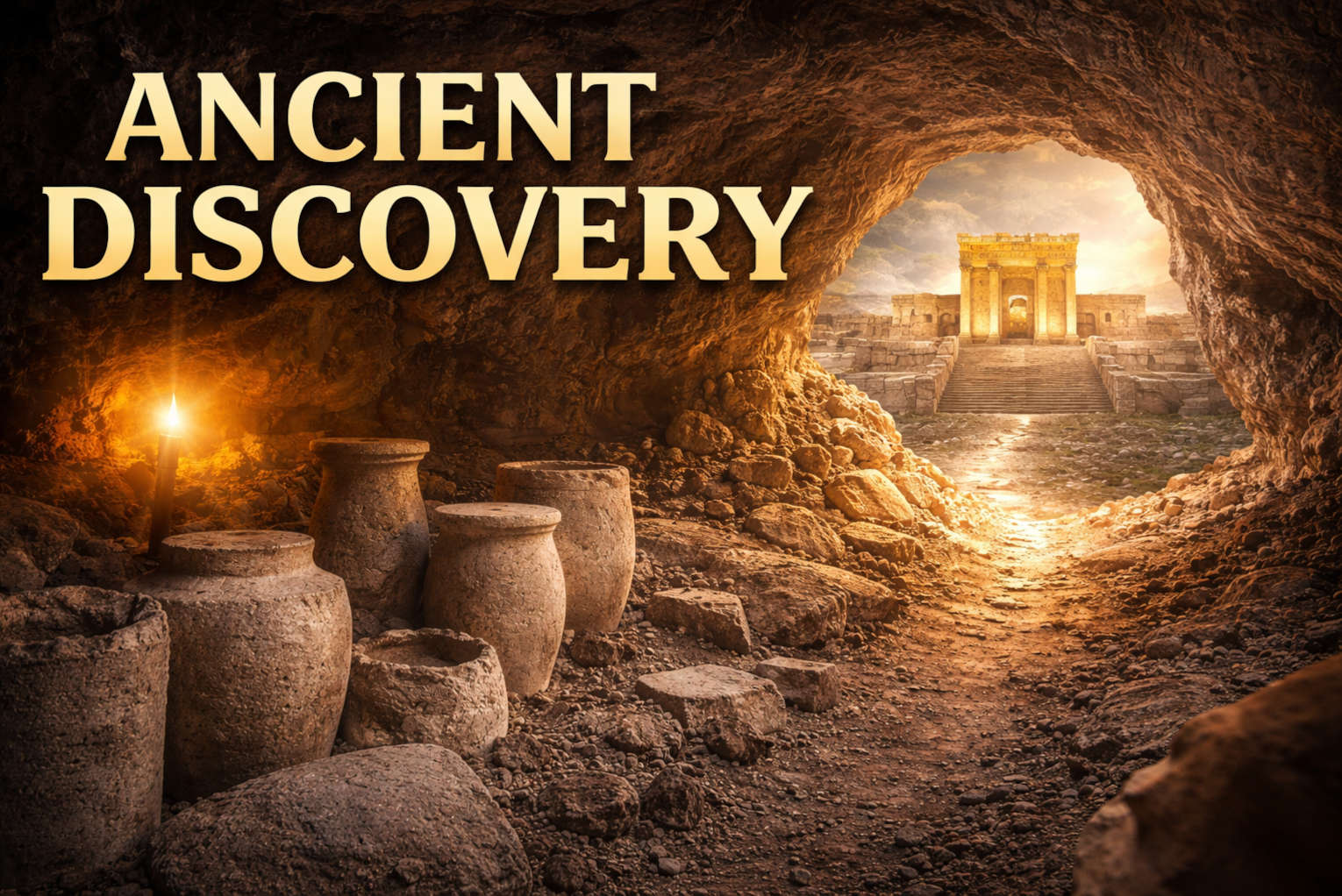
An underground cave on the slopes of Mount Scopus has opened a window into the world of ancient Jerusalem. What began as a late-night sting operation targeting antiquities thieves has uncovered a 2,000-year-old workshop that once supplied Jewish pilgrims making their way to the Temple.
Israeli authorities discovered the site during an operation against looters, as reported by Fox News. Instead of finding only stolen artifacts, officials stumbled onto a production center dating to the Second Temple period, the era in which Jesus lived and preached in Jerusalem.
The Israel Antiquities Authority announced the discovery Feb. 16, explaining that investigators tracked suspects to an underground cave and caught five individuals inside with quarry tools and a metal detector. The suspects were arrested and confessed.
According to the release, “They will soon be indicted both for damage to and for illegal excavation of an antiquities site, offenses punishable by law, for which the proscribed penalty is up to five years in prison.”
What authorities uncovered inside the cave surprised even seasoned archaeologists. “To their amazement, they discovered hundreds of unique stone vessel fragments,” the statement said. The cave also contained production waste and unfinished items, evidence that this was not a small family operation but a serious workshop serving a steady demand.

Order Amanda Grace’s New Book, “Brace For Impact” on Amazon.com!
The location tells its own story. The cave stood along a main road used by Jewish pilgrims traveling between Jerusalem, the Jordan Valley, Jericho and the Dead Sea region. These were the same roads filled with worshipers ascending to the Temple during feast days. “It seems that the vessels produced here were marketed in the streets of Jerusalem to both the city’s residents and to visitors making a pilgrimage during the Second Temple period,” the IAA said.
The vessels themselves were not ordinary household items. Officials noted they were “unique to the Jewish population,” reflecting the heightened concern for ritual purity during that time. “Ancient sources describe a revolution in the field of purity and impurity during this period, in which there was widespread strictness in the laws of impurity and purity that affected every person,” the release stated.
Archaeological evidence from the era confirms that purification mikvahs were installed in private homes and near the Temple, revealing how deeply purity laws shaped daily life.
Eitan Klein, deputy director of the Theft Prevention Unit at the IAA, said the scale of the workshop points to significant demand. “This was probably an industrial-scale workshop that produced vessels for the large Jewish population and pilgrims who arrived in Jerusalem in those days,” he said. He added that the discovery is “particularly important, because now a broad picture of the region is emerging.”
The find carries weight beyond the cave walls. The Second Temple period underpins much of the New Testament and remains central to prophetic passages focused on Jerusalem and the Temple. Each discovery tied to that era reinforces the idea that the city described in Scripture was not symbolic or mythic but active, structured and deeply rooted in covenant practice.
Israeli Minister of Heritage Amichai Eliyahu described the cave as “not merely an archaeological site, but a window into a world preserved deep within the ground, waiting for us.” He added, “Attempts by our enemies to loot antiquities are not crimes of financial theft, but efforts to steal our identity.”
Now displayed at the Jay and Jeanie Schottenstein National Campus for the Archaeology of Israel in Jerusalem, the stone fragments speak quietly but clearly. They tell of pilgrims climbing dusty roads, of families preparing for worship, of a city alive with expectation. Buried for centuries and uncovered in the middle of a criminal investigation, the workshop stands as another reminder that Jerusalem’s ancient story is still being unearthed, one cave at a time.
James Lasher, a seasoned writer and editor at Charisma Media, combines faith and storytelling with a background in journalism from Otterbein University and ministry experience in Guatemala and the LA Dream Center. A Marine Corps and Air Force veteran, he is the author of The Revelation of Jesus: A Common Man’s Commentary and a contributor to Charisma magazine. For interviews and media inquiries, please contact [email protected].
