
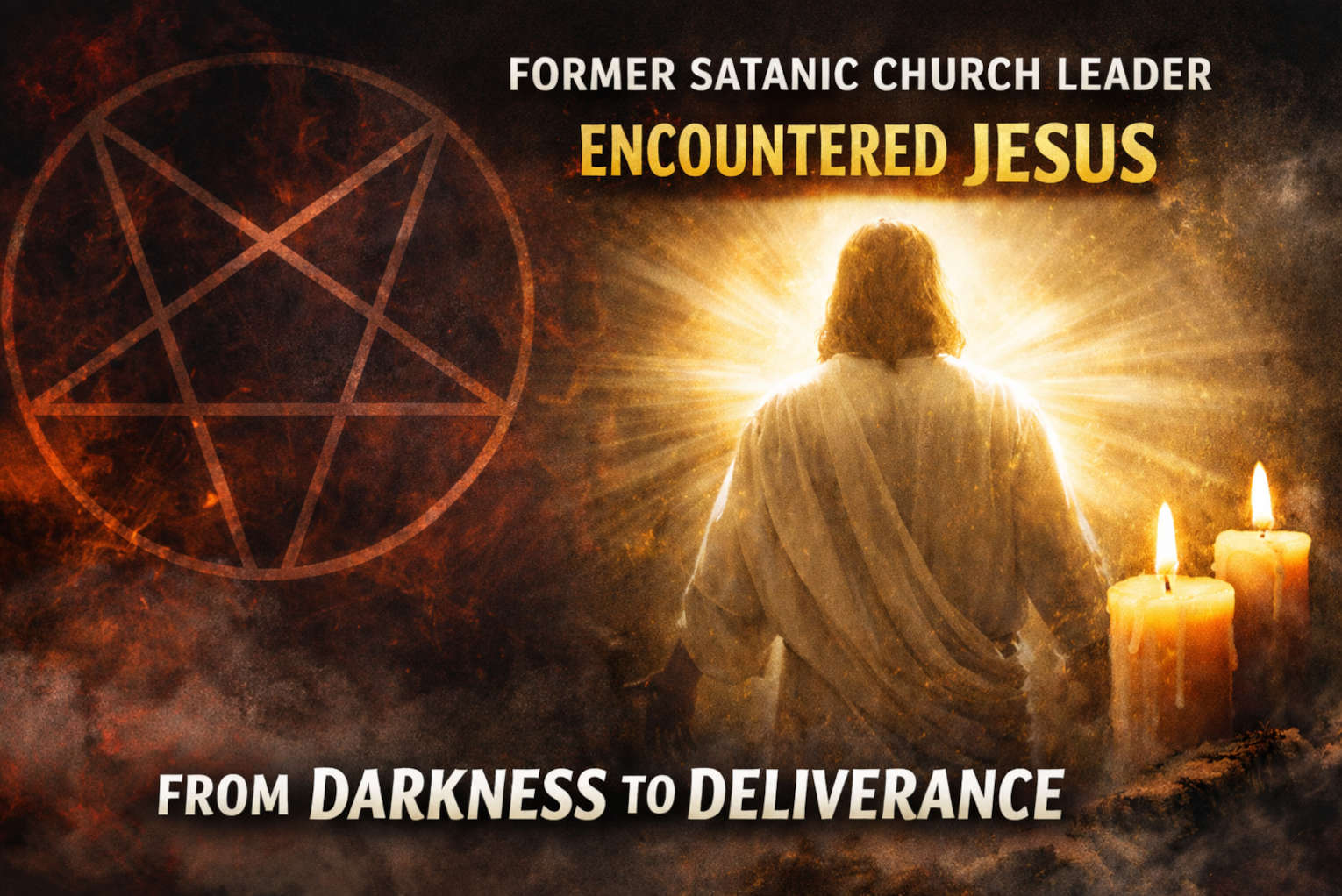
He was preparing to carry out a globally recognized satanic ritual. Candles flickered inside a dark room reserved within a satanic church building. The atmosphere was heavy and deliberate. Riaan Swiegelaar, once a leader within the satanic church, said the ritual had international significance within occult circles and required formal appointment.
He had just lit a second candle when everything changed.
“This whole room lit up,” Swiegelaar said during a recent interview with Isaiah Saldivar. The space, normally illuminated only by torches and candlelight, suddenly filled with a brilliance that did not come from any earthly source. He stood up and turned around.
“A man was standing there,” he recalled. Assuming at first it was an intruder, he demanded to know who had entered. The response stunned him.
“When he said to me, ‘I’m Yeshua of Nazareth,’ I said to him, ‘I’m sorry, but I don’t believe you. You’re going to have to prove it then.’”
What followed, Swiegelaar said, was not condemnation but overwhelming love. “He flooded me with so much love,” he said. In that moment, he described seeing the full weight of his own sin while simultaneously encountering what he called undeniable compassion and authority. “Everything that I’ve seen in the occult and in Satanism… doesn’t compare even closely to who Jesus is.”
The encounter lasted less than two minutes. It was enough to dismantle years of allegiance.
Swiegelaar abandoned the ritual and eventually resigned from the satanic church. He lost homes, properties, cars and financial stability. He severed ties with the influence and access that once defined his life. “I lost everything,” he said. “And you know what? I don’t regret it for a second.” The power he once pursued through occult practices faded in comparison to what he now describes as a solid, unchanging foundation in Christ.
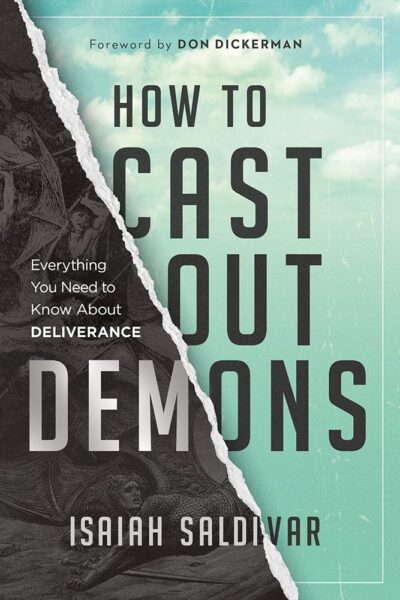
Order Isaiah Saldivar’s Book, “How to Cast Out Demons” on Amazon.com!
In the days that followed the encounter, he said he felt physically exhausted and emotionally undone. On the fifth day, he awoke at 3 a.m. to what he described as a voice instructing him to go to the beach. There, for the first time in his life, he began speaking directly to God.
His transformation did not happen in isolation. His parents had discovered his involvement in Satanism through a newspaper article years earlier. Though their relationship was strained, his mother asked him one question. Was it real? She needed to know how to pray.
After nearly four years without speaking, Swiegelaar would later see in his mother’s Bible the verses where she had written his name again and again. She had dedicated him to God as a baby and believed she could pray him back into the kingdom. “She said to the devil, ‘Sorry, you’re not going to have my child because he belongs to God.’”
Testimonies like Swiegelaar’s raise uncomfortable questions within the modern church. Deliverance ministry and open discussions about demonic oppression were once central to Christian preaching and practice. Today, many American churches rarely address spiritual warfare directly. Conversations about casting out demons, confronting occult influence or engaging in intercessory battle are often avoided in favor of more culturally palatable themes.
The silence has consequences. When believers neglect the reality of spiritual warfare, the enemy faces little resistance. Scripture portrays a spiritual conflict that demands vigilance, prayer and authority rooted in Christ. Swiegelaar’s account underscores that the occult is not imaginary theater but a spiritual system he says carries real influence.
Yet his testimony also highlights something more powerful. The authority of Jesus is not fragile or passive. It confronts darkness. It exposes sin. It restores what was lost.
The Gospels show that nearly 30 percent of Jesus’ earthly ministry involved casting out demons and delivering those bound by unclean spirits. Deliverance was not a fringe activity. It was central to demonstrating the kingdom of God advancing against darkness.
If spiritual bondage remains a present reality, then deliverance remains a present necessity. Swiegelaar’s story is a reminder that no one is beyond redemption and no darkness is beyond the authority of Christ. The church must not retreat from engaging in spiritual warfare but stand firm in the power that Scripture declares still sets captives free.
James Lasher, a seasoned writer and editor at Charisma Media, combines faith and storytelling with a background in journalism from Otterbein University and ministry experience in Guatemala and the LA Dream Center. A Marine Corps and Air Force veteran, he is the author of The Revelation of Jesus: A Common Man’s Commentary and a contributor to Charisma magazine. For interviews and media inquiries, please contact [email protected].
