Pastor Jack Hibbs, senior pastor of Calvary Chapel Chino Hills, opened a recent teaching on Bible prophecy with a simple but forceful claim: Scripture explains the world more clearly than modern headlines, artificial intelligence or political analysis ever could.
Teaching from John 14:29, Hibbs said Jesus’ words establish the purpose of prophecy itself. “I’m telling you something that’s going to come,” Hibbs paraphrased, “and when it does come to pass, you may believe.”
That pattern, he argued, is the foundation of biblical prophecy: prediction followed by fulfillment, producing faith.
Prophecy as Evidence, Not Speculation
Hibbs defined Bible prophecy as the study of God’s revealed future, commonly called eschatology, but emphasized it should be understood as evidence rather than guesswork.
“The God of the Bible claims to know the future in advance,” Hibbs said. “When God says, ‘Watch the future, this is what’s going to happen,’ and then it happens thousands of years later, should you not sit up and take notice?”
He argued fulfilled prophecy answers one of Christianity’s most common challenges: whether God exists at all. According to Hibbs, Scripture presents prophecy as God speaking from outside time and space, validating His Word through history.
“Bible prophecy proves the existence of God,” he said, adding that fulfilled prophecy produces confidence in what has not yet occurred.
Reading Headlines Through a Biblical Lens
Hibbs encouraged listeners to interpret current events through what he called a “biblical prophetic worldview,” rather than reacting emotionally to news cycles.
He pointed repeatedly to Israel, which he described as the most frequently mentioned nation in Scripture. Developments involving Iran, identified biblically as Persia, were cited as examples of why prophecy remains relevant, though Hibbs stressed that certain prophetic events have not yet occurred.
“It hasn’t happened yet,” he said of Ezekiel 38, which describes a future invasion of Israel. “But what’s happening right now should make us pay attention.”
Hibbs cautioned against drawing premature conclusions while still urging discernment rooted in Scripture rather than speculation.
Technology, Deception and the Book of Revelation
Addressing artificial intelligence, Hibbs referenced Revelation 13, which describes an “image” empowered to identify those aligned with a future global system.
“That’s my opinion,” Hibbs said, clarifying that his view connects modern technology with biblical warnings about deception in the last days. “Jesus said there would be deceiving spirits and doctrines of demons.”
He emphasized that Scripture anticipates both technological advancement and spiritual deception, requiring believers to remain grounded in biblical truth.
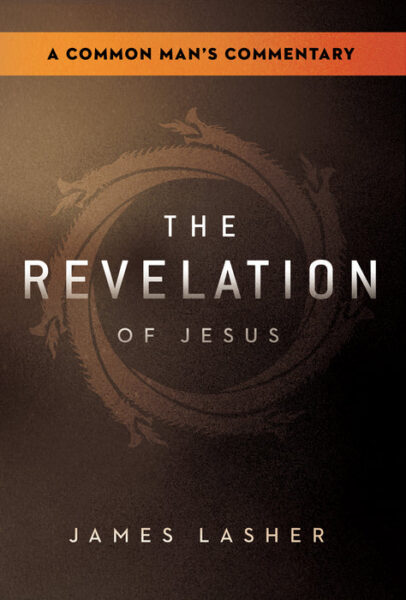
Order James Lasher’s New Book, “The Revelation of Jesus” on Amazon.com!
Why Avoiding Prophecy Weakens the Church
Hibbs warned that neglecting Bible prophecy leaves Christians vulnerable to confusion and false teaching.
“Christians that don’t know Bible prophecy are like people who are anemic,” he said. “They can’t fight back. They can’t discern truth from error.”
He compared ignoring prophecy to attempting to live on a partial Bible, arguing that prophecy is essential to spiritual maturity and discernment.
Revelation’s Built-In Road Map
One of the most practical elements of Hibbs’ teaching focused on Revelation 1:19, which he said provides the book’s complete outline.
“Write the things which you have seen, the things which are, and the things which will take place after this,” Hibbs quoted, explaining that the verse divides Revelation into past (chapter 1), present (chapters 2–3) and future (chapters 4–22).
He encouraged believers to apply this framework broadly, sorting prophetic passages into past, present or future categories to better understand Scripture’s unfolding narrative.
Prophecy Meant to Prepare, Not Panic
Hibbs concluded by stressing that prophecy is intended to steady believers, not frighten them.
“God gave us Bible prophecy to prepare us, not to scare us,” he said.
According to Hibbs, understanding prophecy anchors Christians in hope, enabling them to face global uncertainty with confidence rooted in God’s proven Word.
James Lasher, a seasoned writer and editor at Charisma Media, combines faith and storytelling with a background in journalism from Otterbein University and ministry experience in Guatemala and the LA Dream Center. A Marine Corps and Air Force veteran, he is the author of The Revelation of Jesus: A Common Man’s Commentary and a contributor to Charisma magazine.