
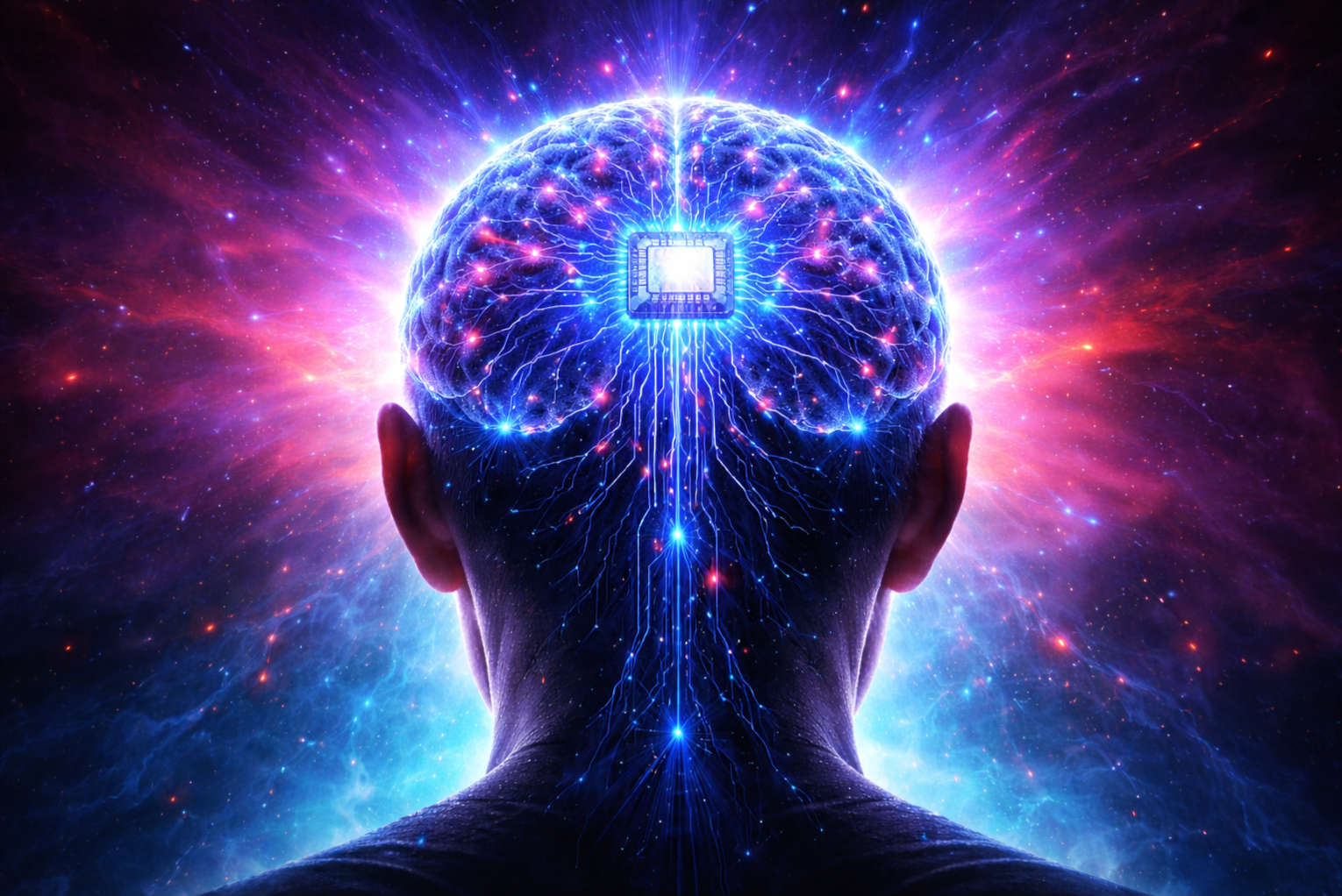


The merger of human bodies and advanced technology is no longer speculative or theoretical. It is accelerating, normalized through innovation headlines and framed as medical progress. What once sounded like science fiction is now being presented as the next logical step in human evolution, quietly reshaping how society views the boundary between flesh and machine.
That shift became unmistakable this week when Neuralink, the brain-implant company founded by Elon Musk, revealed plans that move far beyond experimental trials. Musk stated that Neuralink will begin “high-volume production of brain-computer interface devices and move to a streamlined, almost entirely automated surgical procedure in 2026.” He pointed to the significance of the technology itself, noting, “Device threads will go through the dura, without the need to remove it. This is a big deal.”
Neuralink will start high-volume production of brain-computer interface devices and move to a streamlined, almost entirely automated surgical procedure in 2026.
— Elon Musk (@elonmusk) December 31, 2025
Device threads will go through the dura, without the need to remove it. This is a big deal. https://t.co/nfNmtFHKsp
According to Reuters, the implant is designed to help people with conditions such as spinal cord injuries. The first patient has already used the device “to play video games, browse the internet, post on social media, and move a cursor on a laptop.”
Reuters also reported that “12 people worldwide with severe paralysis have received its brain implants and were using them to control digital and physical tools through thought,” a milestone that signals how quickly this technology is moving from medical aid to direct human-machine integration.
Neuralink’s progress did not come without resistance. The company “began human trials of its brain implant in 2024 after addressing safety concerns raised by the U.S. Food and Drug Administration, which had initially rejected its application in 2022,” Reuters reported.

Order Jonathan Cahn’s Newest Book, “The Avatar” on Amazon.com!
Those concerns, however, did not slow momentum for long. By June, the company had “secured $650 million in a funding round,” demonstrating strong institutional confidence in a future where the human brain becomes a programmable interface.
This is where the implications grow darker. Once embedding technology inside the human body becomes commonplace, the infrastructure for total dependence is already in place. A system that can control access, participation, communication and functionality through internalized technology no longer requires coercion. It only requires consent, convenience and compliance. When bodies themselves become terminals, exclusion becomes effortless.
None of this should surprise us. We were warned about a future system that governs buying, selling and participation through submission to a unified authority. The pathway to that system was never going to arrive with sirens and announcements. It would come quietly, efficiently and wrapped in promises of healing and progress. The trajectory is visible now. The destination was written long ago in biblical prophecy.
James Lasher, a seasoned writer and editor at Charisma Media, combines faith and storytelling with a background in journalism from Otterbein University and ministry experience in Guatemala and the LA Dream Center. A Marine Corps and Air Force veteran, he is the author of The Revelation of Jesus: A Common Man’s Commentary and a contributor to Charisma magazine.