


America has plenty of churches willing to talk about “practical” Christianity, but far fewer willing to preach the parts of Scripture that make people nervous. End-times prophecy sits near the top of that list.
In a recently re-published video that is apt for the times we live in, Prophecy Watchers contributor, author and researcher Mondo Gonzales put his finger on the problem: many pastors avoid prophecy because they assume it is too divisive, too complicated, or too risky. He argues that avoidance is not neutral. It leaves believers less prepared, less grounded in Scripture, and less equipped to answer a culture that is already asking what is happening to the world.
Gonzales lays out “seven reasons to study prophecy,” and he frames them as seven reasons Christians should stop treating prophecy like an optional hobby for a niche crowd. He also refuses the lazy excuse that prophecy cannot be understood.
“It was sad to me that he felt that it was unable to be understood,” he said, recalling a pastor who mocked Daniel’s prophecies with a tinfoil hat. Gonzales acknowledges that Revelation has difficult sections, but insists God gave believers an outline and expects them to pay attention.
Here are the seven reasons Gonzales says Christians should not ignore prophecy.
1. Prophecy centers on Jesus Christ, not speculation
Gonzales starts where prophecy is supposed to start: with Jesus. He points to Christ’s own rebuke in John 5 and then lands it on Revelation’s opening line. “Jesus is talking to the Pharisees there and he simply says, ‘Hey, you guys are looking at the scriptures, but what I’m telling you is they’re all about him,’” Gonzales said. Then he adds the interpretive key: “When we think about the book of Revelation specifically, the first verse in the book of Revelation says the revelation of Jesus Christ.”
He stresses that “apocalypse” does not mean chaos for its own sake. “The word means unveiling. It’s the revealing,” he said. In other words, the point of prophecy is not to feed conspiracy culture. It is to unveil Christ’s majesty, His return and His rightful claim to what He purchased. Gonzales’ bottom line is simple: if a church claims to be Christ-centered while sidelining the book that opens by calling itself the unveiling of Jesus Christ, something is off.
2. Prophecy accuracy builds deeper faith because God’s Word proves itself
Gonzales argues prophecy is not a distraction from faith. It is fuel for faith because it demonstrates that God does what He says. He quotes Isaiah 55’s principle that God’s Word “will accomplish what I desire,” then applies it directly to Revelation. “God gave the book of Revelation not to be ignored but to be studied, to be obeyed,” he said, pointing to Revelation 1:3: “Blessed are all those who hear the words of the prophecy of this book and keep the words, obey them.”
He goes further and ties prophecy to personal endurance, especially when emotions crash. “Emotion doesn’t save you. Emotion will destroy you,” Gonzales said. Prophecy, in his telling, anchors believers to what is solid when feelings are not. “Your book, which is shown to be true by prophecy, unique above all, tells me you won’t,” he said, referring to God’s promise to never leave or forsake His people. The point is not academic. It is survival-level confidence in a God who keeps His Word.
3. Prophecy is God’s built-in challenge to every rival “holy book”
Gonzales calls biblical prophecy a straight-up authenticity test. He points to Isaiah 46 and Isaiah 41 where God issues a challenge to the nations. “He is challenging all religions of the world,” Gonzales said. “Let’s see who it is out there that can predict the future and speak about things to come.”
He frames it as a question Christians should not be shy to ask: “What makes the Bible distinct and unique?” His answer is prophecy with a standard of total accuracy. “In Deuteronomy 18, he puts the standard at 100%,” Gonzales said.
Then he contrasts that with other religious movements that attach timestamps to predictions. He cites a specific example from Mormon history to make the point that failed prophecy is not a small mistake. “As soon as he put a time on there, all we had to do is wait,” Gonzales said, describing a prediction he says never materialized. He adds the theological punchline: “Does God do that?” meaning, does God walk back His own prophecies. “No,” Gonzales answered.
His critique is not aimed at winning arguments. It is aimed at waking up Christians who treat prophecy as an embarrassment. Gonzales flips it. Prophecy is one of Scripture’s strongest public claims. If Christians hide it, they are hiding one of the clearest pieces of evidence the Bible offers about itself.
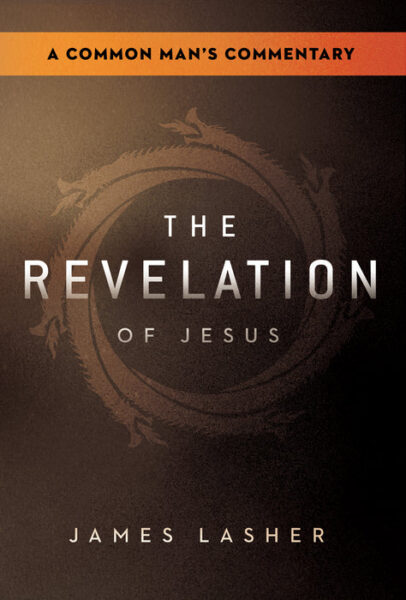
Order James Lasher’s New Book, “The Revelation of Jesus” on Amazon.com!
4. A large portion of the Bible is prophetic, so ignoring prophecy means ignoring Scripture
Gonzales challenges pastors who treat prophecy as a fringe topic by pointing to the scale of it. He says many churches avoid teaching prophecy even though, as he put it, “it’s a third of the Bible.” He ties this to Jesus’ rebuke of religious leaders who could read the sky but not the moment. “Jesus tries, he scolds the Pharisees and says, ‘You guys know how to discern the weather, but you aren’t discerning the signs,’” Gonzales said.
He references Daniel as an example of prophetic specificity and says the religious leaders of Jesus’ day had no excuse for missing it. “Jesus was very, very gracious and compassionate to the lay person,” Gonzales said. “But to the scribes, the professional religious leaders, he was hard on them because they should know better.”
His message to today’s church is obvious without needing to be stated. If leaders can build entire sermon calendars around “felt needs” but treat prophecy as too controversial to touch, they are repeating the same failure Jesus confronted: refusing to handle the parts of Scripture that demand discernment.
5. Prophecy opens doors for evangelism because believers can explain what is happening
Gonzales says prophecy has street-level value: it gives Christians a way to speak clearly into fear, confusion and cultural chaos. He quotes 1 Peter 3:15 and stresses the posture: “We are to have an answer,” he said, but “with gentleness and respect.”
In the discussion, practical examples pour out. The group points to “lawlessness” and fear as themes Jesus named in Matthew 24, and they describe how people’s anxiety becomes an opening for gospel conversations. Gonzales gives a direct, modern illustration from the pandemic era. “None of my immediate family are Christians,” he said, then described relatives reaching out with end-times questions: “They’re reaching out to us looking for some sort of clarification because for them there’s a little bit of fear there, man. Evangelistic opportunity.”
He is direct about what prophecy can do in those moments. “To say what it is and to provide clarity. No, this isn’t the mark of the beast,” Gonzales said. But he also warns that conditions can be set. “This is setting the conditions of society to embrace something because of fear of being alienated or being ostracized or not being able to travel,” he said.
He also points to Israel as a headline-level apologetic. “Did you know that the prophetic age began with the establishment of Israel?” Gonzales said. He describes Israel’s national rebirth as a conversation starter that forces skeptics to deal with the Bible’s long-range claims.
6. Prophecy comes with a promised blessing and a reward for those who long for Christ’s return
Gonzales insists prophecy is not just permitted. It is blessed. He quotes Revelation 1:3: “Blessed is the one who reads out loud the words of this prophecy … and take it to heart what is written in it because the time is near.” He also ties prophecy to the Christian’s forward-facing posture, citing 2 Timothy 4:8 and emphasizing the phrase: “all who have longed for his appearing.”
For Gonzales, longing is not passive. It shapes stewardship and accountability. He says believers will stand before Christ and face questions about faithfulness. “What did you do with the Christian life I gave you?” he said. “Time, gifts, and your resources. Stewardship.”
That emphasis cuts against the way prophecy is often caricatured. Gonzales does not use prophecy as an excuse to disengage. He uses it as an argument to live with urgency and responsibility because Christ’s return is not a theory.
7. Prophecy produces holiness and an expectant life that stays ready
Gonzales ends where many prophecy teachers should end: personal purity. He quotes 1 John 3: “All who have this hope in him purify themselves just as he is pure.” His conclusion is blunt. Expectation changes behavior. A believer who actually believes Christ can return is not drifting through life numb and distracted.
He also emphasizes Jesus’ repeated commands to watch. “This is a command,” Gonzales said, quoting Mark 13: “What I say to you, I say to everyone. Watch.” He then presses how constant it is supposed to be: “Your job is to be staying awake,” and from Luke 21 he quotes, “Be always on the watch.”
Gonzales ties that watchfulness to readiness and to endurance. “To me, I’m going to watch because that’s going to cause me to be ready,” he said. He refuses the fake bravado some Christians wear and admits why watchfulness matters: “I want to escape all these things that are going to be coming.”
The honesty is part of the point. Prophecy is not a party trick. It is a wake-up call that forces believers to take discipleship seriously, to repent quickly, to live clean and to keep their eyes on Christ rather than on comfort.
Gonzales’ argument ends up being an indictment and an invitation. The indictment is for churches that treat prophecy as an optional elective because some people might argue about it. The invitation is to read Revelation and the prophetic Scriptures the way Jesus intended: as friends who are not kept in the dark.
The modern church does not need less prophecy. It needs less fear of it, less laziness about it, and far more of the watchful, Christ-centered obedience Gonzales says Revelation was given to produce.
James Lasher, a seasoned writer and editor at Charisma Media, combines faith and storytelling with a background in journalism from Otterbein University and ministry experience in Guatemala and the LA Dream Center. A Marine Corps and Air Force veteran, he is the author of The Revelation of Jesus: A Common Man’s Commentary and a contributor to Charisma magazine.