

What started as a tongue-in-cheek observation turned into an internet rabbit trail no one saw coming.
After a podcast clip featuring Josh Howerton, senior pastor of Lakepointe Church, went mega-viral for suggesting that Home Alone can be read as a Christian movie, listeners wanted more. The response was so strong that Howerton and his co-hosts revisited the topic in a follow-up episode, this time armed with behind-the-scenes details and original script material that only added fuel to the festive debate.
Taken together, the two discussions lay out a surprisingly thorough case, delivered with humor and curiosity rather than sermonizing.
Here are the main reasons Howerton argues that Home Alone carries an unmistakably Christian framework:
• The church scene is framed as a place of refuge, not fear
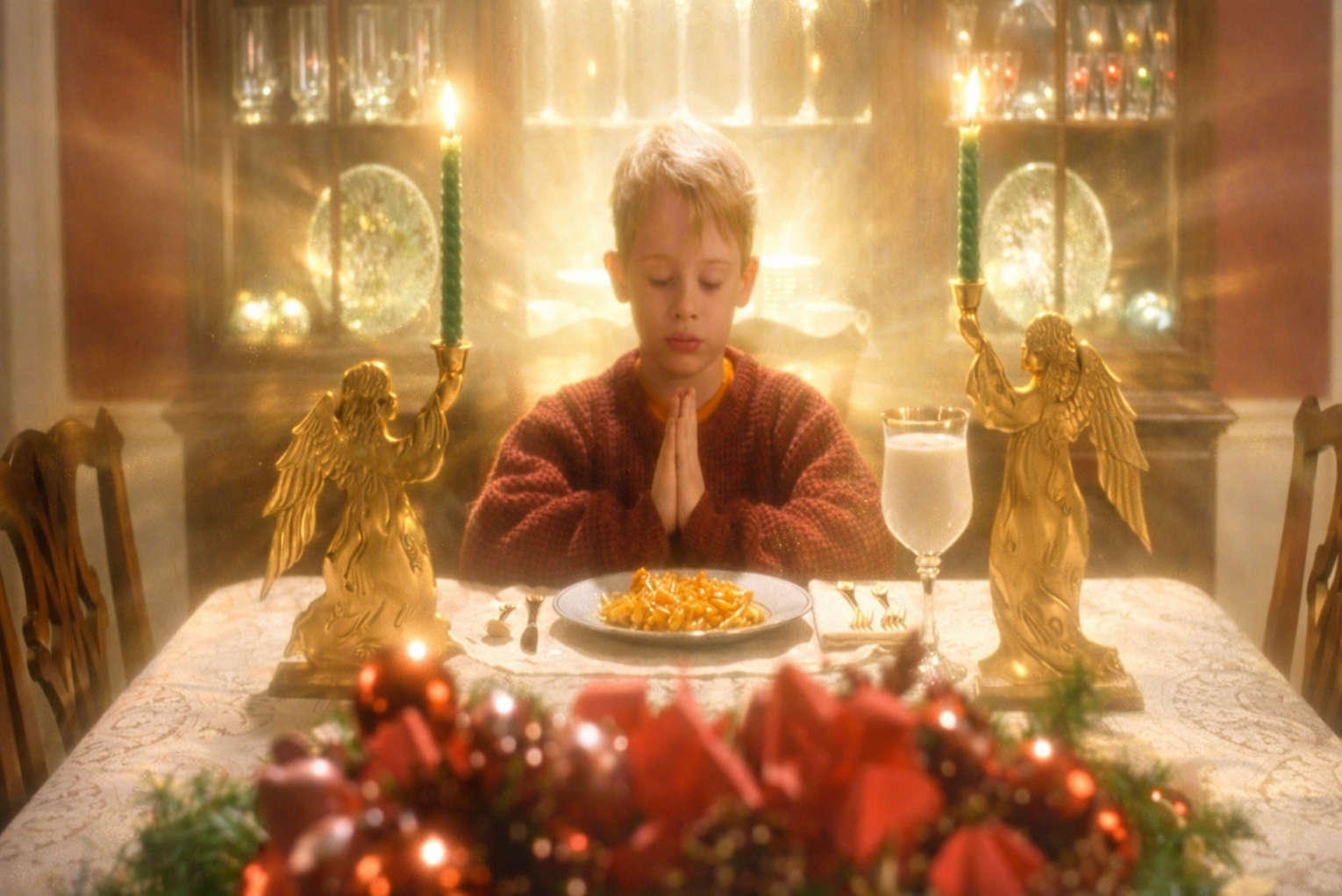
Kevin’s walk into the church is not accidental or merely atmospheric. Howerton points out that the scene draws Kevin toward warmth, beauty and stillness at a moment when he is lonely and overwhelmed. The church is presented as a safe place for reflection rather than a background prop, setting the tone for what follows.
• The music underscores spiritual meaning
As Kevin enters the sanctuary, the choir sings “O Holy Night.” Howerton highlights how specific lyrics align with the moment, particularly lines about kneeling and angelic voices. The song is not incidental. It cues the audience that something deeper than a casual visit is happening.
• Visual cues suggest Christ’s presence
Howerton notes a candle passing across the frame as Kevin enters, which he interprets as symbolic of Christ’s presence in the church. The cinematography subtly reinforces the sacred setting without calling attention to itself.
• Old Man Marley functions as a Christ-figure guide
Rather than portraying Marley as a random conversation partner, Howerton frames him as a redemptive figure. Marley meets Kevin in the church, listens without judgment and offers wisdom. Their interaction resembles pastoral counsel more than small talk.
Order Jonathan Cahn’s Newest Book, “The Avatar” on Amazon.com!
• Biblical symbolism appears earlier than the church scene
When Marley is first introduced in the film, he is shown salting the sidewalk. Howerton connects this to biblical language about being the “salt of the earth,” suggesting the film seeds this symbolism long before the church encounter.
• Kevin makes a confession
Kevin opens up to Marley about his family conflict and his fear that his wishes caused the separation. Howerton likens this moment to confession, a child admitting fault and vulnerability in a sacred space.
• The wounded hand mirrors crucifixion imagery
Howerton draws attention to Marley’s injured hand, which is bandaged in the church scene and later shown to be pierced all the way through. The film never explains the injury, but the visual parallels to crucifixion wounds are difficult to miss once pointed out.
• Kevin cannot save himself
At the climax, Kevin is cornered by the burglars and completely helpless. Howerton emphasizes that this is the turning point where self-reliance fails.
• Rescue comes through grace
Marley appears at the last possible moment and rescues Kevin without condition. The rescue is unearned and unexpected, reinforcing the idea of grace rather than heroics.
• The original script made the faith themes explicit
In the follow-up episode, Howerton reveals details from the original script that never made it to screen. Marley explicitly talks about being baptized, married and burying his wife in the same church. He speaks openly about believing in reunion with her in God’s kingdom.
• Kevin is guided into prayer
In the original script, Marley encourages Kevin to kneel and pray, telling him to ask God to fix things with his family and to say thank you. The scene leaves no ambiguity about who Marley is pointing Kevin toward.
• God is portrayed as accessible
Marley reassures Kevin that God is always available, not just on holidays. Howerton highlights how this line frames faith as relational rather than distant or formal.
• Redemption is visually completed at the end
Howerton notes that in the final scene, after Marley saves Kevin and reconciles with his estranged son, his once-pierced hand appears healed. He interprets this as a visual bookend symbolizing the completion of redemption and restoration.
The result is not an argument that Home Alone was meant to be a sermon, but a reminder that Christmas movies often carry more meaning than we notice on first viewing. Whether intentional symbolism or happy coincidence, Howerton’s playful breakdown has given fans a new excuse to watch the holiday classic with fresh eyes and maybe listen a little more closely the next time the choir starts singing.
James Lasher, a seasoned writer and editor at Charisma Media, combines faith and storytelling with a background in journalism from Otterbein University and ministry experience in Guatemala and the LA Dream Center. A Marine Corps and Air Force veteran, he is the author of The Revelation of Jesus: A Common Man’s Commentary and a contributor to Charisma magazine.