

The Last Supper stands as one of the most profound moments in the Gospels, serving as a bridge between the Jewish tradition of Passover and the establishment of Holy Communion. In Season 5 of The Chosen, this connection is brought to life with a level of depth and authenticity that allows audiences to grasp the full significance of the moment. Through the insights of Rabbi Jason Sobel and the creative storytelling of Dallas Jenkins, the show powerfully illustrates how Jesus, as the fulfillment of the Passover, transformed a historical Jewish observance into a divine ordinance for all believers.
Understanding Passover in The Chosen
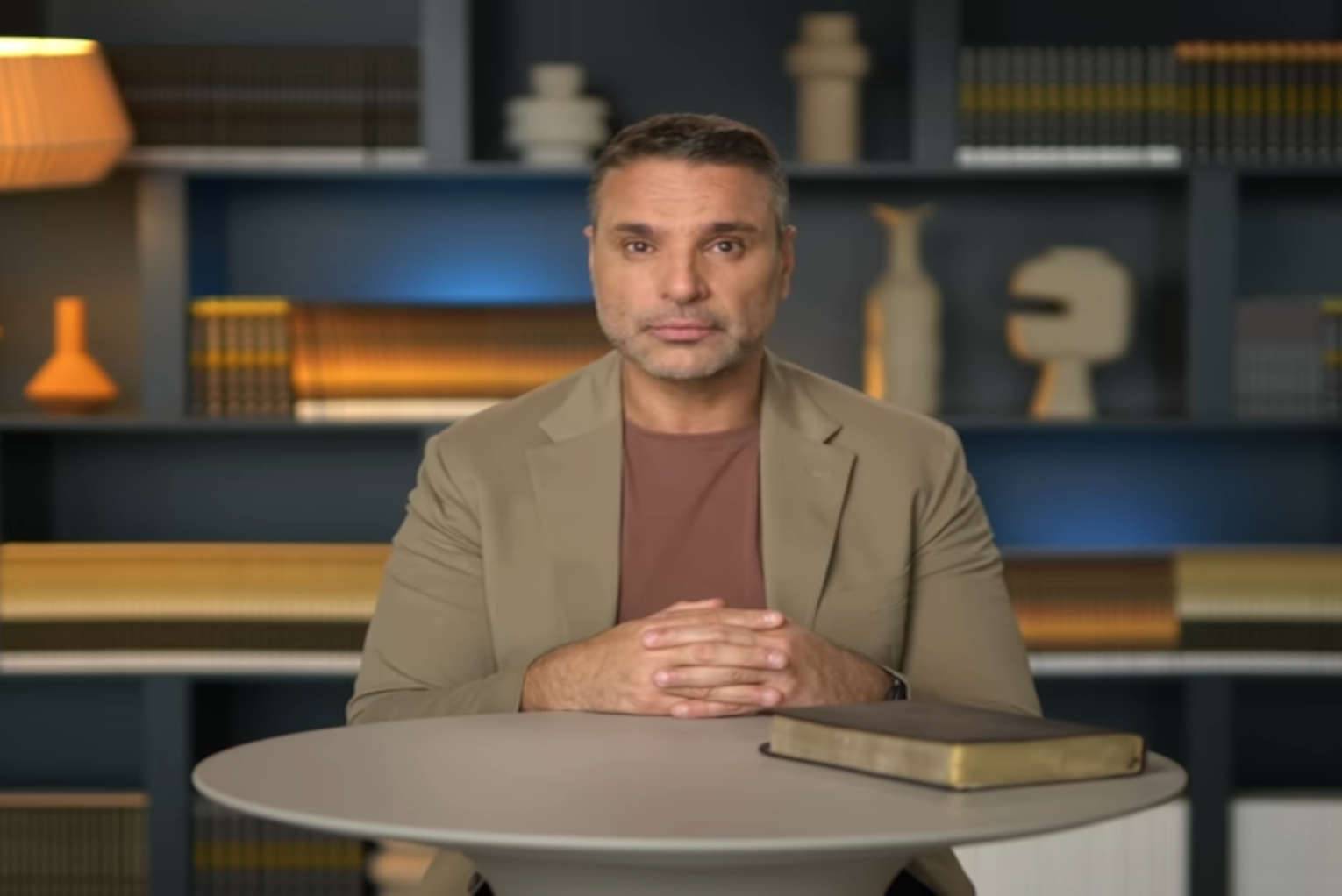
Rabbi Jason Sobel, a Messianic Jewish scholar and key consultant for The Chosen, explains that the Last Supper was actually a Passover Seder—the traditional Jewish meal commemorating the Exodus. This meal, filled with rich symbolism, pointed directly to the coming Messiah. The cast of The Chosen, many of whom were unfamiliar with Jewish traditions, participated in a Passover Seder led by Rabbi Sobel to fully understand its significance. This firsthand experience deepened their portrayal of Jesus and the disciples, lending an authenticity to Season 5’s depiction of the Last Supper.
“It was a fun opportunity, I actually went to Texas and with the majority of the cast we did a Passover Seder and actually walked through the Passover and showed how all of the different elements, ultimately pointed to Jesus as the Messiah,” Sobel says.
One humorous yet profound anecdote from this experience was when Jonathan Roumie, who plays Jesus, attended the Passover meal at Rabbi Sobel’s house. Sobel’s young son turned to him and remarked, “Dad, it’s really weird that Jesus is sitting at the table and you’re leading the Passover.” This moment of levity captured the deeply personal and transformative nature of this tradition with the unique blessing of sharing it with the cast.
The Symbolism of the Third Cup and Communion
A crucial element of the Passover Seder is the four cups of wine, each representing a different stage of Israel’s redemption from Egypt. The third cup, known as the cup of redemption, is the very cup Jesus raised when He instituted Communion. This cup, tied to the threefold application of the Passover lamb’s blood on the doorposts of Israelite homes in Egypt, directly correlates to Jesus’ sacrifice. As Rabbi Sobel highlights, “The third cup is known as the Ula, the cup of redemption. And the reason it’s the third cup, the cup of redemption, is that there were three sprinklings of the blood on the doorposts of the homes in Egypt. And so, the three sprinklings of blood connected to the third cup which then ties into the fact that Jesus was raising the third cup and saying, as the blood of the Passover lamb, this is a reminder it’s me (Jesus), who is the Passover lamb, the Lamb of God who takes away the sins of the world.” The number three often is linked to redemption: Jesus was crucified at the third hour, there were three crosses on Calvary and He rose on the third day.
In Season 5 of The Chosen, the portrayal of the Last Supper is uniquely structured, interwoven throughout multiple episodes. This approach allows viewers to see how Jesus’ actions at the Seder reverberate throughout Passion Week, reinforcing the idea that every step He took was in fulfillment of the ultimate Passover.
The Deeper Meaning of Passover Symbols
One of the most striking symbols in the Passover Seder is the matzah, or unleavened bread. During the Seder, three pieces of matzah are placed in a special bag called a matzah tosh. The middle piece is broken, wrapped in linen, hidden and later redeemed by children in exchange for a reward. This middle piece, known as the afikoman, carries stunning prophetic significance. It represents Jesus, the second person of the Trinity, who was broken, buried and resurrected. The name afikoman can mean both “He came” and “He will come,” alluding to Jesus’ first and second comings.
When Rabbi Sobel first realized these connections as a Messianic believer, it was a profound moment of revelation. He recalls being astonished that everything he had observed in Jewish tradition as a child pointed directly to Jesus. This realization, he notes, is one that more Christians need to grasp in order to fully understand the depth of Jesus’ fulfillment of the Old Testament, “And so as those connections were made, I was like, ‘Wow!’, I just became even more convinced that Yeshua Jesus was the Lamb of God who takes away the sins of the world.”
The Stone Prophecy: Jesus as the Rock
Psalm 118, a key component of the Hallel Psalms sung during Passover, contains one of the most crucial Messianic prophecies: “The stone that the builders rejected has become the cornerstone,” (Modern English Version). This verse is quoted multiple times in the New Testament and is central to Jesus’ identity as the foundation of faith.
Rabbi Sobel explains that the concept of the “stone” goes back even further, to the Torah. When Jacob fled from Esau, he placed stones around his head for protection, saw the vision of the heavenly ladder and later anointed a single rock with oil. Jewish tradition holds that these stones miraculously became one, symbolizing the unity of God’s anointed one. This rock, Sobel asserts, is a foreshadowing of the Messiah.
Even the Hebrew word for stone, evan, reveals deep theological truths. It consists of Aleph (symbolizing the Father), Ben (the Son), and Nun (the Holy Spirit, associated with the number 50—pointing to Pentecost). This beautifully illustrates the Trinity embedded within Hebrew Scripture.
The Role of Extra-Biblical Sources in Understanding Jesus
Some of the insights in The Chosen draw from Jewish traditions outside of the Bible, which were part of Jesus’ cultural framework. The New Testament itself references such traditions, including the book of Enoch and oral teachings known to the Jewish people of Jesus’ time. Understanding these traditions provides deeper context for Jesus’ words and actions.
Paul’s statement in 1 Corinthians that “the rock that followed them was Christ” refers to a Jewish tradition that a rock miraculously provided water to Israel throughout their wilderness journey. Jesus later used this imagery when He declared Himself the source of living water. Such insights help modern audiences appreciate the profound depth of biblical imagery.
The Humanity and Divinity of Jesus in The Chosen
One of the standout elements of The Chosen is its portrayal of Jesus as fully divine yet profoundly human. Unlike traditional depictions where Jesus is distant and ethereal, Jonathan Roumie’s portrayal makes Him approachable and deeply relatable. Rabbi Sobel emphasizes that this authenticity is crucial, as even little children were drawn to Jesus during His earthly ministry, saying of one of his favorite episodes, “I love Jesus and the little children and saying the Shema, I love that aspect. I thought it was such a fun episode.” The Chosen masterfully balances His holiness with His humanity, making Him both awe-inspiring and endearing.
This relatability is critical for revival. Sobel argues that the church must reconnect with its Jewish roots to fully grasp the depth of Jesus’ mission. The Gentile church has often distanced itself from the Jewishness of Jesus, but The Chosen is playing a vital role in restoring this sacred and timeless connection. Smith Wigglesworth once prophesied that the greatest revival before Jesus’ return would be rooted in a revelation of the Word. Sobel believes that this revelation includes understanding Jesus as the fulfillment of the Old Testament.
Impact of The Chosen on Understanding Jesus
As The Chosen continues to grow in popularity, its impact extends beyond entertainment—it is transforming how people understand Jesus. Rabbi Sobel believes that this series is equipping believers with a more holistic view of the Messiah, one that honors both His Jewish heritage and His divine mission, “That’s one thing that makes The Chosen unique, they’re saying, ‘Look, if we’re going to do this, we have to do our best to portray Jesus in His actual historical, cultural, religious setting in which He lived and what He experienced,’” Sobel says. “So, it’s authentic to who He was, because a lot of the Jesus versions out there are not authentic. Listen, Jesus did not have blonde hair and blue eyes. OK? I mean, he didn’t look like Ken of Ken and Barbie. And I think that’s one of the reasons why people love Jonathan’s portrayal of Jesus.”
This respect for delivering deeper understanding to the audience is key to witnessing to the Jewish people, who have often been presented with a version of Jesus that lacks connection to their own traditions. As The Chosen continues its journey through the Gospels, it remains a powerful tool for bridging the historical and spiritual gap between Christianity and its Jewish roots.
Season 5’s portrayal of the Last Supper as the culmination of the Passover story in Holy Week is not just a creative retelling—it is a profound theological statement. Immersing viewers in the Jewish context of Jesus’ final meal, The Chosen allows them to see the depth of God’s redemptive plan in a way that is both intellectually enlightening and spiritually transformative.
Good Time to See All of The Chosen To fully absorb and be blessed with the power of The Chosen: Last Supper, Rabbi Sobel points out the wonderfully obvious, go back and enjoy the blessing of the first four seasons, “I just want to encourage everybody, you got to see the whole thing all over again, but watch Season 1 and build up to it again. It’s an event, it really is beneficial to watch it all over again, because you’re going to see things that you didn’t see before. You’re going to fall in love with Jesus in ways that you haven’t before.”