
Every spring, Jewish families around the world gather at the Passover table and ask a question that has echoed across three millennia: “Why is this night different from all other nights?”
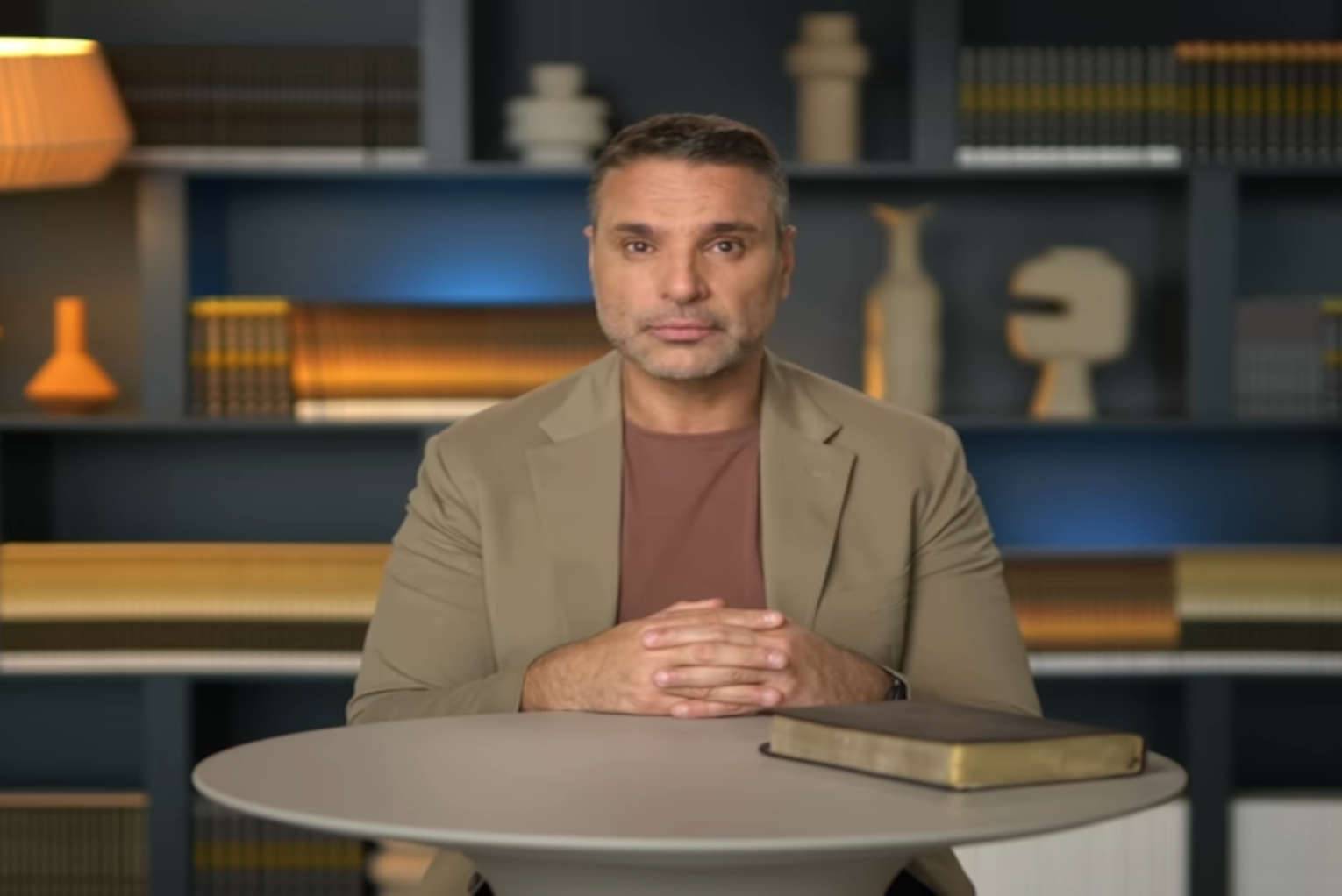
In a powerful sermon, Messianic teacher Jonathan Cahn answers that question in a way that may forever change how you see both the cross and the empty tomb.
The Table Was Always Pointing to Him
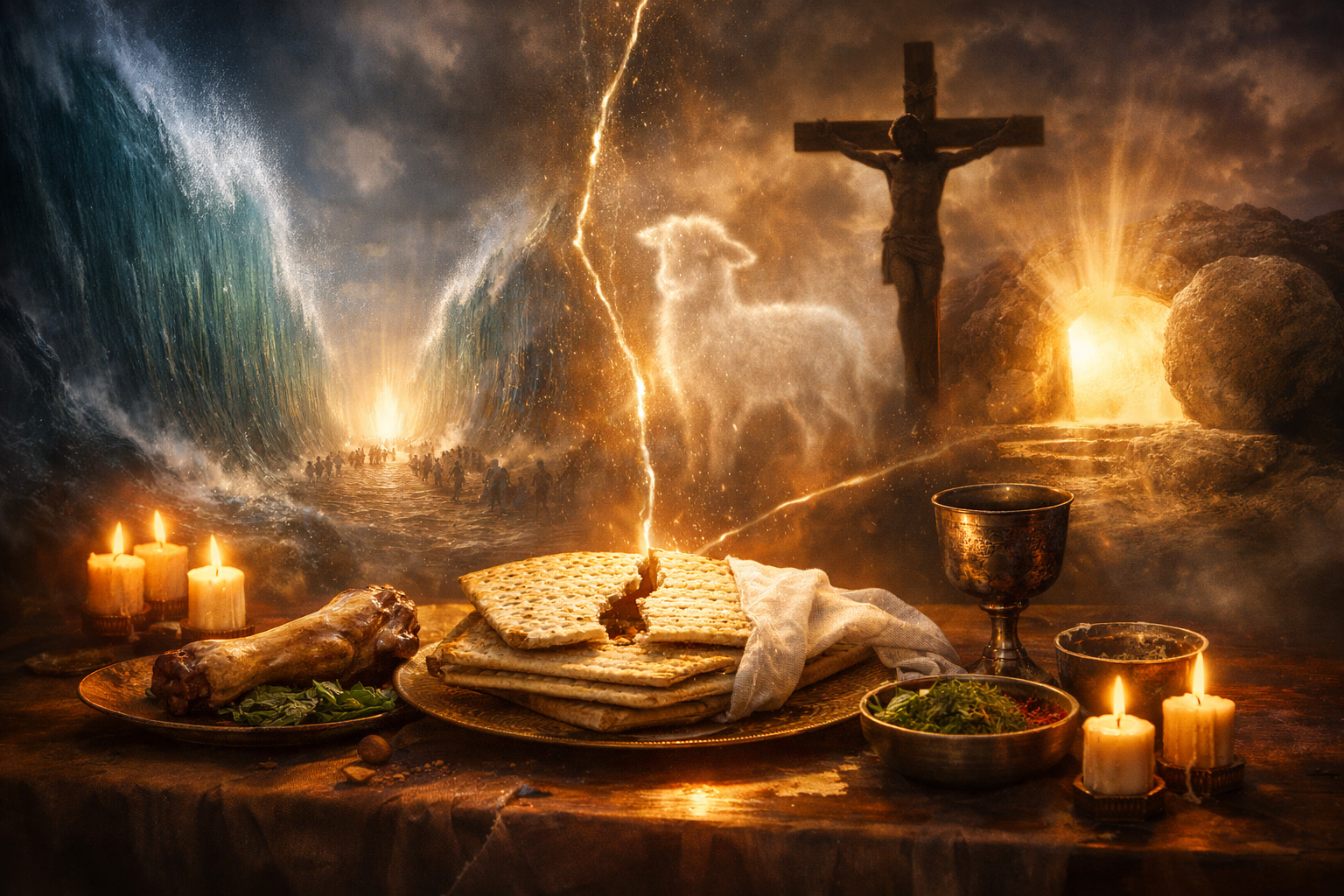
The Passover Seder is filled with symbols — unleavened bread, bitter herbs, a lamb’s bone — but Cahn argues these are not merely historical artifacts. They are a prophetic blueprint of the Messiah.
Take the three pieces of matzah. Cahn explains that no rabbi can fully account for why there are three, yet the number is unmistakable: “There are three pieces of bread. It is a trinity of bread. And it all focuses on the second of the trinity — the middle piece of bread — where the Bible says there is a triune nature of God and the middle is the Son or Messiah.”
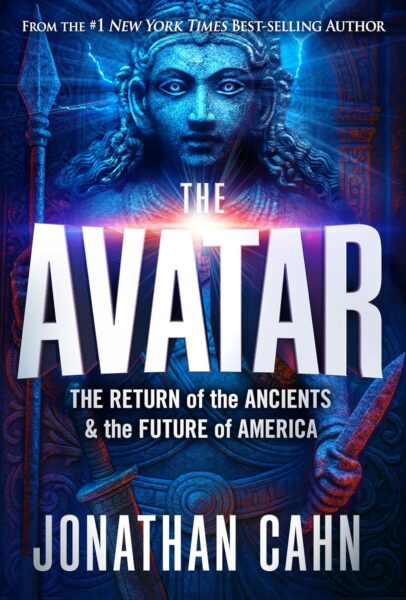
To order Jonathan Cahn’s book, The Avatar, visit Amazon.com.
That middle matzah is then broken, wrapped and hidden away, a ritual Jews have performed for thousands of years without realizing it was narrating the death, burial and concealment of Jesus. “It’s been hidden from his people for 2,000 years,” Cahn says, “but it was wrapped and hidden away.”
The Power of the Lamb’s Bone
At the center of the Seder table sits the zeroa, a lamb’s bone representing God’s outstretched arm of redemption. Cahn draws a stunning connection to Isaiah 53, written centuries before Christ: “To whom has the arm of the Lord been revealed?” The answer: a suffering servant, wounded for our sins, led like a lamb to slaughter.
“The power of God is not thunder and lightning,” Cahn declares. “It’s the love of God. It’s the Lamb of God. It’s God giving his life for us. That is the power of God. There’s nothing more powerful.”
Your Red Sea Is Not the End
The sermon builds to one of the most urgent applications of the Exodus story: what do you do when God says move forward — and all you see is a wall of water?
“God wants you to move ahead even when there doesn’t look like there’s any ahead,” Cahn says. Moses didn’t avoid the Red Sea. God led them there. And when the moment came, Moses was told to lift his rod and baka — a Hebrew word meaning to rip, break and tear apart — the sea.
“You’ve got power to open up the obstacle, to split the barrier, divide the problem,” Cahn says. “You have power to break seas. That means you certainly can break that habit… you can break the gloom. That’s the power of the empty tomb.”
Rejoice Before the Victory
Cahn closes with a challenge that runs counter to every natural instinct. The Israelites praised God after crossing over. But Cahn insists the real key was to praise before.
“Rejoice on this side of the Red Sea, and you’ll rejoice on the other side. Rejoice on this side of your problem, and you’ll rejoice on the other side.”
This Passover season, the ancient table still speaks, and its message is this: the lamb was never just a meal. He was always the way through.
Abby Trivett is a writer and editor for Charisma Media and has a passion for sharing the gospel through the written word. She holds two degrees from Regent University, a B.A. in Communication with a concentration in Journalism and a Master of Arts in Journalism. She is the author of the upcoming book, The Power of Suddenly: Discover How God Can Change Everything in a Moment. For interviews and media inquiries, please contact [email protected].